If both screens connect to one computer, arrange them in Windows or macOS before choosing a mouse: a special dual-screen mouse is not needed to move the pointer between them. Choose a conventional productivity mouse for frequent scrolling and navigation, a vertical mouse if grip and hand fit take priority, or a trackball when moving a mouse across the desk is awkward. Multi-device switching matters only when you use separate computers or other devices.
Who is this choice for?
Two-screen revision organisers
If you keep revision cards on one display and notes or sources on the other, check the screen arrangement before looking for mouse features. Microsoft Support explains that positioning displays in Windows helps the pointer move smoothly between them.
Long-session revisers concerned about fit
If grip, reach or wrist position matters most during desk-based revision, compare the mouse with your hand size and preferred hand. The Health and Safety Executive also advises keeping the mouse within easy reach and supporting the forearm.
Small-desk or shared-space users
If books and cards leave little room to move a mouse, a stationary thumb trackball is worth considering. In a shared study space, check quiet-click claims for the exact model rather than assuming they apply across a brand.
What matters when buying?
Conventional productivity mouse
Choose when: You regularly scroll through lengthy sources and move between cards, notes and browser windows.
Trade-off: A sculpted shape and software-dependent controls may not suit every hand or operating system.
Vertical mouse
Choose when: A vertical grip appeals to you and the specific model fits your hand size and handedness.
Trade-off: Button placement feels different from a conventional mouse, and its shape cannot guarantee comfort.
Thumb trackball
Choose when: A crowded desk makes moving a conventional mouse inconvenient.
Trade-off: Cursor movement is controlled by your thumb, so allow for a different technique.
For two displays on one computer, settle the display layout first. Then decide which of these needs will have the greatest effect on your revision sessions.
| Concern |
What to check |
Who this matters to |
| Navigation and controls |
Check scroll behaviour, navigation buttons and any software requirements. Arrange the displays in the operating system. |
If I move repeatedly between cards, references and long notes, I want controls that make those steps manageable. Around 33% of consumers put navigation first. |
| Grip and hand fit |
Check hand-size and handedness guidance, and whether the mouse can sit within easy reach with your forearm supported. |
During long desk sessions, I want a shape I can use without awkward reach or grip. Hand fit is the main concern for around 45% of consumers. |
| Desk space and quieter use |
Consider the room available for mouse movement and check quiet-click claims for the exact model. |
With books beside my keyboard or other people nearby, I need a mouse that works in the space and setting I have. Around 22% of consumers prioritise those practicalities. |
Common buying mistakes
-
Looking for a “dual-monitor mouse” before arranging the screens
On one computer, an unexpected pointer crossing point can come from displays being arranged differently in software from their positions on the desk. Microsoft Support explains how to reposition displays in Windows; Apple Support describes extending the desktop across Mac displays.
Set up the intended extended layout and test pointer movement before deciding whether extra mouse controls would help.
-
Confusing two monitors with two devices
Switching between paired devices serves a different purpose from moving across two displays attached to one computer. Logitech describes Easy-Switch pairing for compatible products with up to three devices.
Count the computers or other devices you actually use before making device switching a purchase priority.
-
Assuming an ergonomic shape suits every hand
Logitech positions Lift for small to medium hands, while Kensington describes its Pro Fit Ergo Vertical as fitting average to larger hands. The Health and Safety Executive also advises paying attention to reach, wrist position and forearm support.
Check the exact model’s size and handedness guidance, and review the retailer’s return terms before ordering.
-
Comparing quiet-click claims without checking the model
Noise-reduction claims can refer to different comparison mice and conditions, so they do not establish which model will sound quieter in your study space.
Read the claim for each exact model and its stated comparison conditions rather than extending it to every mouse from the same brand.
Brands to consider
Logitech
Its relevant models cover a conventional productivity mouse, a vertical mouse and a stationary thumb trackball.
- Logitech specifies adjustable 8,000 DPI tracking for the MX Master 3S Bluetooth Edition, a 57-degree vertical shape for Lift, and thumb-operated cursor control for ERGO M575S.
- Lift is positioned for small to medium hands; shape and control preferences still need checking for the individual user.
Kensington
The Pro Fit Ergo Vertical Wireless Mouse is a vertical, receiver-based option described by Kensington as fitting average to larger hands.
- Kensington specifies a 46.7-degree slope and forward and back controls for this model.
- Its fit guidance is model-specific; a vertical shape does not establish how comfortable it will be for every user.
HP
HP lists models with different priorities, including multi-device controls and quieter clicks.
- HP Store UK lists programmable buttons and connection to up to three devices for the HP 685 Comfort Dual-Mode Mouse, and noise-reduced clicks for the HP 280 Silent Wireless Mouse.
- Check features against the exact model: the quiet-click description for one mouse does not apply to every HP mouse.
Joybuy mice for revision
These options cover vertical-grip designs, navigation-focused use and mice described with quieter clicks or switching between separate devices. Choose according to your own grip, controls and study space; two screens on one computer do not require device switching.
 Image unavailable
HP 920 Ergonomic Wireless Mouse (Black) with Detachable Wrist Rest
Consider this option if you want to assess a different grip during long desk sessions. The detachable wrist rest is included in the product name; check hand fit and handedness before choosing it.
View on Joybuy
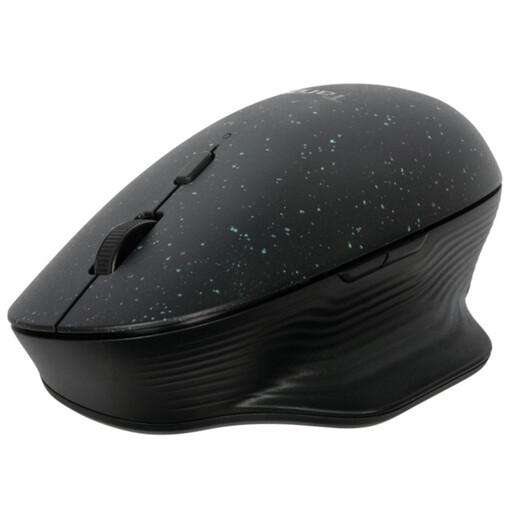 Image unavailable
Targus Ergoflip EcoSmart® Ergonomic Wireless Mouse
Consider this model if handedness flexibility or navigation controls matter to your revision routine. Check its hand-size fit and whether its scrolling behaviour suits the material you use.
View on Joybuy
 Image unavailable
Logitech MX Master 3S Mouse (Black)
Consider this conventional mouse if moving through lengthy sources and using navigation controls are central to your workflow. Check whether its sculpted shape fits your hand; pairing with other devices is a separate need from using two monitors.
View on Joybuy
 Image unavailable
V7 MW500BT Bluetooth Vertical Mouse
Consider this vertical-grip option if you want to compare its feel with a conventional mouse. Its name specifies 2.4 GHz dual-mode connectivity, six buttons and adjustable tracking up to 1600 DPI; check hand fit and operating-system compatibility for your setup.
View on Joybuy
 Image unavailable
HOFOTEK M311 2.4G+BT Mouse (White-Grey, 1×AA)
Consider this model if you use separate devices or want to assess a mouse advertised for quieter clicks. Its name specifies 2.4G+BT connectivity, adjustable DPI and one AA battery; check the button layout if dedicated shortcuts matter to you.
View on Joybuy
Frequently asked questions
Do I need a special mouse for two monitors?
No, not when both monitors are connected to the same computer. Microsoft Support advises arranging Windows displays to match their positions so the pointer crosses between them as expected; on a Mac, Apple Support describes using an extended desktop across displays.
When is a multi-device mouse useful for revision?
It is useful when you switch the mouse between separate computers or other compatible devices, rather than merely between two monitors. Logitech says compatible Easy-Switch products can pair with up to three devices; check the specific model and your devices before making that feature a priority.
Will a vertical mouse solve wrist discomfort on its own?
A vertical shape alone cannot establish how comfortable a mouse will be for you. Check hand fit and reach alongside the Health and Safety Executive’s guidance to keep the mouse close, the wrist straight and the forearm supported.
Can I cancel an online mouse purchase in the UK?
For most UK online goods purchases, the statutory change-of-mind cancellation period ends 14 days after the day you receive the goods, under regulation 30 of the Consumer Contracts Regulations 2013. Check how to notify the seller and whether an exception applies; cancellation is distinct from remedies for faulty or misdescribed goods and from any voluntary retailer return policy.


