Two-screen long-form writers
You keep a draft on one display and source material or notes on the other. Adjustable pointer movement, controlled scrolling and shortcuts are worth considering if you repeatedly move between them.


For two screens connected to one computer, start with a mouse whose pointer speed and scrolling you can control comfortably while moving between your draft and research. Consider a vertical mouse if an upright grip fits your hand, or a thumb-operated trackball if there is little room to move a mouse; multi-device switching matters when you use separate computers, not merely two displays.
You keep a draft on one display and source material or notes on the other. Adjustable pointer movement, controlled scrolling and shortcuts are worth considering if you repeatedly move between them.
You spend long periods reading and editing, so hand fit and a mouse within easy reach matter alongside the rest of your workstation. A vertical mouse or stationary trackball offers a different way to point, but neither guarantees comfort.
Your screens belong to different computers, or you regularly alternate between a work laptop and another machine. Pairing and switching features may help here; they are not needed simply because one computer has two monitors.
Establish whether the screens share one computer, then consider pointer and scroll control, hand fit and the space beside your keyboard. A feature for switching computers solves a different problem from moving a cursor between two displays.
| Concern | What to check | Who this matters to |
|---|---|---|
| Navigation and scrolling | Check adjustable pointer speed and whether the wheel gives you enough control over long pages and drafts. Consider remappable buttons only if you will use the shortcuts. | If I move repeatedly between a draft and source material, I want to reach the right place without overshooting it. Around 36% of consumers put this navigation and document-flow need first. |
| Long-session comfort | Check hand-size and handedness guidance, and whether the mouse sits within easy reach. Review the whole desk arrangement rather than relying on mouse shape alone. | During extended reading and editing, I need a grip and desk position I can use comfortably. For around 29% of consumers, that fit is the primary concern. |
| Separate computers | Confirm whether the displays belong to different computers; if so, check pairing limits, operating-system compatibility and how switching works. | If my draft and research are on separate computers, I want one mouse I can move between them without repeatedly pairing it. That is the main need for around 21% of consumers. |
| Desk space and travel | Check the room available for moving the mouse and whether its size and pointing method suit a changing workspace. | At a crowded desk or when changing work locations, I need a pointing device that fits the space available. Around 14% of consumers place this space or portability need first. |
Two displays connected to one computer do not require the mouse to switch between devices. Pairing features become relevant when you use separate computers.
Check which computer drives each screen before comparing Bluetooth pairing, receiver options or switching software.
A vertical mouse or trackball changes how you point, but desk reach, screen placement and working routine still matter. The UK Health and Safety Executive advises considering display-screen equipment as part of the wider workstation.
Keep the mouse within easy reach and review the desk setup. If discomfort persists, seek an appropriate workstation assessment rather than relying on a product change alone.
A high tracking-sensitivity figure does not establish that a mouse will feel controllable while you edit or read. Scroll behaviour and hand fit also affect the choice.
Look for pointer-speed adjustment you can use comfortably, then check scroll control and any surface-specific tracking conditions.
A stationary trackball uses little movement space but requires thumb-based pointing. Logitech describes Lift as intended for small to medium hands and offers left- and right-handed versions; that guidance does not establish your individual fit.
Compare the maker’s fit guidance with your hand and desk space, and check the retailer’s return terms before trying an unfamiliar shape.
Its documented range includes a full-size productivity mouse, compact multi-device mouse, vertical mouse and thumb-operated trackball.
Its Bluetooth Ergonomic Mouse is relevant to writers switching between separate PCs, particularly in a Windows setup.
The HP 635 Multi-Device Wireless Mouse is a compact option to examine if you change work locations or computers.
These mice cover conventional document navigation, an upright-grip option and a model to consider for switching between separate computers. Choose according to your desk, hand fit and computer setup rather than assuming that two screens call for every feature.
 No image available
Consider this full-size option if scrolling through long sources and adjusting pointer movement are central to your two-screen work. Logitech describes MX Master 3S as offering fast scrolling and adjustable tracking up to 8,000 DPI. Check that its shape fits your hand; cross-computer control requires compatible software and setup.
 No image available
Consider this model if your two screens belong to separate computers and switching between them is a priority. Check its switching method against your setup: cross-computer cursor control calls for a driver and computers on the same Wi-Fi or Ethernet network. Confirm the mouse’s actual shape and hand fit before choosing it as a vertical option.
 No image available
This vertical design is worth considering if you prefer an upright grip while writing and editing. The named configuration includes 2.4 GHz connectivity, six buttons and an adjustable sensor stated at 1600 DPI. Check handedness and hand fit, and confirm the scroll behaviour if you regularly read long documents.
 No image available
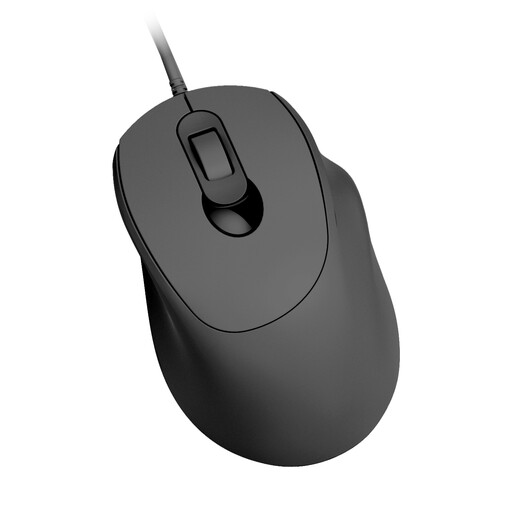
This wired option suits a writing desk where a USB cable is acceptable and basic pointer adjustment is the main requirement. Its named configuration has four buttons, 1000/1200/1600 DPI settings and silent clicks, with Windows and Mac compatibility stated. Check your USB connection, hand fit and scroll-wheel behaviour for longer reading sessions.
No, not when both displays connect to the same computer. Multi-device pairing matters if you need to switch the mouse between separate computers; check whether the model uses a hardware control or requires software on those machines.
Choose one if you prefer an upright grip and the particular model suits your hand size and handedness. Logitech describes Lift’s 57° angle as a more upright position, but its description is not a guarantee of comfort; desk reach and the rest of your workstation still matter.
A thumb-operated trackball is worth considering if there is little space to move a mouse beside your keyboard. Logitech describes ERGO M575S as remaining stationary while the thumb moves the pointer; two monitors alone do not require that pointing method, so consider whether you would find it comfortable to use.
Check that you can reach the mouse comfortably and work without awkward screen or desk positioning. The UK Health and Safety Executive’s display-screen equipment guidance considers the wider workstation, including home working; changing mouse shape is not a substitute for reviewing that setup.