For slide work at a shared desk, start with a mouse whose click description, connection method and shape suit the people and computers using it. Programmable controls and device switching are worth considering if your workflow calls for them; for longer editing sessions, check hand fit before choosing extra controls. Quiet-click descriptions are manufacturer claims, not a promise that every mouse action will be inaudible.
Who is this for?
Shared-desk slide editors
If colleagues sit nearby while you edit or rehearse, look for an explicit quiet-click description for the exact mouse. Logitech and HP describe quiet or silent clicks on particular models, but those descriptions do not cover every sound the mouse makes.
Presenters using more than one device
If you prepare slides on one computer and use another to present, check how the mouse switches between saved devices. Logitech, HP and Dell specify multi-device connection for particular models; the available connection methods differ.
People editing for longer sessions
If grip and hand size matter during extended slide work, compare shapes and sizes rather than choosing by button count alone. Logitech, for example, offers separate hand-size and left-handed variants in its Signature M650 range.
What matters when choosing?
For consumers preparing slides at a shared desk, the most useful starting point is the need that would most affect their own work: nearby colleagues, slide controls, device connections or hand fit.
| Concern | What to check | Who this matters to |
|---|
| Click noise |
Look for a quiet- or silent-click description for the exact variant; do not assume it covers scrolling. |
When colleagues work close by, I want repeated slide edits to cause less distraction. Around 36% of consumers put quieter clicks first. |
| Navigation and shortcuts |
Check scroll modes, programmable buttons and whether any required configuration software works on your computer. |
If I repeatedly move through slide lists and notes, I want controls that fit those tasks without a cumbersome setup. For around 29% of consumers, navigation and shortcuts are the primary concern. |
| Connections |
Check Bluetooth support, receiver inclusion, available ports and the stated number of saved devices. |
Moving between a preparation laptop and another presentation device makes pairing and port access important to me. Connection flexibility comes first for around 21% of consumers. |
| Hand fit |
Compare the maker’s size guidance, handedness options and dimensions for the variant you would use. |
During a long editing session, I care more about a shape that suits my hand than additional buttons. Around 14% of consumers prioritise fit and comfort. |
What should you avoid?
-
Choosing a receiver connection without checking the computer
A 2.4 GHz receiver needs a compatible port, which can be awkward on a laptop with limited USB connectivity.
Check the presentation computer’s ports and Bluetooth support, as well as which connection options the exact mouse provides.
A setup without the right port may require a compatible adapter.
-
Assuming a compact mouse will fit everyone
A portable shape may not suit your hand through a long slide-editing session, particularly if several people share the desk.
Compare dimensions, handedness and any manufacturer hand-size guidance before settling on a variant.
-
Reading “silent clicks” as “no mouse noise”
A quiet-click claim does not establish how loud scrolling or other controls will be. Manufacturer descriptions are not a common noise test across models.
If low noise is essential, check what the exact model’s claim covers and consider how you can assess its suitability before keeping it.
-
Putting an old battery-powered mouse in household rubbish
GOV.UK advises that electrical products and batteries should not go into household rubbish when they are no longer wanted.
Use an appropriate electrical-waste or battery collection route. If the battery cannot be removed, take the complete mouse to an electrical-waste collection point.
Relevant brands to consider
These model ranges illustrate different features to check; a brand name alone does not tell you how a particular mouse will fit or connect.
Logitech
The compact MX Anywhere 3S and the size-specific Signature M650 range address different shared-desk priorities.
- Logitech specifies quiet clicks, two scroll modes and Bluetooth pairing for up to three devices on the MX Anywhere 3S.
- For receiver-based use with the MX Anywhere 3S, Logitech says the Logi Bolt receiver is purchased separately. Check the exact M650 size and handedness variant before choosing.
HP
The HP 710 Rechargeable Silent Mouse is a reference point for quiet clicks and configurable controls across saved devices.
- HP specifies silent clicks, six programmable buttons, Bluetooth 5.3, a 2.4 GHz dongle and switching between up to three saved devices for the HP 710.
- If you want app-specific shortcuts, check software compatibility and whether your workplace allows installation.
Dell
The Pro Premium Compact Mouse MS7421W offers a compact, multi-device connection route.
- Dell specifies three-device connection using 2.4 GHz wireless and Bluetooth 5.0, along with seven buttons and a rechargeable design.
- If reduced click noise is essential, confirm the click specification for the exact MS7421W variant before choosing it.
Lenovo
The Go USB-C Wireless Mouse is a receiver-based option for a computer with a suitable USB-C port.
- Lenovo specifies silent buttons, adjustable DPI, meeting shortcuts and a programmable utility button.
- Check for a compatible USB-C port if you intend to use its receiver; do not assume it offers Bluetooth device switching.
Joybuy mice for slide work
These mice offer different approaches to shared-desk slide work, from models described with quiet clicks to receiver-connected and rechargeable options. Compare each exact variant’s connection and controls against the computer you will use.
 No image available
Logitech MX Master 3S, Black
Consider this model if you want to assess custom controls for repeated slide tasks. Check whether Logi Options+ can be installed on your work computer, and assess quiet-click claims against the noise level your shared desk requires.
View on Joybuy
 No image available
HOFOTEK M311 Silent Office Mouse, White-Grey
For a shared desk using different computers, check how its 2.4G and Bluetooth connection options work with each device. The title specifies adjustable DPI and one AA battery; confirm the controls you need if slide shortcuts matter.
View on Joybuy
 No image available
Philips 3000 Series SPK7378B/00 Wireless Mouse, EU Version, Black
This is an option to assess if your slide computer has a compatible port for its 2.4 GHz USB receiver. Its title specifies 1600 DPI and silent clicks; check whether the receiver setup suits every computer you intend to use.
View on Joybuy
 No image available
ET Wireless Gaming Mouse with LED Backlight
Its USB receiver and five adjustable DPI settings may be relevant if you want to change cursor speed while editing slides. Check that the receiver fits your computer; the stated side-button functions are unavailable on Mac, and the quiet-click claim concerns the left and right buttons.
View on Joybuy
 No image available
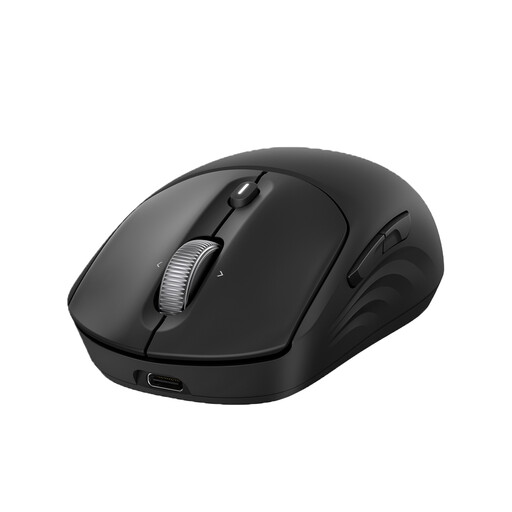
HP 700 Rechargeable Wireless Mouse
Consider this model if device switching and configurable controls are priorities. Check software compatibility before relying on custom buttons, and confirm its click description before choosing it for a noise-sensitive desk.
View on Joybuy
Common questions
Should I use Bluetooth or a USB receiver at a shared desk?
Choose Bluetooth if keeping a USB port free matters and your computer supports the mouse’s Bluetooth connection. A 2.4 GHz receiver needs a compatible port; for a mouse offering both methods, check whether the receiver is included and how switching works on the exact model.
Do I need programmable buttons to prepare slides?
Programmable buttons are useful when you repeatedly use commands that you can assign and configure on your computer. If you mainly select, arrange and review slides, check the basic buttons and scrolling first; workplace software restrictions may limit custom shortcuts.
Will a mouse described as quiet be completely silent?
No: a quiet- or silent-click description does not establish that scrolling and every other action will be inaudible. Logitech and HP use such descriptions for particular models, so check the claim for the exact mouse rather than assuming it applies across a brand.
What should I do with an old battery-powered mouse?
Take it to an appropriate electrical-waste collection route rather than putting it in household rubbish. GOV.UK advises separate collection for electrical products and batteries; if the battery cannot be removed, take the complete mouse as electrical waste.


