What matters when choosing?
Start with the clear space beside the keyboard: that determines whether a moving mouse is practical at all. Then weigh hand fit, booking navigation and connection against the way the desk is used each day.
Stationary trackball
Choose when: Paperwork or equipment leaves little room to sweep a mouse across the desk.
Trade-off: The device stays in place, but thumb- or finger-operated pointer control differs from a conventional mouse.
Compact conventional mouse
Choose when: You prefer familiar mouse movement and have a clear area beside the keyboard.
Trade-off: A smaller mouse still needs surface space in which to move.
Vertical mouse
Choose when: Longer booking sessions make an upright hand position a priority and the shape suits your hand.
Trade-off: Hand fit and workstation setup still matter; a different mouse alone cannot resolve every source of discomfort.
| Concern |
Buying checks |
Who this matters to |
| Desk space |
Measure the clear area beside the keyboard; decide whether the pointer device can move or must stay in place. |
With paperwork covering the desk, I need pointer control without clearing room for each movement. Roughly 31% of consumers would put preserving working space first. |
| Comfort and fit |
Check the exact variant's hand-size and handedness guidance, and whether you can position it in line with your elbow. |
When booking updates occupy much of the day, I want a shape that fits my hand and a workable desk position. Around 31% of consumers would make comfort and fit their primary concern. |
| Booking navigation |
Consider scrolling controls for long lists or wide spreadsheets, but only if they suit the records you use. |
Moving between calendar entries and wide records slows me down if the controls do not suit those tasks. For about 23% of consumers, navigating bookings would come first. |
| Quiet connection |
Check click-noise claims, Bluetooth or receiver requirements, and the computer's available ports. |
At a shared desk, I want clicks that cause less disruption and a connection my computer can use. Approximately 15% of consumers would prioritise quiet, compatible operation. |
Joybuy product choices
These are conventional moving mice for booking work where some clear desk surface remains. Compare their fit, controls and connection requirements with your available space; a stationary trackball remains a distinct option when mouse travel is impractical.
 Image unavailable
Logitech MX Master 3S Ergonomic Black Mouse
Consider this conventional mouse if navigating long booking lists and working across devices matter more than minimising movement space.
Check that there is room to move it and confirm the receiver contents for this exact listing before choosing how to connect.
View on Joybuy
 Image unavailable
HOFOTEK M311 2.4G+BT White-Grey Mouse (1xAA)
This moving mouse is an option for a shared booking desk if quieter clicks and a choice of connection modes are useful.
The name specifies 2.4G+BT connection, adjustable multi-level DPI and a 1xAA battery. Check hand fit and leave space for mouse movement.
View on Joybuy
 Image unavailable
HP 920 Ergonomic Wireless Mouse Black with Detachable Wrist Rest
Consider the HP 920 for longer booking sessions if its shape and detachable wrist rest suit your working position.
Check desk clearance and hand fit before buying. A change of mouse does not replace a review of the wider workstation if discomfort is the concern.
View on Joybuy
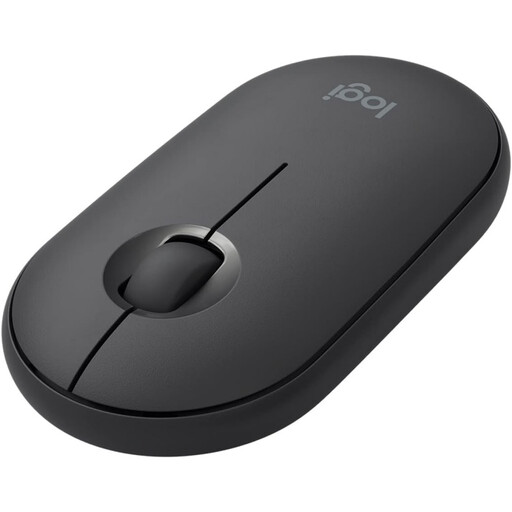 Image unavailable
Logitech Pebble Mouse Black
This conventional mouse is worth considering if you want familiar pointer movement and a low-profile design at a desk with some free surface.
Confirm the connection requirements for this exact variant and check that its shape fits your hand.
View on Joybuy
 Image unavailable
Philips 3000 Series SPK7378B/00 Black Wireless Mouse, EU Version
This moving mouse is an option for a shared booking desk if its stated quiet-click design suits your needs and the computer has a compatible USB port.
The product name specifies a 2.4GHz connection, USB receiver and 1600 DPI. Check desk clearance and hand fit before buying.
View on Joybuy
Common questions
Is a trackball more practical than a compact mouse on a very small desk?
A stationary trackball is the more relevant choice if you cannot clear enough surface to move a mouse: Logitech and Kensington describe their trackballs as staying in place or requiring less working area. If there is room for mouse travel and you prefer conventional control, a compact mouse remains an option.
Will a vertical mouse resolve discomfort during booking work?
A vertical mouse may be worth trying if its size and shape suit your hand, but it is not a guaranteed remedy. The Health and Safety Executive advises considering the whole workstation, work and individual needs for regular display screen equipment users.
What should I check before connecting a wireless mouse to the workshop computer?
Check the exact mouse's Bluetooth requirements or compatible USB receiver, the computer's available ports and its operating-system support. For instance, Logitech says MX Anywhere 3S can use a Logi Bolt receiver, but that receiver is not included.
How should I look after a trackball used near workshop paperwork?
Follow the exact model's cleaning instructions if dust or debris interferes with pointer movement; trackball maintenance procedures can differ. Keep the surrounding working area clear enough to use the device and keyboard comfortably.


