
24/7 Customer Support

Free returns

Same-day & Next-day Delivery

Quality Guaranteed

Unlock Your Welcome Offers: FREE Delivery | Up to 80% OFF | Free 30-day JoyPlus trial
Download the APP
Choosing mouthwash can seem straightforward until you compare alcohol content, fluoride levels, active ingredients, flavour strength and intended use. A bright label may promise complete protection, but the most suitable formula depends on your routine and oral care priorities.
For UK households, the key is to look beyond phrases such as “total care” or “deep clean”. Check what the product is designed to do, how often it should be used and whether it suits your age, sensitivity or current dental needs.
A strong mint flavour can make your mouth feel clean, but freshness is not the same as plaque protection or enamel care. A fresh breath mouthwash may contain flavouring and antibacterial ingredients, while a fluoride mouthwash is intended to provide additional support for teeth and enamel.
Mouthwash should complement, not replace, brushing with fluoride toothpaste, interdental cleaning and regular dental appointments.
An alcohol-free mouthwash may feel gentler for people with sensitive mouths, dry-mouth concerns or orthodontic appliances. However, “alcohol-free” does not automatically mean that a product is suitable for children, prolonged use or specific gum conditions.
Always check the age guidance, active ingredients and directions on the packaging. Some medicated products are intended for short-term use rather than permanent inclusion in a daily routine.
A medicated mouthwash can be appropriate for a specific concern, but stronger active ingredients are not necessarily suitable for everyday use. For example, chlorhexidine mouthwash products may carry warnings about temporary tooth or tongue staining, taste changes and maximum usage periods.
If you have persistent bleeding, swelling, pain, ulcers or irritation, speak to a dentist or pharmacist rather than relying on mouthwash alone.
Match the formula to your main reason for buying:
Some traditional rinses contain alcohol and offer an intense cooling sensation. Others are alcohol-free or described as having a milder taste. This is a comfort and preference decision, but it can affect whether you use the product consistently.
If a rinse feels too harsh, causes irritation or discourages regular use, an alcohol-free mouthwash may be a more practical choice. Review the ingredient list rather than relying only on front-of-pack wording.
Common directions include 10ml for one minute or 20ml for 30 seconds, usually once or twice daily. A 250ml or 300ml bottle may suit occasional or targeted use, while a 500ml or 750ml bottle can be more economical for a household routine.
Calculate usage realistically. A 500ml product used at 20ml twice daily provides approximately 25 days of rinsing for one person. Never dilute a product unless the packaging specifically instructs you to do so.
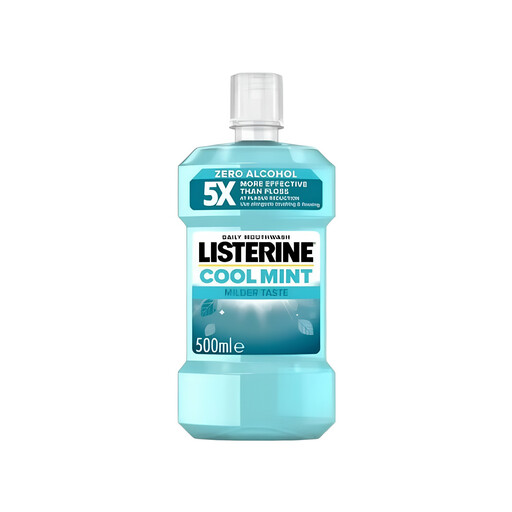
Why This Fits Their Persona: A 500ml alcohol-free option with a milder cool mint taste for adults and supervised use by children over six, subject to the label.
The alcohol-free, milder-taste format avoids assuming that a stronger sting provides better everyday care.
500ml size; contains sodium fluoride and essential-oil ingredients; milder taste.
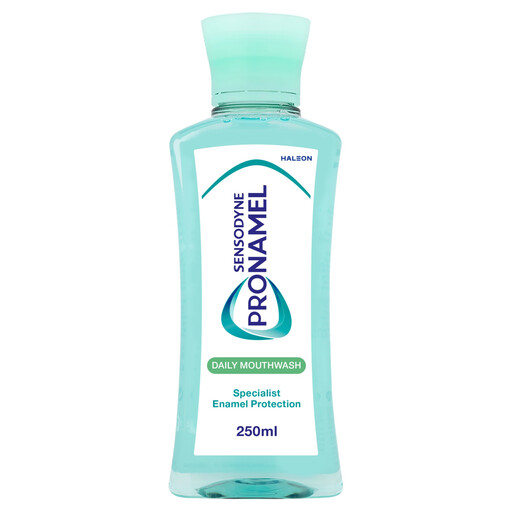
Why This Fits Their Persona: Designed for daily enamel care and people who prefer an alcohol-free rinse with a mint finish.
Its stated purpose and fluoride content make it easier to distinguish enamel support from a rinse chosen only for flavour.
Alcohol-free; pH-neutral formula; contains sodium fluoride; 250ml bottle.
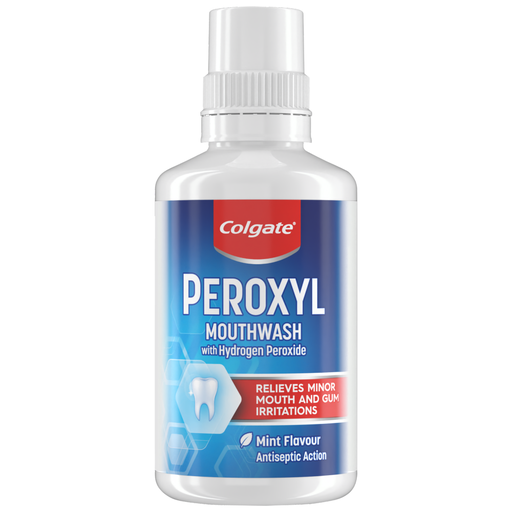
Why This Fits Their Persona: A ready-to-use, alcohol-free rinse for targeted short-term care of minor mouth and gum irritation.
The label specifies a treatment period of no more than seven days unless directed by a dentist or doctor, helping prevent inappropriate long-term use.
Contains 1.5% hydrogen peroxide; alcohol-free; 300ml ready-to-use format.
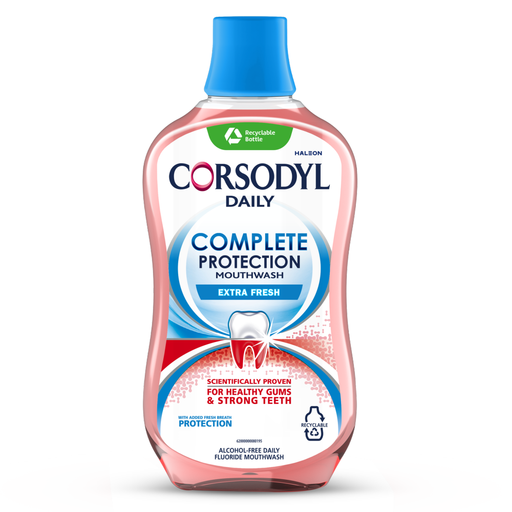
Why This Fits Their Persona: Suitable for adults seeking an alcohol-free daily gum care mouthwash with fluoride, zinc and a larger household-friendly bottle.
It separates daily gum care from the short-term use instructions associated with medicated chlorhexidine rinses.
Alcohol-free; contains sodium fluoride and zinc chloride; 500ml size; 10ml dose.
We have compiled a complete, real-time list of products that fully satisfy these strict selection criteria and UK safety regulations.
Not everyone needs mouthwash every day. Brushing twice daily with fluoride toothpaste and cleaning between teeth remain the foundation of oral care. A daily oral care mouthwash may be useful when its ingredients match your needs, such as enamel support, fresh breath or gum care. Follow the product instructions and advice from your dental professional.
Usage depends on the measured dose. At 20ml twice daily, a 500ml bottle lasts around 12 to 13 days. At 10ml twice daily, it lasts around 25 days. Check whether the product recommends 10ml or 20ml, then compare bottle size and price based on actual daily consumption.
Usually, medicated products should be used only for the period stated on the label or recommended by a dentist or pharmacist. Some formulas, including chlorhexidine mouthwash, may cause temporary staining or taste changes. Persistent gum bleeding, ulcers or soreness should be assessed by a dental professional rather than managed indefinitely with a rinse.