For a movie-night bowl, choose jelly sweets by the dietary needs of the group, the exact pack’s allergen information and its stated serving size. Vegan-labelled fruit jellies and gelatine-containing mixes serve different guests; if a stated cocoa percentage is the priority, compare dark chocolate instead of assuming it is a feature of ordinary jelly sweets.
Who is choosing?
Hosts with vegan or vegetarian guests
Choose an exact pack labelled for those guests rather than assuming that every fruit-flavoured gum is free from gelatine. HARIBO Supermix and ASDA Jelly Babies list gelatine, while Rowntree’s Jelly Tots and ASDA Fruit Jellies have vegan-labelled examples.
Hosts managing allergies as well as dietary preferences
Check the current allergen wording separately from a vegan or vegetarian statement. Marks & Spencer labels Percy Pig products vegan and vegetarian but says they are not suitable for people with a milk allergy.
Buyers who mean high-cocoa chocolate
Decide whether the intended snack is a fruit jelly, chocolate-coated confectionery or dark chocolate before comparing packs. Tesco lists jelly and chewy sweets separately from dark chocolate; a cocoa percentage should be checked on the particular chocolate product, not inferred from a sweet’s colour.
What should you check?
Settle the type of sweet and guests’ dietary requirements first. Then use the pack’s serving information to plan how it will be shared.
| Priority |
What to check |
Your needs |
| Dietary suitability |
Read the exact pack’s vegan or vegetarian statement and ingredients for gelatine or a plant-based gelling ingredient. Check allergen wording independently of dietary claims. |
I’m serving guests who avoid gelatine, or someone with an allergy, so the particular pack needs to meet their requirements. |
| Serving information |
Compare sugars on the same stated basis, such as per serving or per 100g, and check how many servings the pack suggests. Nestlé Confectionery states 11 g sugars per 11 Rowntree’s Jelly Tots; ASDA states 15 g per one-eighth pack of Fruit Jellies. |
For a shared bowl, I want to know what the label counts as a serving before deciding how many packs to open. |
| Texture and format |
Check whether the pack contains small fruit-flavoured pieces or a mix of shapes and textures. HARIBO describes Supermix as combining soft, squishy, creamy and fruity pieces; its ingredient list also includes gelatine. |
Our group would prefer either one fruit-jelly style or a varied mix. Texture alone does not tell me whether everyone can eat it. |
| Cocoa requirement |
Look for a stated cocoa percentage on the exact product if that matters. Tesco presents dark chocolate separately from jelly and chewy sweets and lists a 70% dark-chocolate product in that category. |
If I specifically want high cocoa, I’ll compare chocolate products rather than treat an ordinary fruit jelly as a dark-chocolate option. |
Common buying mistakes
-
Assuming every gummy sweet is vegetarian
Ingredients differ even within a brand: HARIBO Supermix lists gelatine, while HARIBO describes its Jelly Beans as suitable for vegans.
Check the ingredients and dietary statement on the exact pack before filling a shared bowl.
-
Using a vegan label as an allergy check
Marks & Spencer labels Percy Pig and Percy Pig & Pals vegan and vegetarian but states that neither is suitable for people with a milk allergy.
For a guest with an allergy, use the current pack’s specific allergen wording rather than its vegan statement alone.
-
Reading “sharing bag” as a serving size
Serving bases differ. Nestlé Confectionery gives nutrition for 11 Rowntree’s Jelly Tots, while ASDA suggests eight servings for its 200 g Fruit Jellies pack.
Check the labelled serving size and number of servings when planning portions; a whole bag is not necessarily one stated serving.
-
Treating dark-coloured jelly sweets as high-cocoa sweets
Tesco places jelly and chewy sweets in a different category from dark chocolate, where it lists a product described as 70% dark chocolate. Colour or a “dark” description alone does not establish cocoa content.
Decide which type of confectionery you want, then check the particular product label for any cocoa percentage.
Brand and product-line references
These product-line examples illustrate why a brand name alone cannot settle dietary suitability; check the pack you intend to serve.
HARIBO
Fruit sweets and mixed gums with different ingredients and textures across products.
- HARIBO describes its Jelly Beans as suitable for vegans.
- Supermix lists gelatine. Do not extend one HARIBO product’s dietary statement to another.
Rowntree’s
Fruit-flavoured chewy sweets, including vegan-labelled products in its stated core range.
- Nestlé Confectionery says its core Jelly Tots, Fruit Pastilles, Fruit Gums and Pick & Mix range contains no gelatine and is suitable for vegans.
- Nestlé distinguishes other Rowntree’s ranges, including Randoms, as unsuitable for vegetarians or vegans. Confirm the exact variant.
ASDA
Own-label fruit jellies and jelly babies with different gelling ingredients.
- ASDA Fruit Jellies are labelled suitable for vegans, list pectin and suggest eight servings per pack.
- ASDA Jelly Babies list beef gelatine, so the two products do not meet the same dietary needs.
M&S
Percy Pig fruit gums include a Percy Pig & Pals product described by Marks & Spencer for sharing on family film nights.
- Marks & Spencer labels Percy Pig and Percy Pig & Pals vegan and vegetarian; Percy Pig & Pals lists pectin.
- Both product pages state that the sweets are not suitable for people with a milk allergy. Check the current pack.
Jelly sweets on Joybuy
These fruit-flavoured jelly and chewy sweets offer different pack formats for a movie-night group. Check each product’s ingredients and dietary wording before serving; a fruit-sweet selection does not answer a requirement for high-cocoa chocolate.
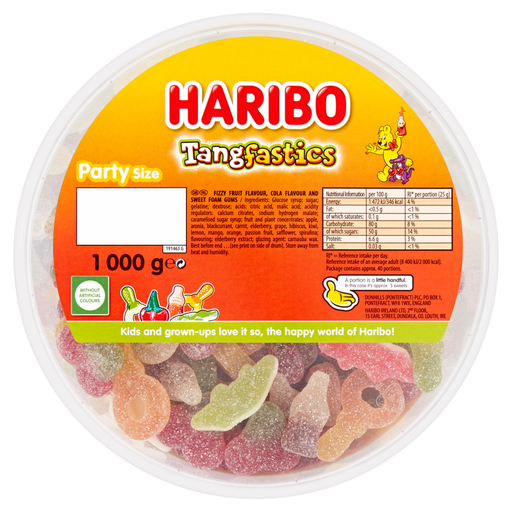 Image unavailable
HARIBO Tangfastics Fruit & Cola Fizzy Sweets, 1kg tub
The 1kg tub is a large-format option for sharing when gelatine is acceptable to the group. The product information lists gelatine, so check another sweet for vegan or vegetarian guests.
View on Joybuy
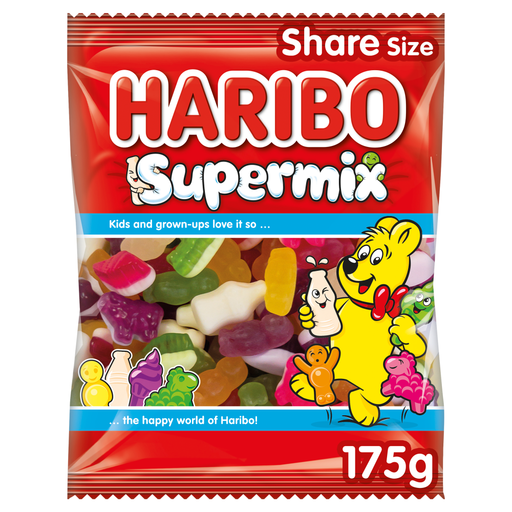 Image unavailable
HARIBO Supermix 175g
Consider this mixed-format bag if guests want varied shapes and textures and gelatine is acceptable. HARIBO lists gelatine in Supermix, so it is not a choice for vegan or vegetarian guests.
View on Joybuy
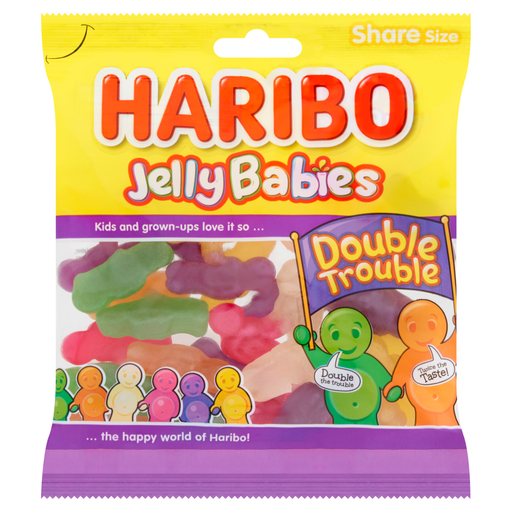 Image unavailable
HARIBO Jelly Babies Double Trouble, 175g sharing bag
The 175g sharing bag offers a fruit-flavoured jelly-sweet format. Its product information lists gelatine and flags possible wheat and milk traces; check the current pack against guests’ dietary and allergy needs.
View on Joybuy
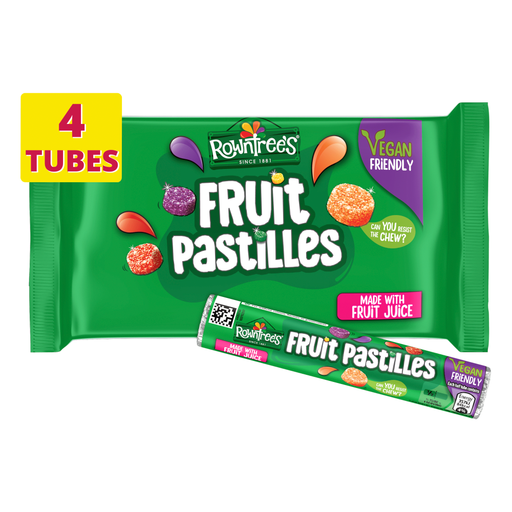 Image unavailable
Rowntree’s Fruit Pastilles, 4 × 41g
Four separate 41g packs offer a different sharing format from one open bag. The listing flags milk and possible traces of other allergens; confirm the current pack’s allergen wording and dietary status before buying for guests with specific requirements.
View on Joybuy
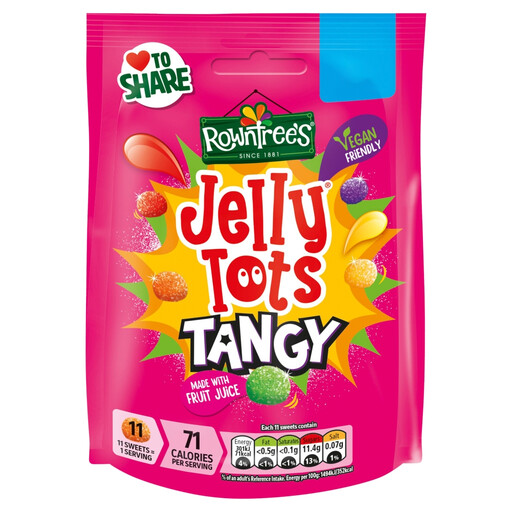 Image unavailable
Rowntree’s Jelly Tots Tangy 140g
The listing describes this tangy fruit-sweet variant as suitable for vegetarians. If guests require vegan sweets, confirm the dietary statement on this exact 140g pack rather than applying one from another Jelly Tots product.
View on Joybuy
Questions about movie-night sweets
Are all jelly sweets suitable for vegans or vegetarians?
No. HARIBO Supermix and ASDA Jelly Babies list gelatine, whereas Nestlé Confectionery describes its core Rowntree’s Jelly Tots range as vegan and ASDA labels Fruit Jellies suitable for vegans. Check the exact product, because suitability can differ within a brand.
Does a vegan label mean a sweet is suitable for someone with a milk allergy?
No. Marks & Spencer labels Percy Pig and Percy Pig & Pals vegan and vegetarian but states that they are not suitable for people with a milk allergy. Use the current pack’s allergen information for the particular product.
How should I store unopened sweets before movie night?
Follow the storage directions on the particular pack, including any instruction to keep it cool, dry and away from sunlight. Check those directions again if you are buying packs ahead of time.
What does a best-before date mean on packaged sweets?
A best-before date concerns quality rather than a use-by safety deadline. GOV.UK explains that food past its best-before date is usually safe to eat but may not have the same quality; check the label and that the product has been stored as directed.


