What matters when buying
For wild-caught tuna, assess sourcing claims separately from the format you need for meals. The concerns below describe distinct primary priorities for consumers stocking a pantry.
| Concern |
What to check |
Who this matters to |
| Organic wording |
Identify what an organic claim refers to, rather than treating general sourcing language as certification. For wild-caught fish, apply the Great Britain organic-standard distinction. |
I want to understand what an organic claim would cover before choosing a tin. About 31% of consumers put organic-label clarity first. |
| Fishery sourcing |
Look for an MSC label on the exact can, or check any stated catch method and product-specific traceability information. |
If provenance is my priority, a broad brand statement is less useful to me than a claim I can identify on the product. Fishery sourcing is the primary need for about 25% of consumers. |
| Pantry format |
Compare can count and drained quantity, then choose chunks or larger pieces and a packing liquid to suit the intended meals. |
When I stock up for several meals, I need a pack size and usable quantity that fit my plans. About 25% of consumers prioritise that pantry practicality. |
| Ingredients and nutrition |
Read the exact product’s ingredients, allergen statement and nutrition information, noting whether values refer to drained contents. |
If I am choosing between plain and flavoured tuna, I need to check what else is in the tin. Ingredients and nutrition come first for about 19% of consumers. |
Brands to consider
These brands and retailers provide useful label and format comparisons. Check the individual tuna product rather than assuming a claim applies across a range.
John West
Offers standard cans and no-drain tuna formats for shoppers comparing pack styles and product-level sourcing information.
- John West provides a can-tracker service, and names an MSC claim in the title of its No Drain Tuna Chunks in Spring Water MSC product.
- A claim on that product does not establish an MSC or organic claim for another John West tin.
Princes
Offers several canned-tuna formats, including chunks, steaks and drained products.
- Princes says it can trace its responsibly sourced canned fish to the original boat.
- Its company-level sourcing statement is not an organic designation or proof that a particular can carries an MSC label.
Tesco
Its tuna assortment offers own-label and branded formats to compare for pantry meals.
- Tesco product listings can show pack quantities and a drained-weight basis for comparing usable amounts.
- An MSC claim on one listing should not be extended to another product or read as an organic claim.
Sainsbury's
An own-label route for shoppers interested in stated fishery certification and catch methods.
- Sainsbury's said in 2023 that its own-label canned tuna was MSC-certified and pole-and-line caught; its Dill & Pickle Tuna listing also makes product-specific claims about its skipjack tuna.
- Check the current can for the claims that matter to you, rather than relying on a past range-wide statement.
Asda
Its tuna category includes branded products that can be assessed individually for format and sourcing claims.
- An Asda listing identifies a specific John West Tuna Chunks in Spring Water MSC product, showing where to look for an exact-product claim.
- That branded listing does not establish a sourcing claim for Asda’s other tuna products.
M&S
Provides product-level information for shoppers comparing ingredients, storage and stated catch methods.
- M&S describes its Tuna Chunks in Spring Water as pole-and-line caught and publishes ingredients and post-opening storage instructions for that product.
- Its broader seafood sourcing standard does not make wild-caught tuna organic; assess each can’s own claims.
Tinned tuna on Joybuy
These are brine and spring-water tuna formats for everyday pantry meals, including single cans and multipacks. If a particular sourcing claim is central to your choice, check the exact can before buying.
 No image available
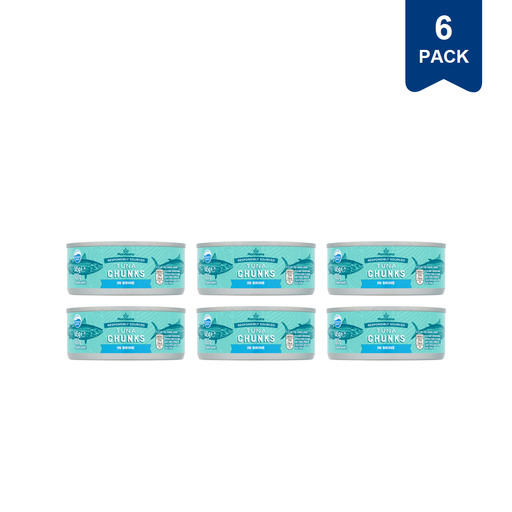
Morrisons Fad Free Tuna Chunks in Brine 145g, six-pack
Consider this six-pack if you use tuna chunks in mixed meals and prefer brine. Check the drained weight when planning portions, and inspect the cans for any fishery claim you specifically require.
View on Joybuy
 No image available
Morrisons Fad Free Tuna Chunks in Spring Water 145g, six-pack
This six-pack is an option for meals calling for tuna chunks packed in spring water. Use the can’s drained weight and nutrition panel for your comparison, and check its label if certification or catch method matters.
View on Joybuy
 No image available
John West Tuna Chunks in Springwater, 4 × 125g
The four-can format may suit meals spread across several occasions. Fishing-area information, where shown on the can, answers a different question from MSC certification or catch method; check the exact label for the claim you want.
View on Joybuy
 No image available
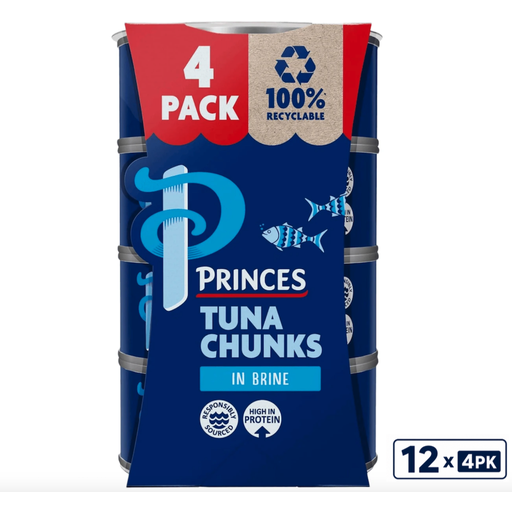
Princes Tuna Chunks in Brine, 4 × 145g × 12 packs
Consider the stated multipack quantity only if it fits your storage space and meal plans. Check the exact pack’s drained quantity and sourcing claims; Princes’ general traceability statement is not a substitute for a product-specific label.
View on Joybuy
 No image available
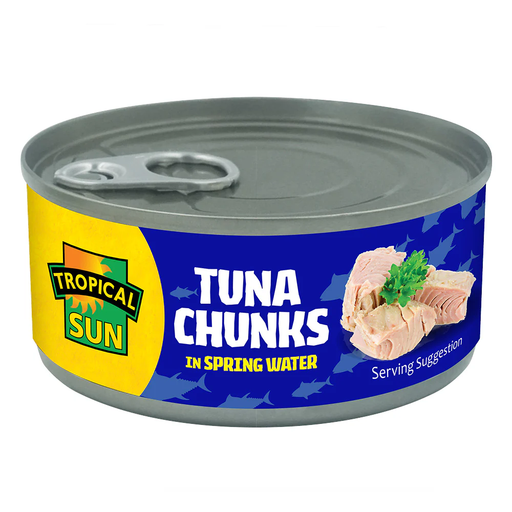
Topical Sun Tuna Chunks in Springwater 160g
A single-can option if you do not need a multipack. Check its drained weight and the current ingredients and allergen statement on the can, particularly if wheat or soya is a concern.
View on Joybuy
Questions about labels and storage
Can wild-caught tinned tuna be sold as organic in Great Britain?
No. Soil Association Certification’s Great Britain organic standards state that products from fishing wild animals cannot be sold as organic. For ordinary wild-caught tuna, assess any fishery-sourcing claims separately instead of treating them as an organic designation.
Can a food containing tuna carry an organic claim?
An organic claim for a food must meet the applicable organic production and labelling rules; it does not make wild-caught tuna itself organic. GOV.UK states that a food product labelled organic must have at least 95% organic agricultural ingredients. Check what the claim refers to on a composite product.
Does MSC mean the tuna is organic?
No. An MSC label identifies a fishery-certification claim, not organic certification. Look for it on the specific can if that sourcing standard matters to you.
How should I store tuna after opening a can?
Follow that product’s storage instructions. For its Tuna Chunks in Spring Water, M&S instructs shoppers to transfer unused contents to a non-metallic container, refrigerate them and eat them within two days; another product may give different instructions.
Does a sourcing label change the pregnancy guidance for tuna?
No. NHS pregnancy guidance says not to eat more than four cans or two tuna steaks a week because tuna can contain pollutants including mercury. Count tuna across the week regardless of any organic or fishery-sourcing wording.


