
24/7 Customer Support

Free returns

Same-day & Next-day Delivery

Quality Guaranteed

Unlock Your Welcome Offers: FREE Delivery | Up to 80% OFF | Free 30-day JoyPlus trial
Download the APP
Cutting skirting, cable trunking or PVC trim by hand can quickly become frustrating when the angle is slightly wrong. Gaps at the corners, crushed edges and blunt blades can turn a straightforward decorating job into wasted material and extra finishing work. The right multi-angle mitre shears can make repeatable cuts easier, but product listings often leave out details that matter in real UK homes and workspaces.
Before buying a mitre shears cutter, look beyond phrases such as “professional quality” or “multi-purpose”. The important questions are: what materials can it cut, how accurately can the angle be set, and can the blade be replaced when it becomes dull?
Multi-angle shears are generally intended for softer materials, not metal, ceramic, hardwood or thick structural components. A tool may be described as a PVC cutting tool, yet still be unsuitable for dense or oversized sections.
Check the stated applications carefully. PVC strips, cable ducts, rubber seals, weatherstripping, soft wood and some moulding materials are commonly listed for this type of tool. Always compare the material thickness and hardness with the manufacturer’s instructions.
An engraved scale does not automatically guarantee a clean joint. The scale should be easy to read, the angle slider should hold its position and the blade should meet the material evenly. A loose guide can create inconsistent cuts, particularly when producing several corners for a room.
A built-in stop at 45 degrees is useful for common mitre joints, while a broader adjustment range can help with unusual corners, bevels and installation work.
Even a sharp blade will eventually need maintenance. Cutting abrasive PVC, adhesive-backed trim or synthetic materials can accelerate wear. Some low-cost listings offer no replacement blade or make the spare part difficult to identify.
A model supplied with spare blades provides a more practical ownership setup. Look for SK5 steel or another clearly specified blade material, rather than relying only on terms such as “ultra-sharp”.
For general decorating and installation work, an adjustable range of 45 to 135 degrees covers many common applications. This includes skirting board joints, moulding, cable trunking and angled trim around frames or floor transitions.
However, angle range alone is not enough. Check whether the tool has:
If you regularly work around non-standard corners, an adjustable 45 to 135 degree shear offers more flexibility than a fixed-angle cutter.
A hardened SK5 steel blade is a practical specification for soft-material cutting. It should be kept clean and dry, and replaced if chipped, damaged or too blunt to cut without excessive force.
Handles also affect control. Aluminium alloy can keep the tool relatively manageable, while steel may provide a more substantial feel. A non-slip PPC, PVC or similar grip is useful when working in a cold garage, on a building site or during longer installation sessions.
Do not assume that a large angle scale means a large cutting capacity. Some extended models state a maximum cutting diameter of 6.8 cm, while more compact designs may suit narrower trim only.
Measure the widest part of your skirting, trunking, gasket or moulding before ordering. Forcing material into an undersized cutter can damage both the edge and the tool.
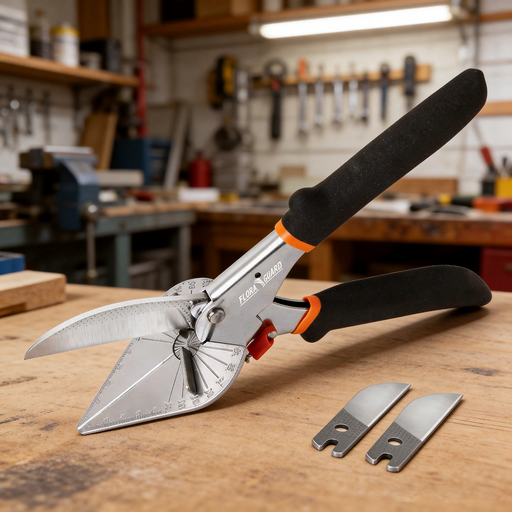
Why This Fits Their Persona: A practical choice for occasional skirting, PVC and home decorating projects where you want one adaptable hand tool rather than several specialist cutters.
The listing specifies a 45° to 135° range, a rotating safety lock and two spare SK5 blades, addressing angle coverage and future blade wear.
Aluminium alloy handle, non-slip PPC cover and compatibility with soft wood, plastic, PVC, rubber seals and mouldings.
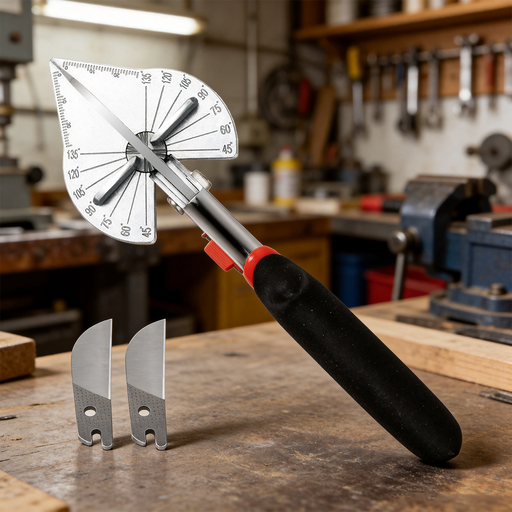
Why This Fits Their Persona: Suits installers, decorators and tradespeople who want a stated capacity and a tool designed for repeated trim and trunking work.
Its specifications identify the SK5 blade, 45° to 135° adjustment, replacement blades and a rotating safety lock rather than leaving key details vague.
Aluminium alloy handle with non-slip PPC coating; listed for PVC strips, rubber seals, mouldings and weatherstripping.
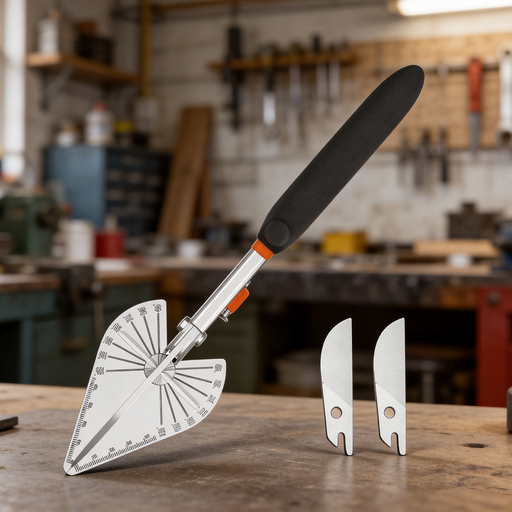
Why This Fits Their Persona: The extended format is suited to larger trim sections and installation tasks where compact angle cutting shears may not provide enough clearance.
The listing states a maximum cutting diameter of 6.8 cm, so buyers can compare the tool with their material before purchase.
45° to 135° scale, SK5 stainless steel blade, non-slip handle and rotating safety lock.
Mark the required angle on a scrap piece before cutting finished material. Support the trim close to the blade, keep fingers outside the cutting path and wear suitable eye protection. For particularly sharp blades, cut-resistant gloves may provide additional protection, but they should not replace careful hand positioning.
After use, brush away fragments, wipe the blade dry and apply occasional light lubricant to the pivot if recommended. Engage the safety lock before storing the tool, particularly in homes with children. Do not use a moulding cutter on material outside its stated capacity or on hard metal.
We have compiled a complete, real-time list of products that fully satisfy these strict selection criteria and UK safety regulations.
They can be suitable for certain soft or thin skirting materials, particularly PVC, plastic or soft wood. Measure the board first and check the stated maximum size. Dense hardwood skirting may require a hand saw and mitre box instead.
Blade life depends on the material, thickness, cutting frequency and storage conditions. Clean cuts on soft trim create less wear than abrasive or adhesive-backed materials. Replace a blade when it becomes dull, chipped or requires excessive force.