
24/7 Customer Support

Free returns

Same-day & Next-day Delivery

Quality Guaranteed

Unlock Your Welcome Offers: FREE Delivery | Up to 80% OFF | Free 30-day JoyPlus trial
Download the APP
Cutting skirting, moulding, cable duct or rubber seals at a clean angle can be difficult with a general-purpose knife or saw. Multi-angle mitre shears are designed for controlled cuts in many soft materials, helping DIY enthusiasts, installers and maintenance professionals create neat joints without setting up a mitre saw for every small task.
However, product listings can make similar-looking tools seem interchangeable. The practical differences are usually found in the blade, adjustment system, cutting capacity and replacement parts.
A product may advertise a broad range such as 45 to 135 degrees, but the scale and slider determine how easily you can set a repeatable angle. A vague printed line or loose adjustment mechanism can lead to inconsistent cuts, particularly when fitting multiple lengths of skirting or trunking.
Look for clearly marked angle settings, a firm guide or stop and a mechanism that does not move while pressure is applied.
Mitre shears for trim are generally intended for soft wood, PVC, plastic, rubber seals, moulding and similar materials. They are not a replacement for metal snips, a saw or heavy-duty cutters for hardwood.
A blade may be made from SK5 steel, but this describes the material rather than unlimited cutting ability. Always compare the intended material and maximum diameter with your project. Forcing a tool through hard or oversized stock can damage the edge, distort the workpiece or create a safety hazard.
Even suitable blades eventually become dull, especially when cutting abrasive plastic or repeated lengths of flooring trim. A tool that includes spare blades can reduce interruption and running costs.
Also check for a safety lock, dry storage guidance and access to replacement blades. A sharp blade should be protected when the tool is carried in a toolbox or stored at home.
SK5 steel blades are commonly specified for multi-angle trim cutters because they are intended for sharp cutting edges and regular use on suitable soft materials. The more important question is whether the blade is replaceable and whether spare blades are included.
A replaceable blade design can be useful for electricians cutting cable ducts, flooring installers trimming PVC profiles and DIY users completing several rooms. Keep the blade clean and dry, inspect it regularly and replace it if it becomes chipped or difficult to control.
For most trim projects, a 45-degree stop is useful for creating common mitre joints. A wider adjustment range from 45 to 135 degrees provides more flexibility for internal and external corners, angled moulding and unusual profiles.
An engraved scale with an adjustable slider is easier to use than estimating an angle by eye. Nevertheless, make a test cut on an offcut before cutting the finished piece, as the profile and orientation of the material affect the joint.
Capacity should be checked against the actual width or diameter of the item. One extendable model listed below specifies a maximum cutting diameter of 6.8 cm. This does not mean every shape of 6.8 cm material will cut identically; thicker or denser sections may require more hand pressure.
A steel or aluminium alloy handle with a non-slip coating can improve control. For repeated work, an extendable handle may provide additional leverage, although a compact model can be easier to store and manoeuvre in tight corners.
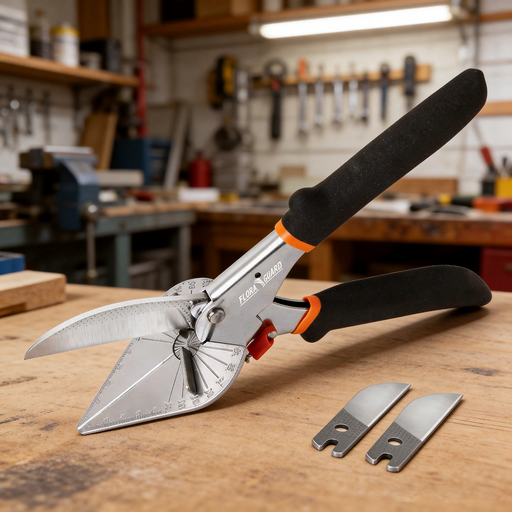
Why This Fits Their Persona: A practical option for occasional home projects involving skirting, PVC trim, soft wood and rubber seals.
It specifies a 45° to 135° adjustment range, an engraved scale, two spare blades and a rotating safety lock.
Replaceable SK5 steel blades; non-slip PPC-covered aluminium alloy handle.
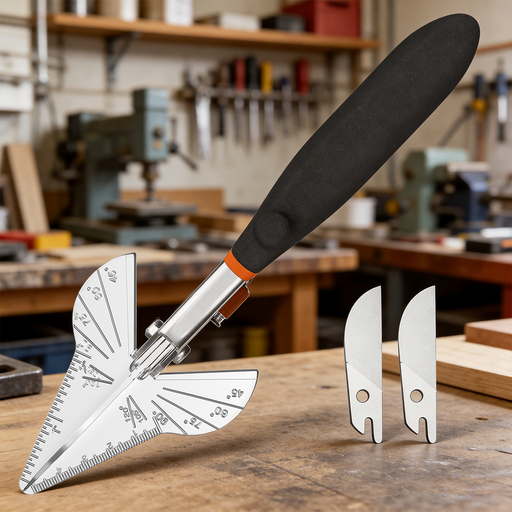
Why This Fits Their Persona: Suited to buyers who want a clearly specified hand tool for recurring trim, vinyl, MDF and cable duct work.
The product description identifies angle markings, a built-in 45° stop and two replacement blades rather than relying only on broad marketing language.
Hardened SK5 stainless steel blade; marked settings from 45° to 135°.
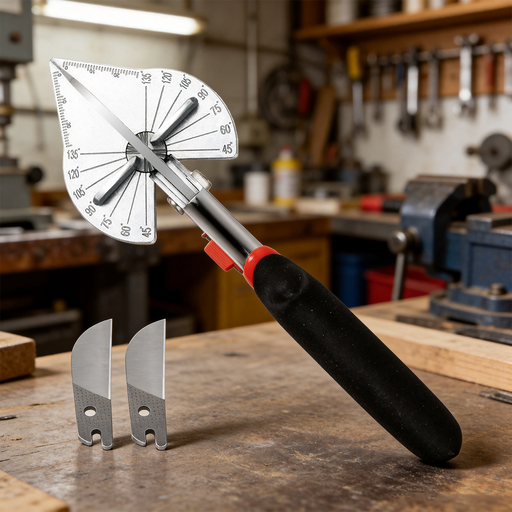
Why This Fits Their Persona: The extendable design is suited to installers and tradespeople handling wider profiles, cable ducts, weatherstripping and repeated renovation work.
The stated 6.8 cm maximum cutting diameter helps buyers compare capacity before purchase, while the safety lock supports secure storage.
45° to 135° adjustment; aluminium alloy handle with non-slip PPC coating.
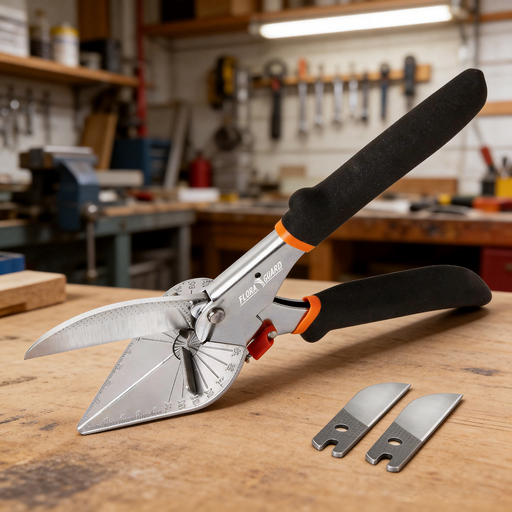
Why This Fits Their Persona: A lengthened multi-angle trim cutter can suit users who make frequent cuts and want additional handle reach for suitable soft materials.
It combines a specified adjustment range with spare blades, so the purchase is not dependent on a permanently fixed or non-serviceable edge.
Two replacement SK5 steel blades; rotating safety lock and non-slip handle cover.
Before cutting, secure the workpiece on a stable surface and confirm that the blade path is clear. Wear suitable eye protection and gloves where appropriate, while keeping fingers away from the cutting edge. Use the tool only for the materials and capacity stated by the supplier.
For workplace use, employers should consider relevant UK duties for work equipment, safe systems of work and personal protective equipment. Keep the tool dry, wipe the blade after use and engage the lock before placing it in a toolbox. A clean, sharp blade generally requires less force than a neglected one.
We have compiled a complete, real-time list of products that fully satisfy these strict selection criteria and UK safety regulations.
They can be suitable for soft wood, PVC skirting and moulding, provided the material fits the tool’s stated capacity. Check the profile width and density first. Hardwood skirting or thick engineered boards may require a saw or powered cutting tool instead.
A 45° setting is commonly used for joining trim at a right-angle corner. Settings above 90°, up to 135°, can help with external corners, angled profiles and specialised installations. Use the scale as a starting point and test the joint on scrap material.
There is no universal lifespan. Frequency of use, material density, grit and cutting technique all affect wear. Replace the blade when cuts become ragged, excessive force is needed or the edge shows damage. Using spare blades and storing them dry can help maintain predictable results.