
24/7 Customer Support

Free returns

Same-day & Next-day Delivery

Quality Guaranteed

Unlock Your Welcome Offers: FREE Delivery | Up to 80% OFF | Free 30-day JoyPlus trial
Download the APP
Cutting skirting, cable ducting or rubber weatherstripping by hand can produce untidy edges, crushed profiles and wasted material. A suitable pair of multi-angle mitre shears can make repeatable angled cuts without setting up a powered saw, but not every adjustable cutter is suitable for every job.
Before buying, UK DIY users and tradespeople should look beyond the number of angle markings on the handle. Blade quality, material capacity and replacement parts have a greater effect on whether a tool remains useful after regular installation work.
Some mitre shears show several angle markings but offer limited adjustment or awkward stops. If your work involves external corners, bevels or unusual profiles, a fixed 45-degree position may not be enough. Look for a clearly engraved scale and an adjustable slider that can be locked securely.
A cutter offering 45 to 135 degrees of adjustment provides more flexibility for trim, moulding, cable ducts and non-standard joints. However, the scale should still be easy to read while positioning the workpiece.
A sharp blade does not automatically mean the tool can cut thick PVC, wide trunking or large softwood sections. Overloading a trim cutter may damage the edge, distort the material or make the handles difficult to close.
Check the stated maximum diameter or profile size. For example, some extendable designs specify capacity up to 6.8 cm, while more compact tools may be intended for narrower strips, seals and mouldings.
Low-cost shears can become poor value if replacement blades are unavailable. For regular work, confirm whether the product includes SK5 replacement blades and whether the blade can be changed without replacing the complete tool.
Also check the intended materials. These tools are generally designed for soft materials such as PVC, plastic, rubber seals, weatherstripping, softwood and synthetic trim. They should not be treated as metal cutters or substitutes for a saw designed for hardwood.
For general home improvement, a built-in 45-degree stop is useful for common mitre joints. A wider adjustment range, such as 45° to 135°, is more suitable when fitting cable ducting, angled trim or rounded profiles.
A high-precision engraved scale helps with repeatability, while a sliding guide can support consistent positioning. For professional installation, assess whether the slider locks firmly and whether the markings remain visible when the tool is held at the working angle.
SK5 steel is commonly used for hand-tool blades because it is designed for hardness and edge retention in cutting applications. Product descriptions may refer to SK5 steel or SK5 stainless steel; buyers should still keep the blades clean and dry and inspect them for chips or dullness.
Replaceable blades are particularly valuable for flooring installers, electricians and carpenters who make repeated cuts. A spare set also reduces disruption during a job. Avoid using a dull blade with extra force, as this can reduce control and crush soft profiles.
An aluminium-alloy handle with a non-slip PPC cover can provide a balance of rigidity and grip. Steel handles may feel more substantial, although the overall weight and handle travel matter during extended use.
Extendable handles can offer additional leverage and a wider cutting capacity. A rotating safety lock is also practical for storage, transport between jobs and reducing accidental blade exposure. Always follow the supplied instructions, keep fingers clear of the blade path and wear suitable gloves and eye protection where appropriate.
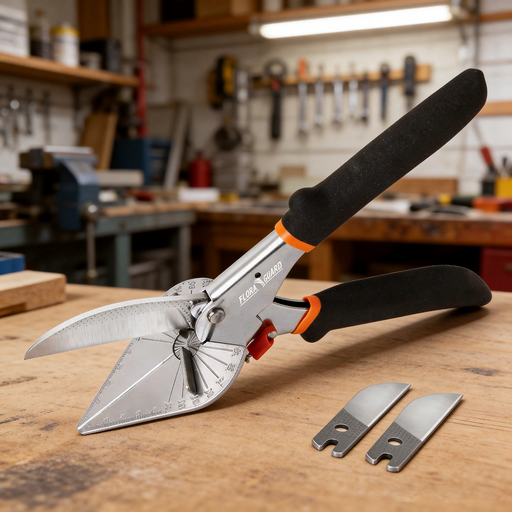
Why This Fits Their Persona: A practical option for occasional home projects involving PVC strips, rubber seals, softwood and moulding, without requiring a powered cutting set-up.
The 45° to 135° scale avoids relying on a single fixed angle, while two spare blades address the common replacement problem.
SK5 steel replaceable blades, aluminium-alloy handle, non-slip PPC cover and rotating safety lock.
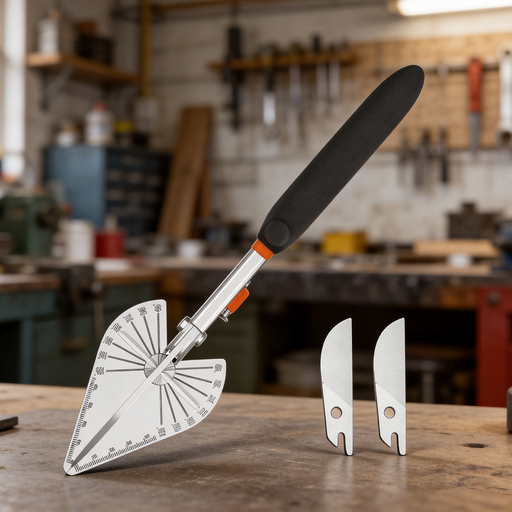
Why This Fits Their Persona: Suits users who want a wider cutting range and a more controlled grip for repeated trim, flooring or home-improvement work.
Its stated 6.8 cm maximum cutting diameter and adjustable scale make capacity clearer than relying on generic “multifunctional” wording.
45° to 135° adjustment, SK5 stainless steel blade, extendable design and aluminium-alloy handle with PPC coating.
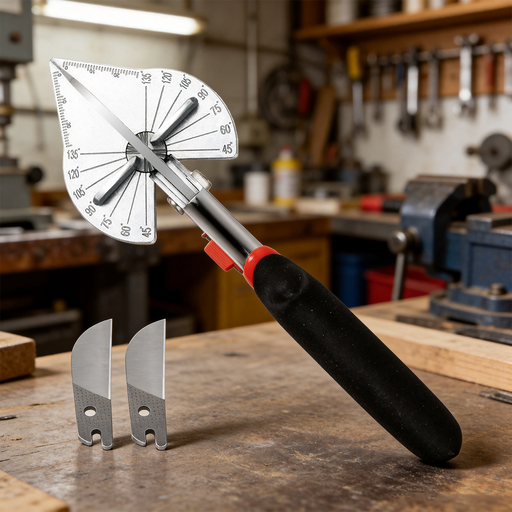
Why This Fits Their Persona: Designed for tradespeople, electricians and installers regularly cutting cable ducts, PVC, moulding, weatherstripping and other soft profiles.
The product specifies the materials and maximum diameter, helping users avoid applying a soft-material tool to hardwood or metal.
Extendable construction, 45° to 135° adjustment, non-slip handle and two SK5 replacement blades.
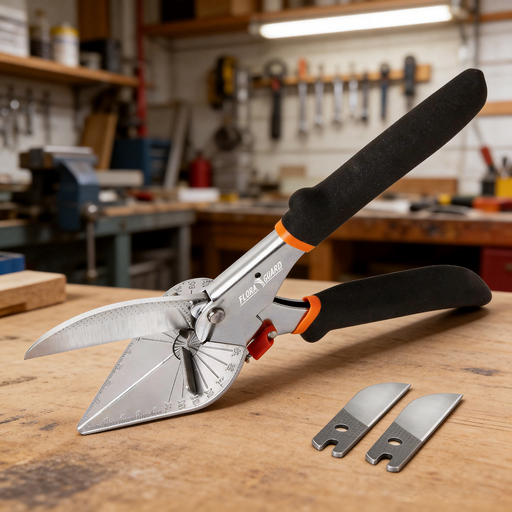
Why This Fits Their Persona: A useful match for DIY users handling several soft materials during one renovation, including plastic, PVC, softwood and rubber seals.
Two spare blades and a specified soft-material application reduce the risk of buying a tool that is difficult to maintain or incorrectly used.
Engraved 45° to 135° scale, aluminium-alloy handle, non-slip PPC cover and rotating safety lock.
We have compiled a complete, real-time list of products that fully satisfy these strict selection criteria and UK safety regulations.
Generally, no. These tools are intended for softwood and flexible materials such as PVC, plastic, rubber seals, cable ducting and trim. Hardwood, metal and thick rigid sections require a tool designed for those materials.
A built-in 45-degree position covers many standard mitre joints. If you work with unusual corners, cable ducts or varied moulding profiles, an adjustable range from 45° to 135° provides more positioning options. Always check that the scale and slider are easy to set accurately.
Blade life depends on the material, thickness, cutting frequency and storage conditions. Keeping the blade clean and dry, avoiding unsuitable materials and replacing it when dull can help maintain controlled cutting. Products supplied with spare SK5 replacement blades can be more practical for repeated DIY or trade use.