
24/7 Customer Support

Free returns

Same-day & Next-day Delivery

Quality Guaranteed

Unlock Your Welcome Offers: FREE Delivery | Up to 80% OFF | Free 30-day JoyPlus trial
Download the APP
Cutting skirting board, moulding, cable trunking or PVC strips by hand can quickly become frustrating when the tool slips, crushes the material or produces inconsistent angles. Multi-angle mitre shears are designed to make these jobs more controlled, but not every adjustable angle shear is suitable for every project.
Before buying, UK shoppers should look beyond phrases such as “professional”, “heavy duty” or “precision cutting”. The useful details are usually found in the blade material, angle range, cutting capacity and safety features.
A tool may advertise an adjustable range from 45 to 135 degrees, but the markings and slider need to be clear enough to set the desired angle repeatedly. An engraved scale, fixed stops and a stable adjustment mechanism are more useful than a large number printed on the packaging.
For skirting and moulding, check whether the cutter supports the angles you regularly use, including 45°, 60°, 75°, 90°, 105° and 120°. Remember that cutting accuracy also depends on holding the workpiece firmly and measuring the correct face of the trim.
Mitre shears for trim are generally intended for softer materials. Depending on the model, this can include PVC, vinyl, rubber seals, weatherstripping, soft wood, cable ducts and selected synthetic materials. They are not a substitute for a saw or metal-cutting tool.
A blade labelled SK5 steel or SK5 stainless steel can offer a practical balance of hardness and edge retention, but it does not make the tool suitable for hardwood, metal or materials above its stated capacity. Always check the product instructions before cutting.
A long handle may provide more leverage, while an extendable design can accommodate wider profiles. However, capacity figures must be treated as limits rather than targets. One listed model supports materials up to 6.8 cm in diameter, but the actual result will depend on the shape, density and position of the material.
A non-slip coating, comfortable grip and safety lock are particularly useful for installers and tradespeople who use trunking shears repeatedly. Do not apply excessive force if the blade is struggling; doing so can damage the cutting edge or cause the material to move unexpectedly.
For regular DIY and installation work, look for a replaceable SK5 blade. Replacement blades can extend the useful service life of the handle assembly and help maintain cleaner cuts. Inspect blades for chips, rust or dull sections and replace them when required.
Some mitre shears include spare blades, while others require a separate purchase. It is sensible to check availability before ordering, particularly if the tool will be used for flooring, trim installation or repeated PVC cutting.
A multi-angle trim cutter should have a clearly marked scale and a slider or stop that stays in place during use. A range of 45° to 135° covers many common bevel, corner and trim applications. For occasional jobs, a simpler built-in 45° stop may be sufficient.
Aluminium alloy handles can provide a relatively light structure, while steel handles may feel more rigid. PPC or PVC non-slip coatings can improve grip. Compare the stated capacity with the width and profile of your moulding, skirting or cable duct rather than relying on general product labels.
For cardboard, fabric, foam board and packaging, a snap-off cutter knife may be more appropriate. An 18 mm SK5 replacement blade is suited to many general-purpose cutting tasks, but it requires different handling and does not provide the controlled angle setting of mitre shears.
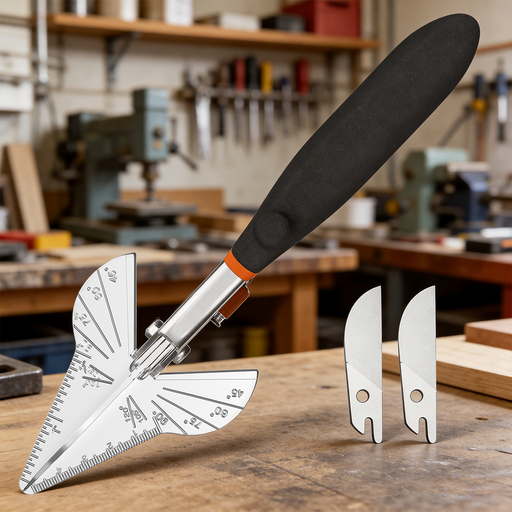
Why This Fits Their Persona: A practical choice for occasional home projects involving vinyl, PVC, skirting, cable ducts and other softer trim materials.
The tool has clear angle markings, a built-in 45° stop and two included SK5 replacement blades, helping buyers avoid an unclear scale or unavailable spare-blade issue.
45°–135° adjustment; steel handle with non-slip PVC coating; includes two replacement blades.
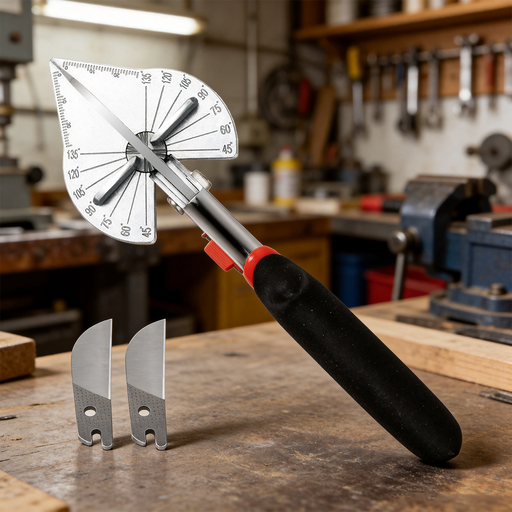
Why This Fits Their Persona: Suitable for renovators and installers who want an extendable tool for repeated trim, PVC and cable-duct work.
Its engraved scale and adjustable slider make the angle setting more visible, while the rotating safety lock supports safer storage between jobs.
45°–135° range; stated maximum cutting diameter of 6.8 cm; aluminium alloy handle with non-slip PPC coating.
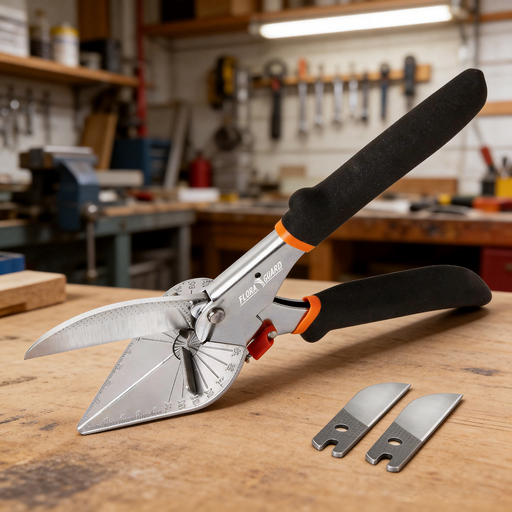
Why This Fits Their Persona: The lengthened format suits installers, flooring workers and renovators handling repeated cuts in soft wood, PVC, rubber seals and moulding.
The product information clearly limits use to softer materials and includes a rotating safety lock, reducing the risk of treating it as a general-purpose hard-material cutter.
Aluminium alloy handle; 45°–135° scale; two spare SK5 blades included.
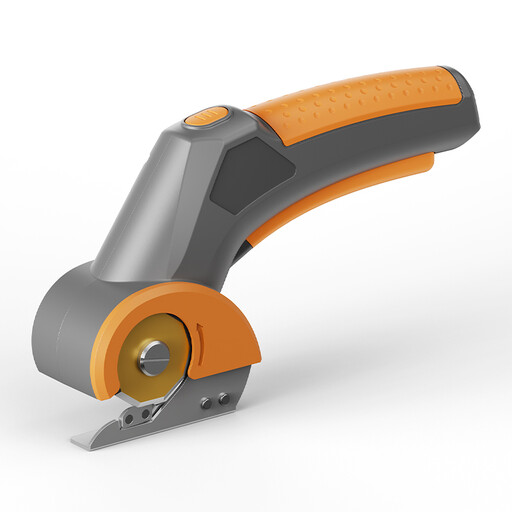
Why This Fits Their Persona: A rechargeable option for crafters and packaging users cutting cardboard, carpet, leather, felt and selected plastic materials without a mains cable.
The stated battery, charging and material information helps buyers compare running convenience with the limits of a cordless rotary cutter.
4V rechargeable battery; USB-C charging; supplied dust bag and spare blade.
We have compiled a complete, real-time list of products that fully satisfy these strict selection criteria and UK safety regulations.
For cardboard and packaging, a snap-off cutter knife may be more suitable. The WORKPRO 18 mm set includes three knives and ten SK5 snap-off blades, while a separate pack of 100 replacement blades can support regular workshop use. For men looking specifically for a rechargeable nose and facial hair trimmer, a grooming device such as the Sparoma 3-in-1 uses interchangeable heads and USB-C charging; it should not be confused with a material-cutting tool.
They can be suitable for certain soft skirting, PVC, vinyl and trim profiles, provided the material remains within the manufacturer’s stated capacity. Check the product instructions before cutting wood, as hardwood and thick sections may require a saw or dedicated moulding cutter.
Use the correct material, avoid excessive force and keep the blade clean and dry. Replace a dull, chipped or damaged blade rather than continuing to press harder. A clear angle scale and secure workpiece also help produce more consistent results.
Running cost depends on charging frequency, battery life and blade replacement. Rechargeable scissors can reduce hand effort for repeated fabric, cardboard or felt cutting, but manual mitre shears do not require charging. Select according to the material and volume of work rather than battery capacity alone.