What matters when choosing portable power?
UPS
Choose it when: One plugged-in device needs to stay on through a brief interruption.
Trade-off: Its runtime at your actual load, rather than its backup label or VA rating alone, determines how long it can help.
USB-C power bank
Choose it when: Phones and tablets come first, or your laptop accepts the bank’s USB-C output.
Trade-off: It cannot be assumed to provide an AC outlet, meet every laptop’s charging requirements or cover repeated multi-device charging for days.
Portable power station
Choose it when: Several devices need repeated charging, particularly if an AC outlet is necessary.
Trade-off: A larger reserve takes more space and is still finite without a workable recharge plan.
For households keeping phones, tablets and laptops usable during a power cut, the primary need determines which specification deserves attention first.
| Concern |
What to check |
Who this matters to |
| Energy for repeated charging |
Add up planned device energy use and compare it with stated capacity in Wh, allowing for conversion losses. |
I need to recharge several devices over multiple days, so a reserve sized for just one phone charge will not cover my plan. Around 42% of consumers put sufficient multi-day energy first. |
| Laptop input and output power |
Confirm the laptop’s charging connection and required watts; check single-port and shared output ratings. |
If I rely on a laptop, the battery must work with its charging input even when other devices are connected. Laptop charging compatibility is the primary need for around 25% of consumers. |
| Brief interruption protection |
For a UPS, compare runtime at your load and socket type; for a station’s UPS-style function, check which outlets it covers. |
I want one connected device to stay on when the power drops, rather than simply having a battery available to plug in afterwards. Around 17% of consumers prioritise that immediate continuity. |
| Recharging and safe ownership |
Check any proposed panel against the station’s solar-input limits and connector, and follow the product’s charging and storage instructions. |
My reserve needs a practical way to be replenished and handled safely during a prolonged cut. Keeping it rechargeable and safe is the first concern for around 16% of consumers. |
Brands to consider for portable power
These examples illustrate different product lines and checks; a brand’s specifications apply to the named model, not every product it makes.
Anker
A reference point for USB power banks when phones, tablets or a compatible USB-C laptop are the priority.
- Anker UK lists its A1383 power bank at 20,000mAh, with 87W shared output and up to 65W to one device.
- Those figures do not establish compatibility with every laptop. Check the exact model and serial number against applicable recall notices.
EcoFlow
A portable-station and solar-accessory line to examine when both USB and AC connections or a compatible solar recharge option matter.
- EcoFlow UK lists USB and AC outlets for the RIVER 3 Plus and says its capacity can be expanded up to 858Wh.
- EcoFlow’s stated automatic switching time and solar charging examples are model- and condition-specific; confirm the exact station’s inputs, connectors and required runtime.
Jackery
A portable-station option for a charging plan that calls for roughly 1kWh of stated storage and AC output.
- Jackery’s UK Explorer 1000 v2 listing states 1070Wh capacity and 1500W output.
- Its stated capacity is not a device-specific runtime: connected load, conversion losses and opportunities to recharge still matter.
BLUETTI
A portable-station line to consider when a calculated multi-device plan calls for a larger stated reserve and several connection types.
- BLUETTI UK lists the AC180P at 1440Wh, with 1800W continuous AC output and USB, AC and 12V connections.
- The same model is listed at about 16kg, so consider where it would be stored and how it would be moved during an outage.
Portable power options on Joybuy
These power stations and power banks address different parts of a personal-device charging plan. Compare their stated capacity and outputs with your own devices; a portable battery does not replace checking runtime or arranging a way to recharge it.
 No image available
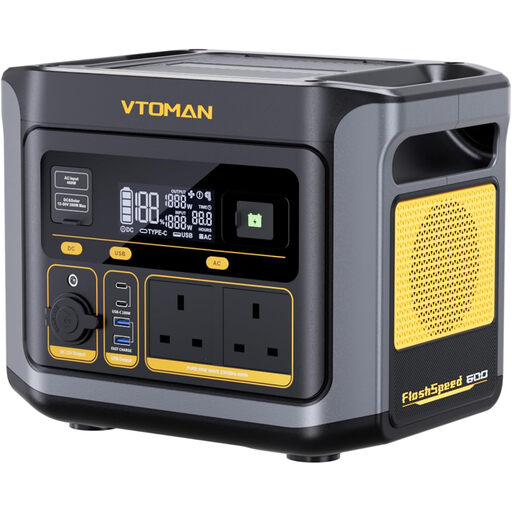
VTOMAN FlashSpeed 600 Portable Power Station, 499Wh
Consider this station if your charging plan needs USB-C and AC connections as well as a stated battery reserve. Its title specifies 499Wh capacity, 600W output, 1200W peak output, a 100W USB-C connection and 230V AC. Allow for conversion losses when planning runtime; if solar charging matters, check the compatible panel connection and input limits.
Joybuy
 No image available
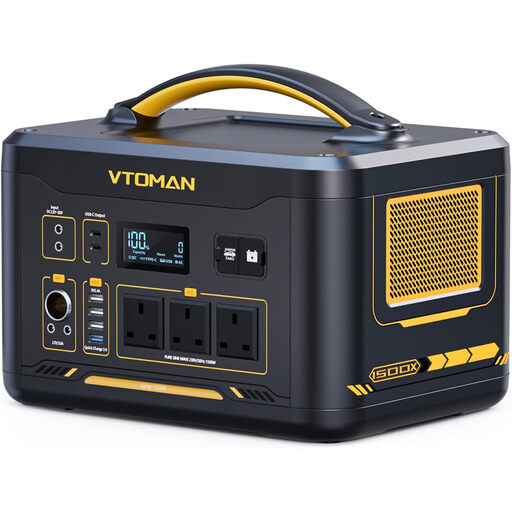
VTOMAN Jump1500X Portable Power Station, 828Wh
Consider its stated reserve for a plan involving repeated personal-device charging and an AC-powered laptop charger. The title specifies 828Wh capacity, 1500W AC output and 100W USB-C output. Expansion to 2376Wh requires a compatible expansion battery; check whether that battery is included before planning around the expanded figure.
Joybuy
 No image available
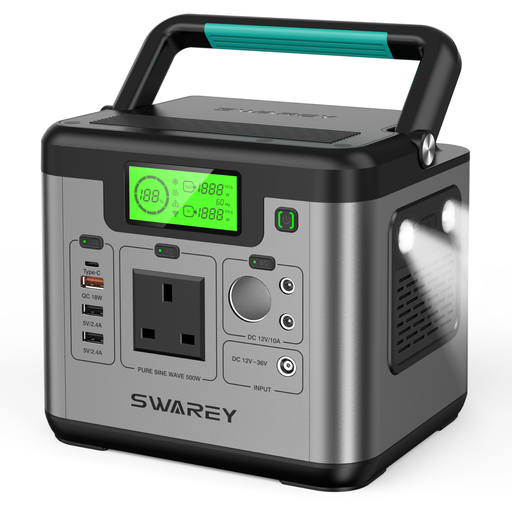
S500 Portable Power Station, 518Wh
This station is an option to assess when your devices need both an AC connection and USB-C charging. Its title states 518Wh capacity, 500W rated AC output, 1000W peak output and 65W USB-C output. Confirm that the laptop accepts the USB-C connection you intend to use, and check solar-input compatibility before adding a panel.
Joybuy
 No image available
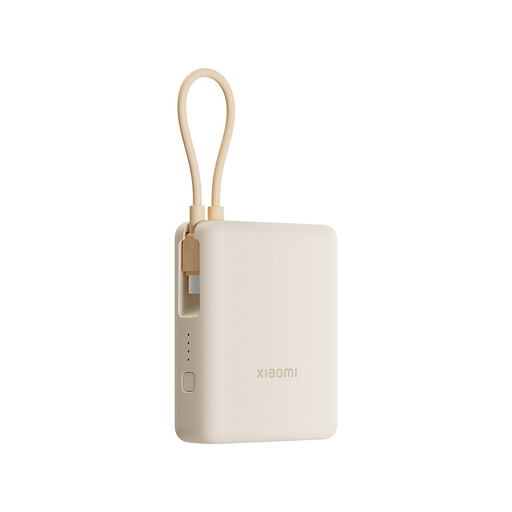
Xiaomi 33W Power Bank, 10,000mAh, Integrated Cable, Tan
Consider this compact power bank when phone or tablet charging is the priority. Its title specifies 10,000mAh capacity, 33W output and an integrated cable. The mAh figure is not a promise of a particular number of recharges; check your device’s charging connection and requirements.
Joybuy
 No image available
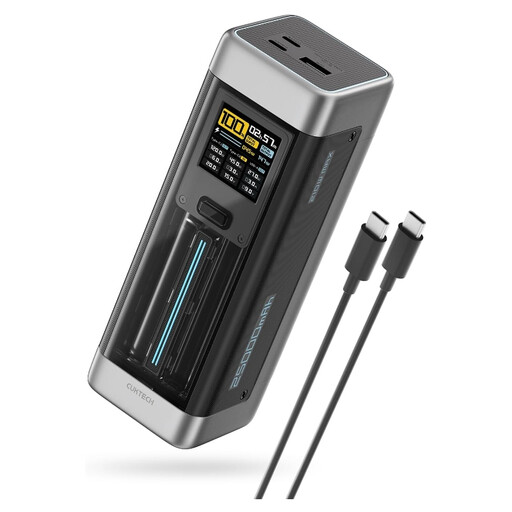
CUKTECH NO.20 P23 Power Bank, 25,000mAh, Gray
Assess this USB-C power bank if laptop charging without an AC outlet is part of your plan. Its title specifies 25,000mAh capacity, 140W USB-C output and three ports. Confirm the laptop’s accepted charging input, use an appropriately rated cable and check how output is shared when several ports are in use.
Joybuy
Questions about outage power
How much battery capacity do I need for phones, tablets and laptops?
Start with the energy each device needs between recharges and how often you expect to charge it, then add a margin for energy lost through USB or AC conversion. Compare the resulting plan with stated battery capacity in Wh where available, and separately confirm that the outputs have the right connections and enough watts for your devices.
Will a UPS keep my devices charged for several days?
Do not assume a UPS will cover several days: its main role here is keeping a connected device running through a brief interruption. Check the particular UPS’s runtime at your actual load; for repeated charging, assess a portable power station’s stored energy, outputs and recharge options instead.
Can a solar panel guarantee a recharge during a power cut?
No: solar charging depends on usable daylight and an electrically compatible station and panel. Check the station’s permitted solar voltage, current, input wattage and connector against the panel before buying; a manufacturer’s peak-sunlight charging example is not a guarantee of daily output.
How should I charge and store a portable battery safely?
Follow the product’s instructions, use its intended charging equipment and keep it away from heat, liquids and damage. Charge it uncovered in a ventilated place, avoid leaving a power bank charging overnight or in an empty home, and check recall information for the exact model and serial number.
What should I do with an old, damaged or recalled power bank?
Keep it out of household rubbish and ordinary recycling, and use an appropriate battery or electrical collection route. GOV.UK advises that lithium-battery terminals should ideally be taped before recycling; if a recall applies, follow the manufacturer’s instructions and stop using the product when directed.


