
24/7 Customer Support

Free returns

Same-day & Next-day Delivery

Quality Guaranteed

Unlock Your Welcome Offers: FREE Delivery | Up to 80% OFF | Free 30-day JoyPlus trial
Download the APP
A multi-device charger can simplify a bedside table, office desk or daily commute by powering several products from one socket. However, a high device count does not automatically mean better value. Some charging stations have limited output, awkward alignment or compatibility restrictions that only become obvious after purchase.
For UK households, commuters and frequent travellers, the right choice depends on the devices you own, the charging speeds they support and where the charger will be used.
A charger advertised as 65W, 100W or more may divide that power between several ports. When multiple devices are connected, each output can be lower than the headline figure. Check the per-port output and the power distribution table rather than relying only on total wattage.
A USB-C fast charger with Power Delivery (PD) may suit a phone, tablet or laptop, while a wireless station typically provides lower output for earbuds and smartwatches.
A 3-in-1 wireless charger may support a phone, TWS earbuds and a smartwatch, but the watch section can be designed specifically for Apple Watch models. Similarly, a MagSafe charging station may require a compatible magnetic phone or case, while many Android phones need a Qi-compatible case or magnetic ring.
Before buying, check:
Some charging stands include a cable but not a suitable mains adapter. Others require a PD or QC charger to reach their stated performance. A stand connected to a low-output adapter may charge slowly, particularly when all positions are occupied.
For high-output desktop charging, a GaN charger can provide several USB-C ports in a relatively compact body. For the car, check whether the charger supports your vehicle’s 12V or 24V power socket.
Qi-compatible products use inductive charging, but speed varies by device and charger. A Qi2 wireless charger is designed around improved magnetic alignment for compatible devices, which can help reduce misalignment during charging.
Magnetic alignment does not guarantee that every phone will charge. Thick, metal or poorly positioned cases can interfere with the connection. Look for stated compatibility rather than assuming that any magnetic phone will work.
For a stand that charges three devices, compare the individual figures. For example, a product may provide 15W for a phone, 5W for TWS earbuds and a lower dedicated output for a watch. These outputs are suitable for different device types and should not be compared directly with a laptop charger.
For wired charging, USB-C PD, QC and PPS are useful protocol references. Compatibility between the charger, cable and device determines the actual speed. A laptop may require considerably more power than a phone, so check the manufacturer’s recommended wattage.
A 5-in-1 wireless charging stand can reduce cable clutter, but confirm what its five charging positions actually comprise. Some combine wireless pads with USB-A ports, meaning not every device charges wirelessly.
Choose a charger with clearly stated protections such as over-current, over-voltage, short-circuit and temperature control. Look for complete product instructions and avoid using a damaged casing, unsuitable adapter or frayed cable.
Wireless chargers and mains adapters should be used in a dry, ventilated indoor area unless specifically designed for another environment. A motorcycle or in-car charger needs additional attention to mounting, moisture exposure and vehicle voltage.
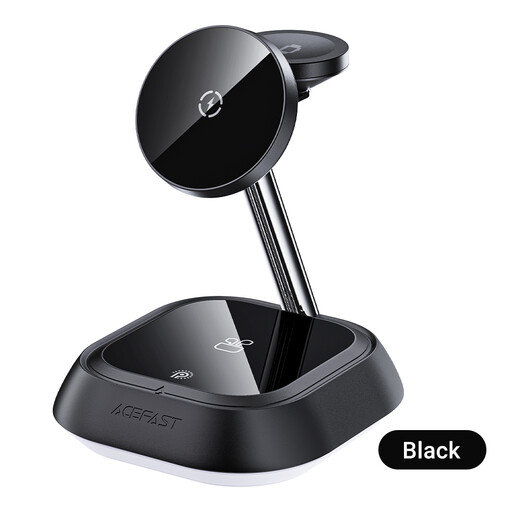
Why This Fits Their Persona: A straightforward option for users who want one home charging point for a wireless phone, TWS earbuds and an Apple Watch.
Its instructions specify the phone, earbuds and watch charging areas, helping users check device placement before purchase.
Three dedicated charging areas and a single USB-C input; suitable for a tidy bedside or desk setup.
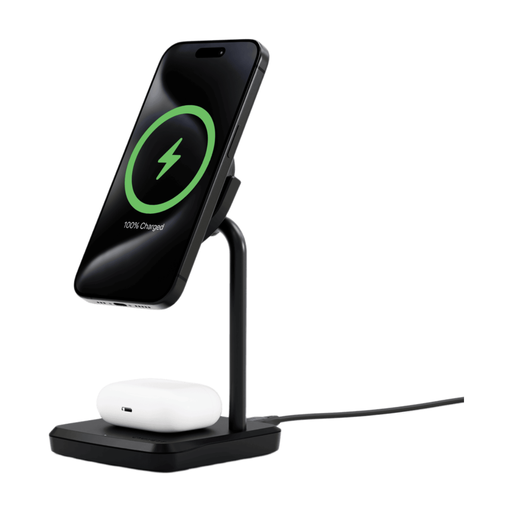
Why This Fits Their Persona: Suits an office or bedside user who values a stable, minimal setup for a phone and wireless earbuds.
The product details state 15W plus 5W wireless outputs and include a MagRing for selected older Qi devices, making the compatibility information clearer.
Qi2.0 support, an 80° swivel head, weighted non-slip base and a stated 20W total output.
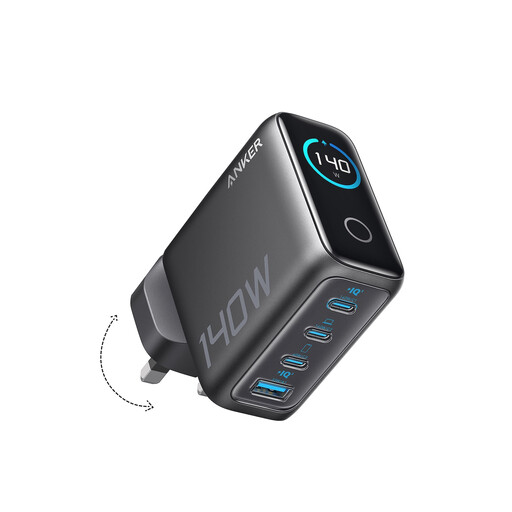
Why This Fits Their Persona: A practical match for professionals, students and travellers charging phones, tablets, laptops and other USB-C equipment from one compact unit.
Four ports and a stated power figure make it more suitable for wired multi-device use than a low-output wireless-only station.
Four-device charging, two high-speed USB-C ports, 140W maximum output and an integrated charging display.
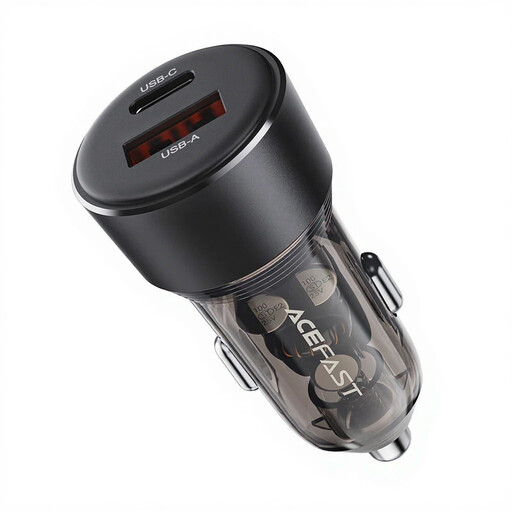
Why This Fits Their Persona: Useful for drivers who need a phone and another portable device charged from one car socket during regular UK journeys.
It states compatibility with 12–24V vehicles and identifies separate USB-C and USB-A outputs, helping buyers check socket and cable requirements.
60W total output, up to 30W per port and support for PD, QC, PPS, FCP, SCP and AFC protocols.
Different routines call for different accessories:
We have compiled a complete, real-time list of products that fully satisfy these strict selection criteria and UK safety regulations.
The electricity used depends mainly on the devices’ battery capacity, charging efficiency and how often they are charged. A multi-device charger may reduce standby clutter and the number of mains sockets in use, but it does not automatically use less energy. Unplug chargers when they are not needed and avoid leaving damaged or poorly ventilated equipment connected.
Usually, if the devices use a compatible wireless standard and fit the marked charging areas. However, smartwatch charging is often more restricted than phone or earbuds charging. Check the product’s compatibility list, case thickness guidance and required adapter before ordering.
Lifespan depends on heat exposure, cable quality, daily load and handling. Keep the unit dry and ventilated, do not cover it during use and replace cables showing damage. A charger with clear safety instructions, suitable output and a warranty gives you more practical protection than one selected solely by its port count.