
24/7 Customer Support

Free returns

Same-day & Next-day Delivery

Quality Guaranteed

Unlock Your Welcome Offers: FREE Delivery | Up to 80% OFF | Free 30-day JoyPlus trial
Download the APP
By Joybuy Product Recommendation Officer
Charging several devices should reduce clutter, not create another drawer full of incompatible plugs and unreliable cables. For UK households, commuters, remote workers and frequent travellers, the right multi-device charging accessories can power a phone, tablet, laptop, headphones and other essentials from fewer sockets.
However, product listings often focus on headline wattage while leaving important details unclear. Before buying a USB-C wall charger, 4-in-1 charging cable or car adaptor, check how the product will work with your actual devices and daily routine.
A charger labelled 100W may not deliver 100W to each connected device. Its total output may be shared between ports, and some ports may have different power limits. A 3-port USB charger is useful for simultaneous charging, but check the output distribution when using a laptop and phone together.
For example, a laptop may need more power than a phone, while a second device can reduce the available output. Look for clear information about USB-C Power Delivery, port ratings and total output rather than relying on the largest number in the title.
USB-C describes the connector shape, not the cable’s charging speed, data capability or power rating. A basic cable may charge a phone but be unsuitable for a laptop or gaming console. Similarly, a USB-C to Lightning cable is designed for devices with a Lightning port and cannot replace a USB-C cable for newer devices.
A cable advertised as supporting 240W still requires a compatible charger, device and charging standard. If any part of the setup has a lower rating, charging will operate at the lower supported level.
A wireless charging mount can be practical in a car, but the phone must support compatible wireless charging and the mount needs a stable installation. Magnetic alignment may also depend on the phone or case. A fast car charger must match the vehicle’s 12–24V input range and should be positioned without obstructing controls or visibility.
For UK use, also check the plug format, product safety information and seller details. Do not use a charger, cable or mount showing fraying, exposed wiring, unusual heat or physical damage.
For phones, a USB-C wall charger with USB Power Delivery can provide a convenient single charging point. A GaN fast charger is often more compact than conventional charger designs with similar output, making it suitable for a work bag or travel case.
Consider your combined requirements:
These figures are practical guidance rather than a guarantee of charging speed. The device, cable and charger must support the same relevant protocol.
A braided charging cable may resist everyday rubbing and bending more effectively than a thin, unreinforced cable, but construction alone does not make it indestructible. Avoid tight knots, sharp bends and pulling the cable by its wire.
Before purchasing, list the connectors you actually use:
Foldable plugs can reduce bulk in luggage, while a cable around 1.2m suits a desk or bedside table. A 2m cable can reach a sofa or rear car seat more comfortably, although excess length should be stored loosely.
For car use, check the charger’s input range, output arrangement and physical clearance. A compact fast car charger is less likely to interfere with nearby controls. For wireless mounts, confirm the mounting method, phone size compatibility and whether your case affects alignment.
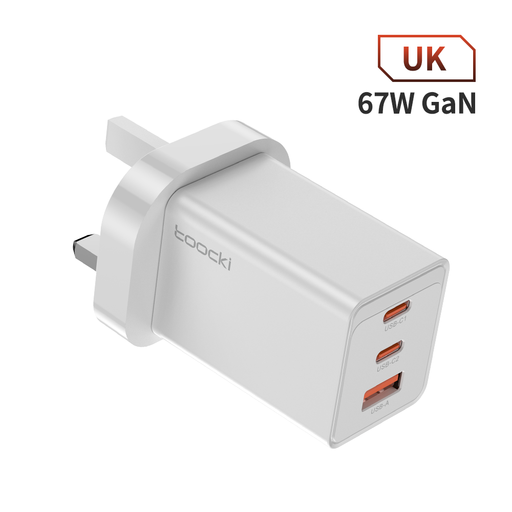
Why This Fits Their Persona: A practical starting point for households that need one compact charger for phones, tablets and selected laptops.
The three-port layout reduces the need for multiple plug-in adaptors. Buyers should still check how output is shared when all ports are occupied.
67W total output, GaN design and three USB ports in one wall charger.
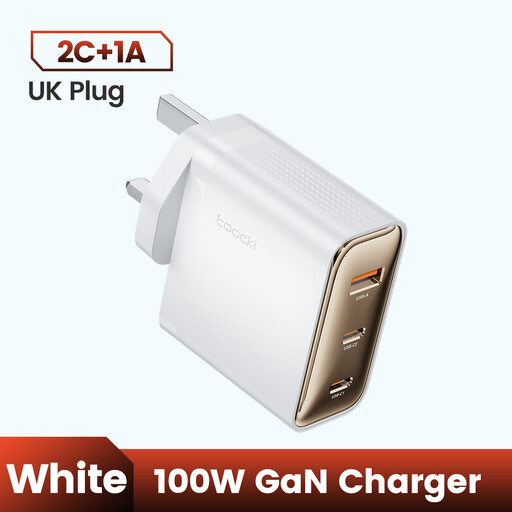
Why This Fits Their Persona: Suitable for remote workers or households charging a laptop alongside phones and smaller devices from one socket.
Its listed 100W capacity is more appropriate for higher-demand devices, but users should confirm the individual port allocation before multi-device use.
100W output, three ports, GaN construction and a foldable plug.
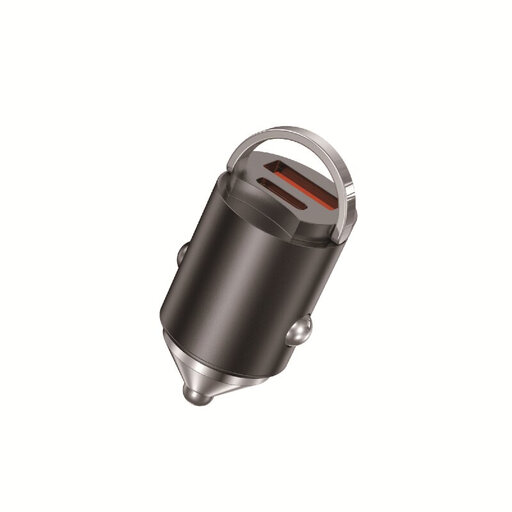
Why This Fits Their Persona: Designed for drivers who need to charge a phone and a higher-power device during commutes or longer journeys.
The listed DC12–24V input clarifies vehicle compatibility, helping avoid adaptors intended only for a particular socket range.
Aluminium alloy body, USB 100W output and separate PD20W output.
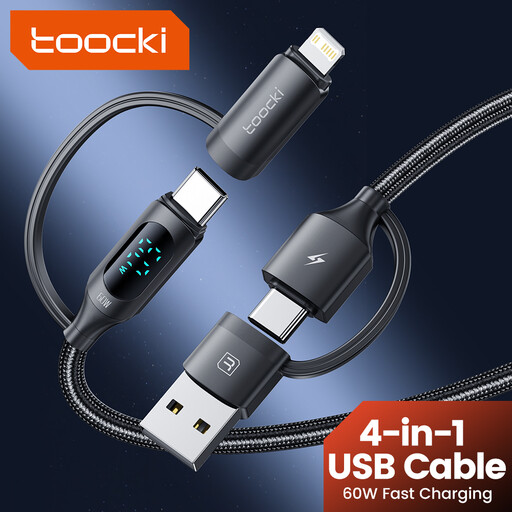
Why This Fits Their Persona: A compact option for travellers carrying a mixture of iPhone, tablet, Galaxy and laptop accessories.
Multiple connector types reduce the need to pack separate leads. The cable should still be paired with a suitable charger and inspected before use.
1.2m length, braided wire, aluminium alloy construction and a digital charging display.
We have compiled a complete, real-time list of products that fully satisfy these strict selection criteria and UK safety regulations.
Use the charger on a hard, uncovered surface with ventilation around it. Avoid placing it under bedding or inside an enclosed bag while powered. Connect the correct cable firmly, but do not force a connector or continue using equipment that becomes unusually hot.
For a travel setup, combine a GaN wall charger, a suitable 4-in-1 cable and a spare single-device cable where a particular device has strict compatibility requirements. In a car, secure cables away from pedals, steering controls and airbag deployment areas. A wireless charging mount should be installed where it does not block the driver’s view.
They can reduce the number of powered adaptors and occupied sockets, but electricity use depends on charging time, device battery capacity and standby consumption. Unplug chargers when they are not needed, particularly when travelling or leaving home.
It can, provided the charger has suitable ports and supports the required charging standards and power levels. The cable is equally important: USB-C devices generally require USB-C cabling, while compatible Lightning devices need a suitable USB-C to Lightning cable.
There is no fixed lifespan. Care, bending frequency, connector strain and storage conditions all matter. A braided cable may help with everyday wear, but replace any cable that is frayed, split, discoloured or unusually warm during use.