
24/7 Customer Support

Free returns

Same-day & Next-day Delivery

Quality Guaranteed

Unlock Your Welcome Offers: FREE Delivery | Up to 80% OFF | Free 30-day JoyPlus trial
Download the APP
Living in a compact UK flat, university hall or just needing a convenient way to make lunch at the office means every kitchen appliance has to earn its space. The multi-functional electric pot promises to be that all-in-one solution: a steamer, a fryer, a boiler and a slow cooker rolled into one. However, the market is flooded with options, and it is easy to end up with a gadget that either burns your noodles or takes an age to boil water.
As a Joybuy Product Recommendation Officer, my role is to help you see past the marketing jargon. Before you buy, let’s look at the common design flaws that can turn a promising purchase into a cupboard-filler.
Many electric cookers look similar on the surface, but small differences in design can have a big impact on your daily use. Here are three frequent issues to watch out for.
The most common complaint with budget models is a lack of temperature control. They often have a single, aggressive heat setting designed only for rapid boiling. This makes it nearly impossible to gently simmer a soup, sauté vegetables without burning them or keep a meal warm. You are left with an appliance that is only good for one thing: boiling water. A truly versatile pot needs adjustable power.
A non-stick surface is essential for easy cooking and cleaning, but not all coatings are created equal. Many cheaper pots use thin, low-quality coatings that begin to scratch, flake or peel after just a few months of regular use. This not only makes food stick and cleaning a chore but also raises concerns about particles from the coating getting into your food.
A pot advertised with a "2-litre capacity" might sound generous, but this figure often refers to the total volume right to the brim. The actual, safe cooking or "MAX" fill line can be significantly lower, sometimes by as much as 25%. This leaves you with a much smaller usable volume, which may not be enough to prepare a proper meal for one or two people, turning your planned hot pot into a small soup.
To ensure you get a reliable and useful appliance, focus on these core specifications. They are the true indicators of a well-designed multi-functional electric pot.
For a pot to function as more than just an electric ramen cooker, it needs variable power settings. Look for models with at least two heat levels:
portable hot pot, or for getting a good sear when using it as a non-stick electric skillet.A dual-power or multi-power switch gives you the control needed to cook a wider range of dishes properly, from a gentle stew to a quick stir-fry.
The longevity of your cooker depends heavily on its inner pot. A quality non-stick surface should be durable and easy to clean. Look for information stating the coating is PFOA-free, which is a common standard for safer cookware. A transparent glass lid is also a highly practical feature, as it allows you to monitor your cooking without letting heat escape.
For a dorm room cooker or a small electric pot for your office, the balance between a compact footprint and adequate cooking volume is crucial. A usable capacity of 1.8L to 2.5L is generally a good range for preparing generous meals for one to three people. Always check the product dimensions to ensure it will fit in your space and pay attention to the "MAX" fill line mentioned in the product description or images.
Based on these practical criteria, here are a couple of options that align with different user needs.
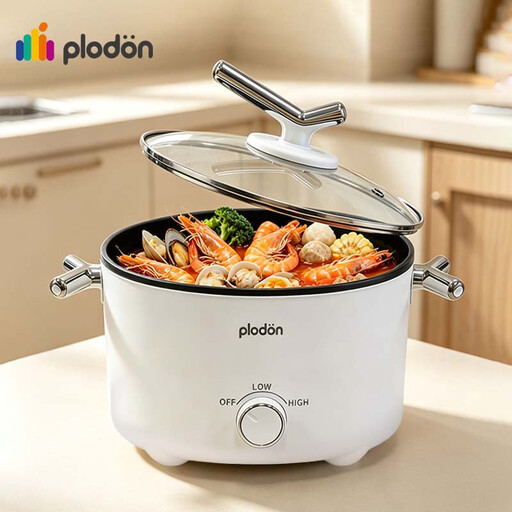
Why This Fits Their Persona: Its compact size is perfect for a small dorm room desk or kitchen. The 2.0L capacity is ample for one person, whether making a hearty bowl of Cross-Bridge Rice Vermicelli or boiling pasta. The simple controls are straightforward for those new to cooking.
This model features a dual power control (LOW/HIGH), avoiding the "all-or-nothing" heat trap and allowing for both simmering and boiling.
Features overheat protection for safety and a clear glass lid to monitor cooking. The non-stick interior simplifies cleanup, a major plus in a shared kitchen.
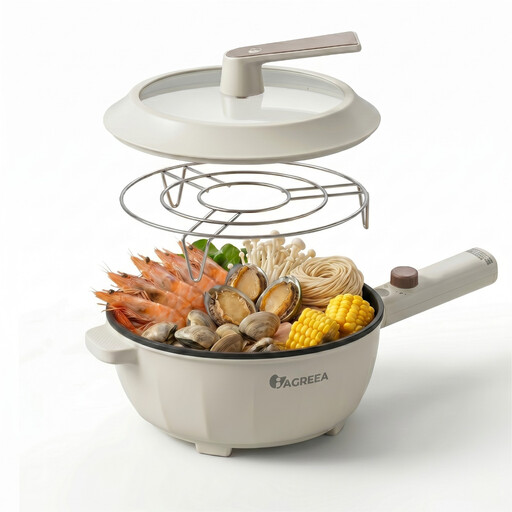
Why This Fits Their Persona: For those in small flats or needing a powerful office lunch solution, this pot offers greater versatility. The 1600W max power and 2.3L capacity are enough to sear a steak, stir-fry vegetables or host a hot pot for two, making it a true multi-cooker for more ambitious meals like a homemade Hanoi-style beef pho.
With three adjustable power modes (600W/1000W/1600W), it provides precise control for everything from slow cooking to high-heat searing, completely avoiding the single-setting issue.
The high-quality, PFOA-free non-stick coating is designed for durability and healthier cooking with less oil. Its anti-scald long handle is a thoughtful safety feature.
Now that you have the perfect cooker, you will need some quick and delicious meal ideas. From authentic Vietnamese Pho to hearty noodle bowls, having the right ingredients makes all the difference. Explore our curated selection of meal solutions to stock your pantry.
How much does it cost to run a multi-functional electric pot? The running cost is quite low. Based on the UK's average electricity price (approx. 25p per kWh as of mid-2026), a 1000W (1kW) pot running on high for 15 minutes would cost about 6-7p. A 600W pot simmering for 30 minutes would cost around 7-8p. It is generally a very energy-efficient way to cook small meals.
Can you properly fry in an electric ramen cooker? This depends entirely on the model's power. To fry or sear effectively, you need a pot with a high-power setting of at least 1000W, preferably more. Models with lower wattage are better suited for boiling, steaming and simmering. Always check that the pot is rated for frying and has a durable non-stick surface.
How do I make the non-stick surface last longer? To protect the coating, always use wooden, silicone or plastic utensils instead of metal ones. Avoid abrasive scouring pads when cleaning; a soft sponge and warm, soapy water are usually sufficient. Finally, never heat the pot while it is empty, as this can damage the non-stick layer.