
24/7 Customer Support

Free returns

Same-day & Next-day Delivery

Quality Guaranteed

Unlock Your Welcome Offers: FREE Delivery | Up to 80% OFF | Free 30-day JoyPlus trial
Download the APP
A smooth, professional finish is the hallmark of any successful DIY or trade project. Yet, achieving it often comes down to one crucial and frequently overlooked, component: sandpaper. Choosing the wrong type or grit can lead to frustration, wasted time and a surface that’s far from perfect. Whether you're stripping old paint, smoothing freshly cut timber or preparing a surface for its final coat, having a versatile multi grit sandpaper pack is essential.
This guide is designed to help you navigate the options. We'll break down what to look for when selecting sandpaper and highlight some practical recommendations to ensure you have the right tools for a flawless finish, every time.
Before adding a pack to your basket, consider these key factors. Getting this right from the start will save you time and help you achieve a better result on your project.
Sandpaper is graded by its grit number, which indicates the coarseness of the abrasive particles. A lower number means a coarser grit, designed for aggressive material removal, while a higher number signifies a finer grit for smoothing and polishing. A good multi grit sandpaper pack should offer a range to cover the entire process.
The type of sandpaper you need depends on the tools you use. Ensure the pack you choose is compatible with your equipment.
The abrasive material determines the sandpaper's durability and effectiveness on different surfaces. Aluminium oxide is a popular and durable choice, suitable for sanding a wide range of materials including wood, metal and painted surfaces. The backing material—paper or cloth—also affects durability, with cloth backing generally offering more resilience for heavy-duty applications.
Here are our recommendations for versatile and practical sandpaper packs that cater to a variety of common DIY and professional tasks.

Why It Stands Out: This comprehensive set is designed for efficiency and compatibility. The premium aluminium oxide abrasive provides consistent performance, while the 8-hole design aligns with most standard orbital sanders for effective dust extraction. The pack includes a generous quantity across four essential grits, making it a reliable staple for any workshop.
Pros:
Who is it for? This is an excellent choice for woodworkers, decorators and DIY enthusiasts who regularly use an orbital sander and need a reliable stock of orbital sander sheets for everything from preparation to finishing.
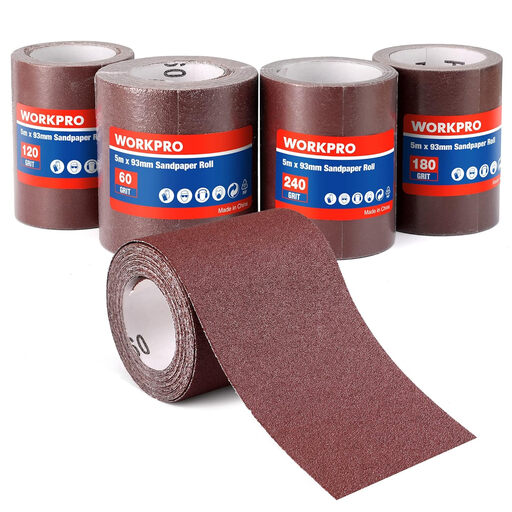
Why It Stands Out: Offering superb flexibility, this set of four sandpaper rolls allows you to customise the sandpaper size for any task. Whether you're using a hand-sanding block, a power sander or need to wrap a piece around a dowel for a curved surface, these rolls adapt. The grit numbers are clearly printed on the back for easy identification.
Pros:
Who is it for? Ideal for users who require sandpaper for both hand sanding and power tools. It’s a cost-effective solution for general-purpose workshop use and for projects that involve sanding irregular shapes or custom-sized areas.
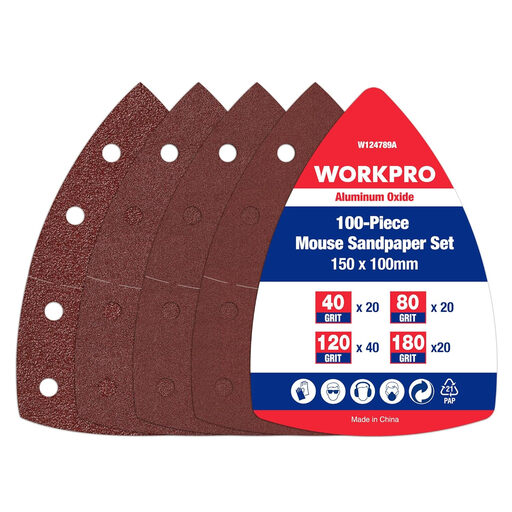
Why It Stands Out: Detail work requires precision and these triangle sander pads are designed for just that. Made to fit most multi-sanders, their shape is perfect for reaching into corners and sanding detailed profiles. The 11-hole pattern ensures dust is efficiently removed, and the pack contains a practical assortment of grits for detailed preparation and finishing work.
Pros:
Who is it for? A must-have for anyone with a multi-sander or detail sander. It's particularly useful for furniture restoration, window frame preparation and any project requiring precise sanding in hard-to-reach areas. These are essential multi sander accessories.
Once your surfaces are perfectly sanded and prepared, the next step is choosing the right materials for the build itself. For durable, low-maintenance and weather-resistant options for decking, cladding or fencing, consider modern composite solutions.
Discover our selection of Plastic timber for your next build.
Always start with the lowest grit number (coarsest) required to remove imperfections or old finishes. Then, work your way up sequentially through the higher grit numbers. For example, you might sand with 80 grit, then move to 120 grit and finish with 180 grit. Skipping a grit level can leave behind deep scratches from the coarser paper that are difficult to remove.
Yes, abrasives like aluminium oxide are versatile enough to be used on both wood and many metals. However, for heavy-duty metal grinding or rust removal, you may want to look for sandpaper specifically designed for metal, which can have a more durable backing and a different abrasive coating. For general-purpose smoothing and paint removal on metal, a standard WORKPRO sandpaper pack is often sufficient.
You should change your sandpaper sheet or section when it feels smooth to the touch, is visibly clogged with dust that can't be brushed off or is no longer removing material effectively. Continuing to use worn-out sandpaper is inefficient and can burnish the wood rather than abrade it, which may prevent finishes from adhering properly.