
24/7 Customer Support

Free returns

Same-day & Next-day Delivery

Quality Guaranteed

Unlock Your Welcome Offers: FREE Delivery | Up to 80% OFF | Free 30-day JoyPlus trial
Download the APP
The days of carrying a separate charger for your laptop, phone and tablet are numbered. The promise of a single, compact multi-port GaN charger is to declutter your bag and power up all your devices from one socket. However, the market is flooded with options, and many fail to deliver on their promises. As a Product Recommendation Officer at Joybuy, my role is to help you see past the marketing jargon and make a practical choice.
Before you buy, be aware of a few common pitfalls that lead to disappointment and wasted money:
universal travel adapter are only suitable for low-power devices like phones. They often lack the wattage to charge a modern laptop, leaving you with a dead battery when you need it most on a business trip or holiday.To choose the right charger, you need to understand a few key parameters. This ensures you get a device that not only works but works efficiently and safely for your specific needs.
The core of any modern charger is its power output, measured in watts (W). GaN (Gallium Nitride) is the technology that makes today's chargers smaller, cooler and more efficient than the bulky silicon "bricks" of the past.
When looking at specifications, pay attention to:
100W laptop charger should clearly state it can deliver at least 65W-96W to a single USB-C port, even when other ports are active. A high-speed charger for iPhone and MacBook needs to intelligently allocate power between them.The types of ports on a charger determine what you can connect.
USB-C charging station will feature multiple USB-C ports.Before buying, count your devices. A typical setup for a professional might include a laptop (USB-C), a smartphone (USB-C) and a pair of headphones or a power bank (either USB-C or USB-A). A charger with two or three USB-C ports and one USB-A port is often a versatile choice.
Instead of a single "best" model, the right charger depends entirely on your lifestyle and the devices you use. Here are a few options matched to common UK user profiles.
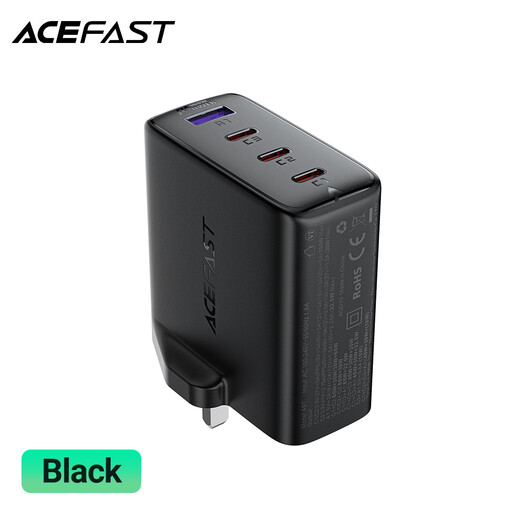
Why This Fits Their Persona: This user juggles a company laptop, personal phone and tablet. They need a single plug that can power their entire mobile office, whether at home, in a co-working space or at a client's site.
It avoids the "Total Wattage" illusion by offering up to 100W from a single USB-C port, sufficient for most power-hungry laptops. The power distribution is designed for multi-device use.
Versatile Port Mix: With 3 USB-C and 1 USB-A port, it covers both modern and legacy devices.
High Power Output: Capable of fast-charging a MacBook Pro and an iPhone simultaneously.
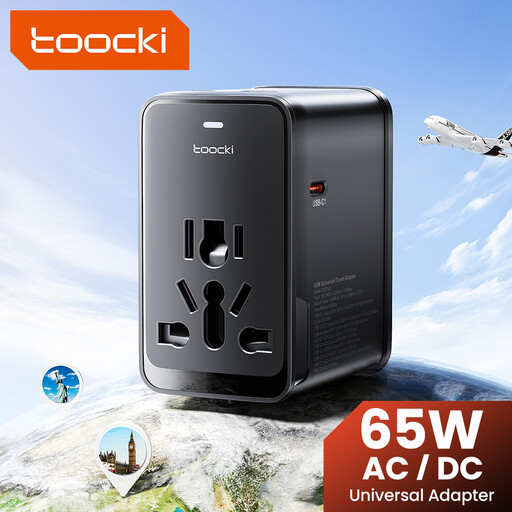
Why This Fits Their Persona: This user is frequently travelling between the UK, EU and US. They need one device that adapts to different sockets and can still charge their ultrabook (like a MacBook Air) and phone without carrying multiple adapters.
It directly counters the underpowered travel adapter pitfall. With 65W PD output, it's powerful enough for most modern laptops, not just phones, making it a true all-in-one travel solution.
All-in-One Design: Integrates UK/US/EU/AUS plugs with a multi-port charger.
Sufficient Power: 65W is the sweet spot for charging ultrabooks and tablets at full speed.

Why This Fits Their Persona: For professionals who practically live out of their car—sales reps, field engineers or digital nomads on a road trip. They need to charge a high-power laptop, phone and another device simultaneously between appointments.
Most car chargers are weak and can barely keep a laptop's battery from draining. This model's massive 165W total output and 100W single-port capability make it a true mobile workstation power source.
Extreme Power: One of the most powerful car chargers available, capable of charging two laptops at once.
Informative Display: The digital display shows real-time voltage and power output for each port.
We have compiled a complete, real-time list of products that fully satisfy these strict selection criteria and UK safety regulations.
Yes. GaN (Gallium Nitride) is simply a more efficient semiconductor material than traditional silicon. It allows chargers to be smaller and run cooler. The safety of a charger is determined by its internal protection circuits and its compliance with safety standards like UKCA and CE. Always prioritise certified chargers, regardless of whether they use GaN technology.
Yes, it is perfectly safe. Modern chargers and devices use communication protocols like Power Delivery (PD). When you connect your phone, it "tells" the charger its maximum power requirement. The charger then supplies only the amount of power the device can safely handle (e.g., 20W). It will not overload or damage your phone's battery.
A well-made GaN charger from a reputable brand should provide reliable service for several years. Its lifespan depends on build quality and usage. To maximise its longevity, ensure it has good ventilation during use (do not cover it) and unplug it from the wall when not in use for extended periods. If a charger becomes unusually hot, it is often a sign of poor quality or an internal fault.