
24/7 Customer Support

Free returns

Same-day & Next-day Delivery

Quality Guaranteed

Unlock Your Welcome Offers: FREE Delivery | Up to 80% OFF | Free 30-day JoyPlus trial
Download the APP
Choosing multi-purpose cutting tools can save space in a UK home workshop, sewing room or kitchen. However, “multi-purpose” does not mean one tool is suitable for every material. A cutter designed for PVC trim may damage fabric, while a fabric cutter may be unsuitable for thick cardboard or leather.
The practical approach is to match the blade, cutting mechanism and safety features to your most frequent tasks. The following guide covers mitre shears, cordless electric cutters, rotary cutters, utility knives, craft cutting tools and food preparation tools, with options for DIY users, tradespeople, crafters and home cooks.
Product descriptions often list numerous materials, but cutting capacity varies according to thickness, density and flexibility. A small cardboard cutter may handle packaging sheets but struggle with dense carpet or thick leather. Similarly, PVC and trim cutters are generally intended for softer profiles rather than metal, hardwood or structural materials.
Check the manufacturer’s stated material list and maximum diameter or thickness. Do not rely solely on phrases such as “professional” or “heavy duty”.
SK5 steel blades are widely used in utility knives and mitre shears because the material is associated with hardness and edge retention. Nevertheless, blade geometry, heat treatment, pivot alignment and the material being cut also affect results. A sharp SK5 blade used beyond its intended capacity can chip or deform.
Look for practical details such as blade thickness, whether the blade is replaceable and whether replacement blades are included.
Cordless tools offer convenient movement around a garage, craft table or packing station, but they need charging and eventual battery replacement. Some use USB charging, which is convenient, while others may have limited runtime. Manual cutters avoid battery costs but require more hand pressure.
Safety features also matter. A blade lock, retractable blade or storage case can reduce accidental exposure between uses. Always read the supplied instructions and keep sharp tools away from children.
For trim work, an adjustable multi-angle mitre cutter should have clear markings and a secure adjustment system. Several models below offer a range from 45° to 135°, supporting bevels, mitre cuts and angled sections.
The maximum cutting diameter is equally important. One extendable model specifies capacity up to 6.8 cm. This does not mean every shape or material of that size will cut easily, so measure the actual profile before ordering.
A replaceable blade can extend the useful life of a tool, provided compatible blades remain available. Check whether the package includes spares, whether changing them requires tools and how used blades should be disposed of.
For UK use, check the product instructions, supplied warnings and any applicable conformity markings before purchase. Wear suitable eye protection and gloves when the instructions recommend them, keep fingers clear of the cutting path and never force a cutter through material outside its stated capacity.
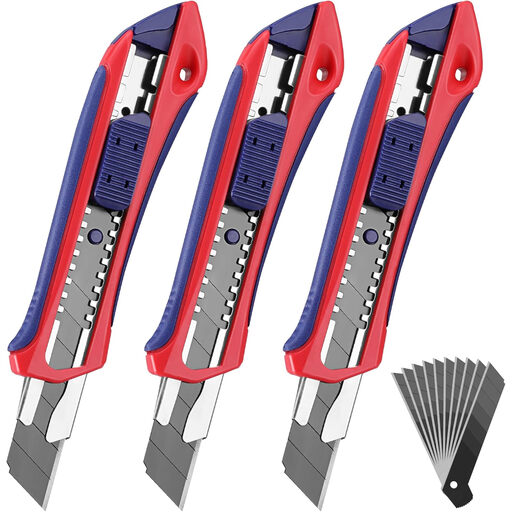
Why This Fits Their Persona: A sensible starting point for packaging, paper, fabrics, foam board and everyday DIY jobs around a UK home.
The set includes three knives and 10 replacement SK5 carbon steel blades, making blade renewal clearer than buying a single disposable cutter.
18 mm snap-off blades, ABS and TPR rubber handles, plus a blade-locking mechanism.
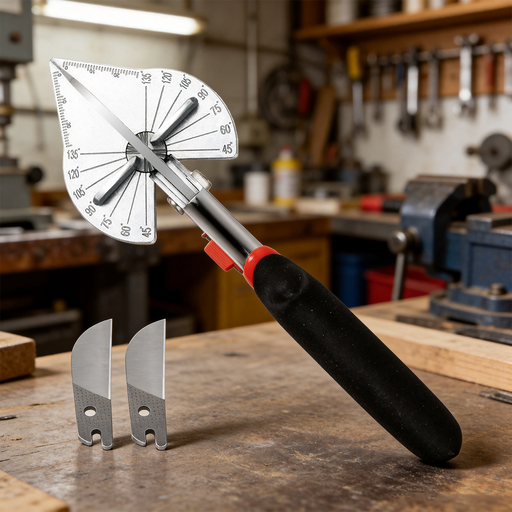
Why This Fits Their Persona: A measured option for installers, flooring projects and home improvers who need repeatable angled cuts.
Its engraved scale and adjustable slider show the angle range rather than leaving precision to guesswork.
45°–135° adjustment, up to 6.8 cm cutting diameter, SK5 stainless steel blade and rotating safety lock.
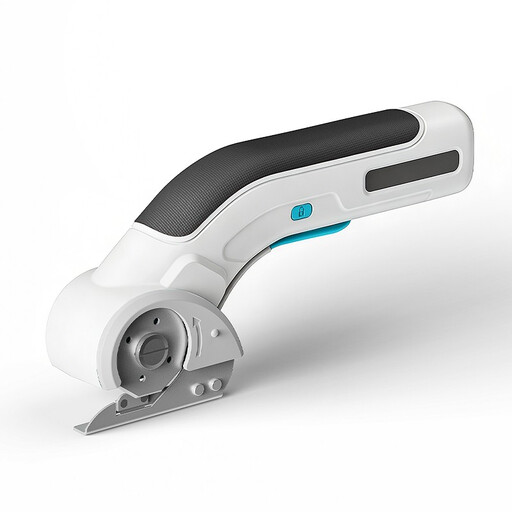
Why This Fits Their Persona: Suits sewers, packaging users and DIY makers making frequent cuts in a workshop, studio or home office.
The listing specifies the battery voltage, charging method, weight, noise level and blade-change design, helping buyers assess practical use.
4.2V rechargeable battery, USB Type-C charging, stated runtime of up to two hours and tool-free blade changes.
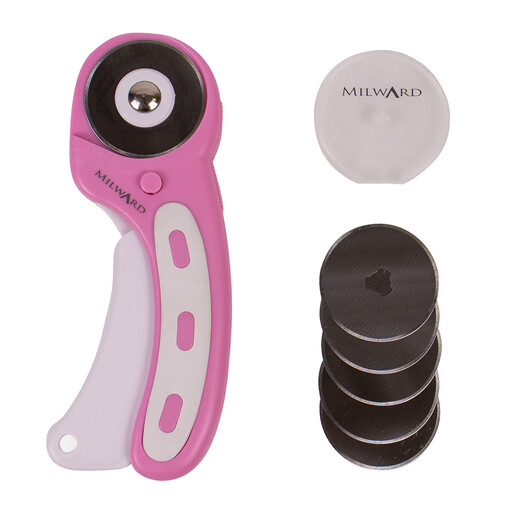
Why This Fits Their Persona: Designed around fabric, quilting, sewing, paper, leather and scrapbooking rather than general workshop cutting.
The 45 mm blade size and stated craft applications make its intended use clearer than a broad, non-specific multi-material claim.
Includes five spare blades, a soft-grip handle and a safety button that locks the blade.
For compact detail work, the BLACK+DECKER 7.2V Cordless Rotary Multi Tool has five speed settings, an LED ring and 52 accessories for sanding, cutting and polishing. It is more suited to small-scale work than long, straight cuts.
For trim users who value included spares, the FLORA GUARD DIY-2 Lengthen Mitre Shears include two replacement blades and a 45°–135° adjustment range. The GARTOL Multi Angle Mitre Shears Cutter also includes two SK5 replacement blades and marked angle stops.
For food preparation, the Zyliss Zick Zick 3 Food Chopper uses a push-down mechanism, stainless steel rotating blades and a clear container. Keep kitchen choppers separate from workshop and craft cutting tools.
We have compiled a complete, real-time list of products that fully satisfy these strict selection criteria and UK safety regulations.
They cover several tool types rather than one universal product. Depending on the design, they can cut trim, PVC, fabric, cardboard, leather, paper, plastic or food. Always follow the stated material and size limits.
Their direct running cost is generally limited to electricity for recharging and replacement blades. Runtime, charging method and battery condition affect convenience. A USB Type-C model can be practical if you already use compatible chargers, power banks or laptop ports.
Blade life depends on the material, cutting frequency, pressure and storage conditions. Replace a blade when it becomes dull, chipped, rusty or begins tearing rather than cutting cleanly. Wipe blades after use, keep them dry and store the tool with its safety lock or blade cover engaged.