
24/7 Customer Support

Free returns

Same-day & Next-day Delivery

Quality Guaranteed

Unlock Your Welcome Offers: FREE Delivery | Up to 80% OFF | Free 30-day JoyPlus trial
Download the APP
Keeping a home clean and hygienic is a top priority for many of us. A good multi-surface cleaner seems like the perfect solution—one bottle to tackle grime on countertops, spatter on hobs and sticky fingerprints on tables. However, the shelves are crowded with options, each making bold claims. It's easy to end up with a product that doesn't live up to the hype, isn't right for your home or contains ingredients you'd rather avoid.
As a Joybuy Product Recommendation Officer, my role is to help you navigate the market. Let's look at the common pitfalls UK shoppers face and what really matters when choosing an all purpose cleaner.
To make a confident choice, focus on these key parameters. They will help you find a product that aligns with your household's needs, whether you prioritise powerful disinfection or sustainable living.
Understanding the label is crucial. A "cleaner" is formulated to lift dirt, grease and grime. A "disinfectant" is designed to kill germs. Many products do both.
Always check what germs the product is proven to kill to ensure it meets your hygiene standards, especially for a kitchen cleaner spray used in food preparation areas.
If environmental impact is a concern, look for evidence beyond vague claims.
Before adding a cleaner to your basket, read the small print. The manufacturer's instructions will list which surfaces the product is suitable for and, more importantly, which to avoid. Using a cleaner on an incompatible surface like unsealed stone, varnished wood or certain plastics can cause irreversible damage. For households with children and pets, look for bleach-free formulas that are explicitly marked as safe for use on high chairs, toys and food preparation areas.
To help you find the right fit, here are a few multi-surface cleaners matched to different household needs.
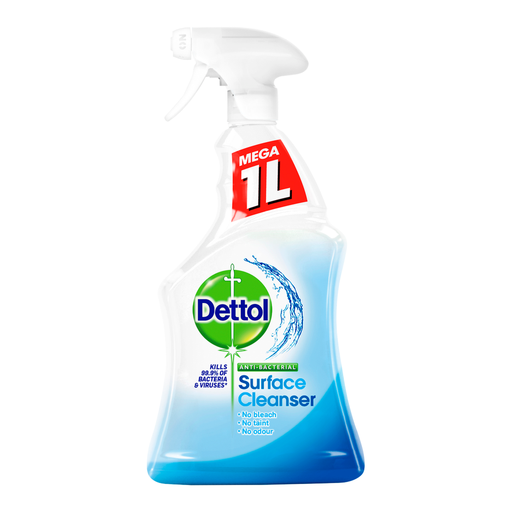
Why This Fits Their Persona: This cleaner is ideal for families prioritising hygiene. It is explicitly stated to be safe for food preparation areas, high chairs and changing mats, offering peace of mind. The formula is designed to kill a range of bacteria and viruses, including E. Coli and Human Coronavirus.
It moves beyond the vague "kills 99.9% of germs" claim by specifying the types of bacteria and viruses it is proven to kill. Its bleach-free, no-taint formula also avoids the "one-size-fits-all" myth by being specifically designed for sensitive areas.
Kills 99.9% of bacteria and viruses. Removes 90% of allergens like pollen and dust mites. No bleach, taint or odour.
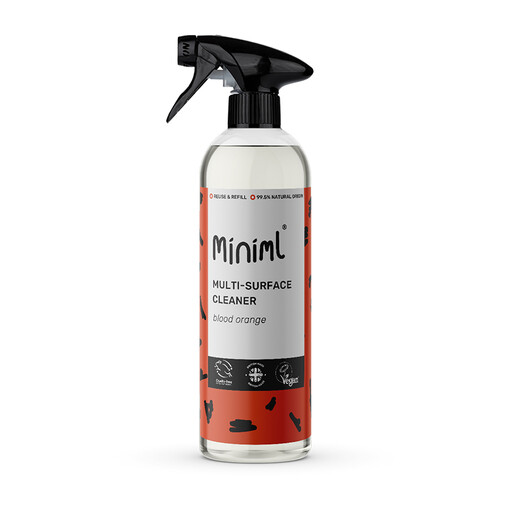
Why This Fits Their Persona: This cleaner is built around sustainability. It uses a plant-powered formula and is part of a zero-waste, closed-loop refill system where you can send empty containers back for reuse. It's perfect for those wanting to minimise their environmental footprint without compromising on cleaning power.
It avoids the "eco-friendly illusion" by offering a tangible, practical solution to plastic waste with its refill system. The brand provides clear information on its plant-based ingredients and commitment to zero waste, moving beyond simple marketing claims.
Zero-waste closed-loop refill system. Plant-based, non-toxic formula. Natural blood orange fragrance without harsh chemicals.
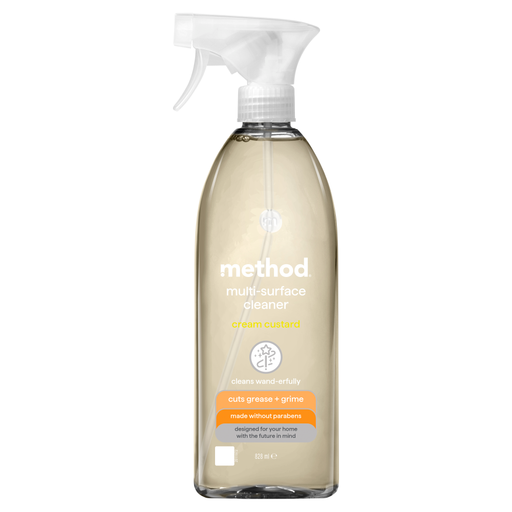
Why This Fits Their Persona: For those who believe cleaning should be a pleasant experience, this Method cleaner delivers. Its unique Wild Rhubarb fragrance turns a chore into something more enjoyable. The plant-powered formula is effective on various surfaces like tile, stone and wood, and it's cruelty-free.
This product directly counters the idea that effective cleaners must have a harsh, chemical smell. It proves that a plant-based formula can cut through grease and grime while leaving behind a unique, pleasant scent, offering both performance and a superior user experience.
Cuts through grease and grime effectively. Unique and pleasant limited edition fragrance. Cruelty-free and made with a 75% bio-based formula.
We have compiled a complete, real-time list of products that fully satisfy these strict selection criteria and UK safety regulations.
It depends entirely on the product and your floor's finish. Many multi-surface cleaners are too harsh for sealed or unsealed wood and can strip the finish or cause damage. Always check the product label for specific exclusions. For wood, it is generally safer to use a cleaner specifically formulated for wooden floors.
This is known as the contact time, and it varies significantly between products. Some may require as little as 30 seconds, while others need 5-10 minutes of being visibly wet to kill the specified germs. This information is critical for effective disinfection and can always be found in the usage directions on the product label.
Yes, many modern plant-based cleaner formulations are highly effective at cutting through grease and grime. For disinfection, look for products that use plant-derived active ingredients like Lactic Acid and are proven to kill bacteria. While they may function differently from traditional bleach-based cleaners, they can be just as effective for everyday cleaning and hygiene when used as directed.