For 3D printing enthusiasts, moving beyond single-colour prints is a natural step in elevating your creations. The world of multicolour PLA filament offers a spectrum of possibilities, transforming standard models into vibrant, eye-catching works of art. However, the market is filled with terms like rainbow, gradient and co-extruded filaments, which can make choosing the right material feel complicated.
This guide is designed to clarify the options available. We will walk through the different types of multicolour filaments, offer practical advice for making your selection and present our top recommendations to help you find the perfect material for your next project.
How to Select the Right Multicolour Filament
Before you add a spool to your basket, understanding a few key characteristics will ensure you get the visual effect you are aiming for.
1. Understand the Colour-Changing Mechanism
The way a filament displays multiple colours is the most important factor. There are two primary types:
- Gradient (or Rainbow) PLA: This type of filament features a slow, sequential colour change along its entire length. For example, a spool of rainbow PLA filament might transition from red to orange, then yellow and so on. The final appearance of your print depends heavily on its size; smaller objects may only show one or two colours, while larger, taller prints will display the full gradient effect.
- Co-extruded PLA: This is a more complex type of artistic 3D printer filament. Here, two, three or even four separate colours are extruded together into a single strand. This means the colour of your print will change depending on the angle you view it from. A tri-colour PLA filament, for instance, will show a different dominant colour on each side, creating a dynamic, iridescent effect that is consistent regardless of the print's size.
2. Consider the Finish: Matte vs. Silk
Beyond the colour, the finish of the filament plays a huge role in the final aesthetic. While standard PLA has a slightly glossy finish, many multicolour filaments come in a "silk" variant. A silk PLA filament is formulated with additives that give it a highly reflective, shiny PLA filament surface. This finish accentuates the colour shifts in co-extruded filaments and adds a luxurious sheen to gradient prints, making them appear almost metallic.
3. Check Technical Specifications
Always verify the technical details to ensure compatibility and print quality:
- Diameter: The vast majority of consumer 3D printers use 1.75mm PLA filament. Always double-check that the filament diameter matches your printer's requirements to avoid clogs and extrusion issues.
- Spool Winding: A neatly wound spool is more than just satisfying to look at; it is crucial for preventing tangles and knots that can ruin a long print. Look for product descriptions that mention "neat winding" or "tangle-free" spools.
- Printing Temperatures: Speciality filaments can sometimes require slightly different settings than standard PLA. Check the manufacturer's recommended nozzle and bed temperatures to achieve the best layer adhesion and surface finish.
Our Top Recommendations for Multicolour PLA Filament in 2026
Based on their unique visual properties and suitability for creative projects, here are some of our standout recommendations for 2026.
CAILAB 3D Printer Filament PLA Silk Tri-Colour - Red&Green&Blue
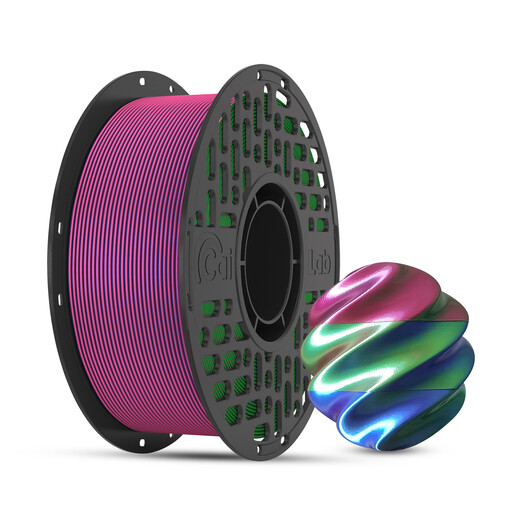
- Why It Stands Out: This coextruded PLA combines three distinct colours—red, green, and blue—into one strand. The result is a print that shimmers and changes colour with every turn. The silk finish enhances this effect, creating a vibrant, almost magical appearance that makes any model pop.
- Pros:
- Dynamic tri-colour effect visible from different angles.
- High-gloss silk finish for a premium look.
- Consistent colour separation for predictable results.
- Who is it for?
- Makers creating articulated toys or fantasy figurines.
- Etsy sellers who want their products to have a unique, iridescent quality.
- Hobbyists printing decorative items that need to stand out on a shelf.
CAILAB 3D Printer Filament PLA Rainbow Gradient - Sunflower
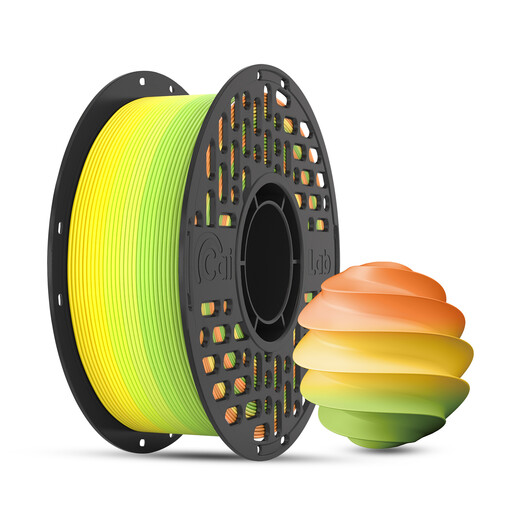
- Why It Stands Out: As a classic gradient 3D printer filament, this "Sunflower" spool offers a long and gentle transition between warm colours. It is ideal for creating large-scale objects where the full colour spectrum can be displayed, such as vases, lampshades, or architectural models.
- Pros:
- Slow and smooth colour transition for a beautiful gradient effect.
- Bright, cheerful colour palette.
- Prints with the ease of standard PLA.
- Who is it for?
- Artists and designers printing tall, single-piece sculptures or vases.
- Anyone looking to create functional home decor items with a colourful twist.
- Beginners wanting to experiment with multicolour printing on larger models.
CAILAB 3D Printer Filament PLA Silk Quad-Colour - Steampunk
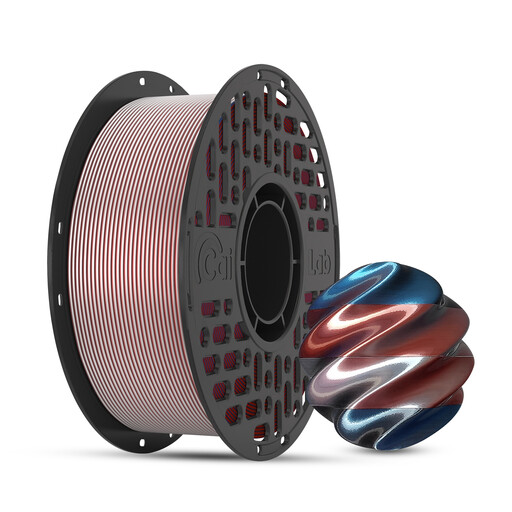
- Why It Stands Out: This is a truly unique filament. As a quad-colour co-extrusion, it blends metallic-looking shades of gold, copper, bronze and black. The silk finish gives it an authentic metallic lustre, perfect for projects with a vintage, industrial, or steampunk theme.
- Pros:
- Unique four-colour combination for a metallic, aged look.
- Shiny silk finish enhances the metallic effect.
- Excellent for hiding layer lines on detailed models.
- Who is it for?
- Cosplayers and prop makers creating replica gears, gadgets, or armour.
- Tabletop gamers printing detailed miniatures or terrain.
- Designers aiming for a sophisticated, antique-metal appearance.
Looking for More Options?
These recommendations represent just a fraction of the creative possibilities available. If you are searching for a different colour combination or finish, there is a wide world of 3D printing supplies to discover.
Explore our full collection of Gradient 3D Filament here.
Frequently Asked Questions about Multicolour PLA
1. What is the difference between rainbow PLA and co-extruded PLA? A rainbow PLA filament has colours that change one after another along the length of the spool, so the colour of your print changes with its height. Coextruded PLA has multiple colours running side-by-side in the same strand, so the colour changes as you rotate the object and view it from different angles.
2. How can I get the best colour effect from a gradient filament? To see the full spectrum of a gradient or rainbow filament, it is advisable to print larger or taller objects. For smaller items, you can print several at once; as the printer moves between them, it uses more filament per layer, accelerating the colour transition across all the objects.
3. Does silk PLA filament require special settings? Generally, silk PLA filament prints very similarly to standard PLA. However, for the best possible shine, some users find that printing at a slightly higher temperature (around 5-10°C above standard PLA) and a slightly slower speed can enhance the glossy finish. Always start with the manufacturer's recommended settings and adjust from there.


