Compact-kitchen bean cooks
People cooking smaller portions of black beans who need pressure cooking but have limited shared worktop and cupboard space.


Choose a pressure-capable multicooker if you want to cook soaked dry black beans without keeping a hob occupied throughout the cooking cycle. A 3.8L option suits smaller portions and tighter storage; a 5.7L–6L option gives shared batches more room, but check the exact model’s pressure-fill limit, release instructions and cleaning requirements before deciding.
People cooking smaller portions of black beans who need pressure cooking but have limited shared worktop and cupboard space.
Housemates preparing chilli, bowls or portions to store for later, who need room in the pot and may want to sauté ingredients before pressure cooking.
People who value clear controls and pressure-release instructions when several housemates will operate the same cooker.
For black beans in a shared kitchen, start with pressure-cooking instructions, then decide how much batch capacity you can accommodate alongside storage and cleaning.
| Concern | What to check | Who this matters to |
|---|---|---|
| Pressure cooking | Confirm a pressure-cook programme and follow the exact model’s liquid, fill and release instructions. | I want to cook soaked dry beans without watching a pan, but I need a clear way to finish the pressure cycle; roughly 36% of consumers would put reliable pressure cooking first. |
| Shared batches | Compare nominal capacity with the pressure-cook fill line and the size of your usual batch. | When I prepare chilli for housemates and portions for later, I need enough usable pot space; around 29% of consumers would make batch capacity their primary concern. |
| Storage space | Check exterior dimensions and weight, including space needed for the lid or accessories. | If the cupboard and worktop are shared, I need a cooker I can put away between uses. Roughly 21% of consumers would prioritise manageable storage. |
| Cleaning and handover | Check how the pot, lid, seal and any condensation collector are cleaned and dried. | When several people use the cooker, I need a straightforward way to leave it clean for the next person; about 14% of consumers would put cleaning and handover first. |
Nominal capacity is not the amount you can necessarily use for a pressure-cooked bean batch. Instant Pot’s Classic 5.7L guidance, for example, requires contents to remain below its pressure-cook fill marking.
Check the fill line and minimum-liquid instructions for the exact model against your usual recipe before choosing a size.
Release instructions affect how you handle the cooker and how long a meal takes. Instant Pot’s black-bean chilli recipe includes a natural-release period after its pressure programme.
Follow your chosen model’s manual and the recipe’s release instructions rather than transferring a procedure from another cooker.
Air-fry and crisping functions do not replace the pressure-cook function needed for the quicker soaked-bean approach described here. Additional accessories can also take up shared storage space.
Choose those functions if housemates will use them for other meals; otherwise focus on pressure cooking, pot size and where the appliance will live.
A shared cooker needs its pot and other food-contact parts cleaned between users, with cooked leftovers handled appropriately. The Food Standards Agency identifies cleaning, cross-contamination, cooking and chilling as important food-safety considerations.
Agree who cleans and dries the appliance after each batch and who puts leftovers into suitable storage.
Its UK range includes compact and larger pressure-capable multicookers with functions such as sautéing and slow cooking on relevant models.
The UK Cook4me range includes guided digital pressure cookers for people who prefer on-screen cooking steps.
Relevant UK Foodi models combine pressure cooking with other modes, including air frying or steaming on cited 6L and 7.5L models.
These pressure-capable multicookers offer 3.8L and 5.7L options for smaller portions or shared batches. Match the pot size to your kitchen space and check the exact model’s bean-cooking and pressure-release instructions.
 Image unavailable
Consider this 5.7L pressure multicooker for shared batches if a sauté function is useful for your recipes.
Its stated features include a ceramic non-stick coating and a recipe book. Check the model’s liquid and pressure-fill instructions, as well as its exterior dimensions, against your batch and storage space.
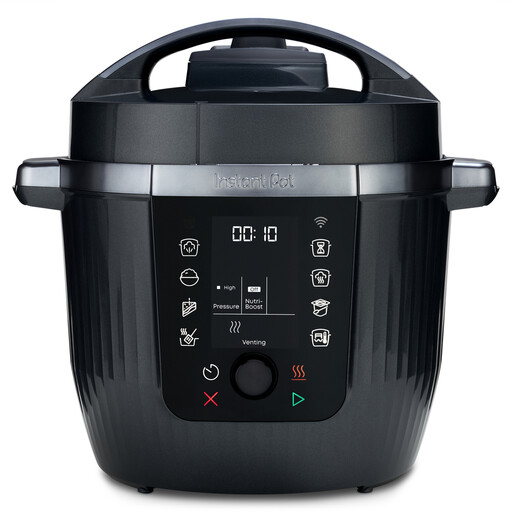 Image unavailable
This 5.7L option is relevant to shared meal preparation where pressure cooking and sautéing are priorities.
Before choosing it for black beans, check the exact model’s liquid, fill and release instructions, plus how its pot is cleaned and where the appliance will fit.
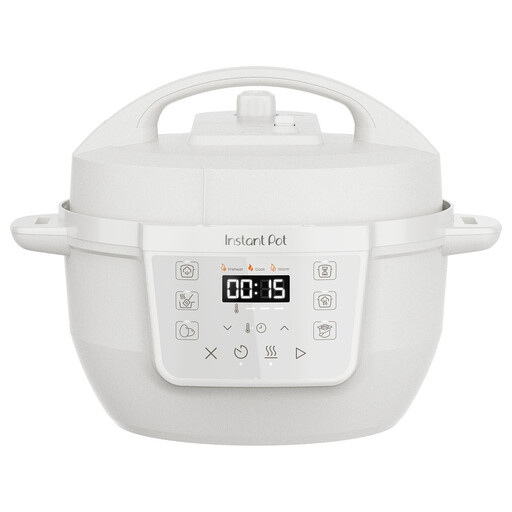 Image unavailable
Consider this 3.8L option for smaller portions when shared storage space is a priority.
Pressure cooking and sautéing are relevant to preparing beans in one pot. Check its exterior dimensions, cleaning instructions and model-specific pressure-fill and liquid requirements before purchase.
Yes, if it has a pressure-cook function and you follow a suitable recipe and the exact model’s instructions. Instant Pot UK’s black-bean chilli recipe calls for soaking the beans for 4–8 hours, pressure cooking for 20 minutes and allowing 10 minutes of natural pressure release; those timings are for that recipe, not every cooker or bean dish.
A 3.8L cooker suits smaller portions when storage is the main constraint; a cooker around 6L offers more nominal space for shared batches. Check the exact appliance’s exterior dimensions and pressure-cook fill line, because its stated capacity is not necessarily the amount available for beans and liquid.
Make sure everyone can follow the chosen model’s lid, sealing and pressure-release instructions, and agree how its parts will be cleaned after use. Instant Pot’s Classic 5.7L guidance also specifies liquid and a pressure-cook fill limit; use the instructions for your own model rather than assuming they are identical.
Agree who cleans the cooking area and puts leftovers into suitable storage after each batch. The Food Standards Agency identifies handwashing, cross-contamination, cooking and chilling as important food-safety behaviours; sharing an appliance makes a clear handover between users particularly useful.