One-bowl convenience cook
You mainly want to warm one serving with little washing-up. Pressure cooking is not needed for the beans themselves, so the ease of direct heating and cleaning matters most.


For one serving of already-cooked canned butter beans, start with a multicooker that has a documented non-pressure heating mode, such as sauté, simmer or reheat, and a pot you can manage and clean easily. Pressure cooking adds lid and steam-release steps that make more sense if you also plan to cook other meals; a larger pot is easier to justify when you regularly make several portions.
You mainly want to warm one serving with little washing-up. Pressure cooking is not needed for the beans themselves, so the ease of direct heating and cleaning matters most.
You are heating canned beans now but expect to make rice, soups, stews or other one-pot meals later. Those plans may give you a reason to consider more cooking functions.
You live alone but deliberately cook several portions at once. A larger pot can suit that routine even though it is more capacity than one bowl of beans needs.
Check how you would heat a single serving without pressure, then decide how much pot capacity and extra cooking capability your other meals warrant.
| Concern | What to check | Who this matters to |
|---|---|---|
| Small-portion practicality | Check pot capacity, external dimensions and whether the pot is removable. Consider how much space the cooker will occupy between uses. | If I mostly heat one bowl, I want a pot that is manageable to use and store rather than capacity I rarely use. Around 50% of consumers would put small-portion practicality first. |
| Direct heating | Look for a documented sauté, simmer or reheat mode; check how the pot is cleaned after use. | When I want to warm beans without learning a pressure programme, I need straightforward controls and an easy clean-up. For around 30% of consumers, simple direct heating would come first. |
| Future cooking | Decide whether you will use pressure cooking for other meals, and read the exact model's lid, liquid and steam-release instructions before using that function. | If I plan to cook more one-pot meals, I may accept the extra pressure-cooker procedures for those functions. Future versatility would come first for around 20% of consumers. |
Canned beans are already cooked. A pressure-capable appliance adds lid, valve and steam-release procedures without making pressure necessary for this reheating task.
Choose a cooker with a documented non-pressure heating mode first. Add pressure capability if you expect to use it for other meals and are prepared to follow the model's manual.
Tefal describes its 5L RK302E15 as a four-portion cooker, while Ninja describes its 8L PossibleCooker as accommodating up to eight portions. That capacity may go unused if you only heat one serving.
Check both capacity and external dimensions. A larger cooker makes more sense if you regularly batch cook or prepare meals for others.
Buckinghamshire Healthcare NHS Trust advises keeping leftovers from an opened can in a covered container in the fridge and following the pack's storage instructions. In food-safety guidance for people receiving chemotherapy, Guy's and St Thomas' NHS Foundation Trust advises heating reheated food until piping hot throughout and not reheating cooked food more than once.
Heat the portion you intend to eat, refrigerate the remainder in a covered container and follow the storage instructions on the can.
Its range includes compact pressure-capable multicookers for buyers who want direct heating now and other cooking functions later.
Ninja offers both the 4.7L pressure-capable Foodi Mini and the larger 8L PossibleCooker, which serve different portion plans.
Tefal's multicooker range is worth considering if you prefer programmed cooking and a labelled reheating function.
These cookers offer a direct-heating function to consider for canned beans, but their 5.7L–6.5L capacities are easier to justify if you also prepare larger or varied meals. Check each model's instructions for heating a small portion before choosing.
 Image unavailable
Consider its listed sauté function for warming beans without pressure if you also want a cooker for other meals.
The product name specifies a ceramic non-stick coating and food-warmer function. Its 5.7L capacity is substantial for one serving; check the instructions for small quantities and pot cleaning before buying.
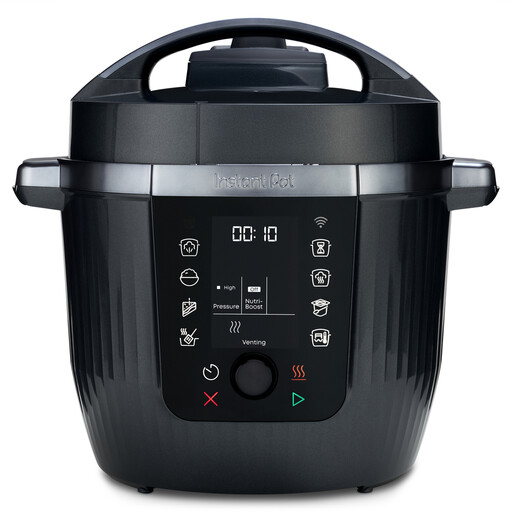 Image unavailable
Its listed sauté function is the relevant option to consider for beans if you also want pressure and other cooking functions for later meals.
The 5.7L capacity may be more than a single serving warrants. Check guidance for small quantities and inner-pot cleaning; follow the model's lid and steam-release instructions whenever you use pressure cooking.
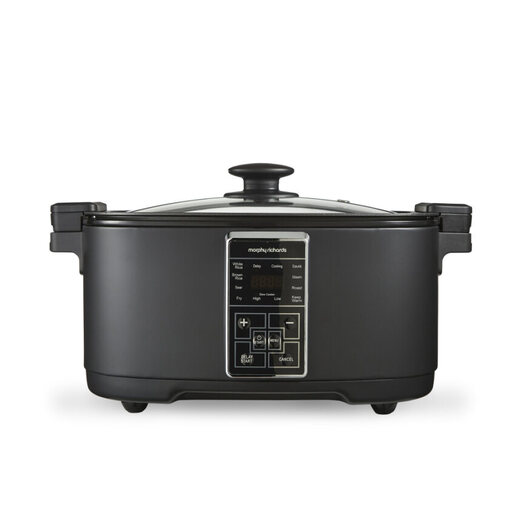 Image unavailable
Consider the listed sear/sauté function for heating beans without pressure if you also cook larger meals.
The product name specifies 1350W, 10 preset functions and a dishwasher-safe pot and accessories. At 6.5L, it is a larger choice for one serving; check small-quantity guidance, available space and whether it has the keep-warm function you want.
No: canned butter beans are already cooked, so look for a documented non-pressure mode such as sauté, simmer or reheat. Pressure functions are a separate reason to buy a multicooker if you plan to cook other meals and are willing to follow its lid and release instructions.
Choose capacity around the other meals you intend to make, not just the bowl of beans. Instant Pot UK lists the Classic Mini at 3.8L, Ninja UK describes its 4.7L OP100UK Mini as cooking for up to two people, and Tefal presents its 5L RK302E15 as a four-portion model; also check the cooker's external dimensions and small-quantity instructions.
Keep the unused beans in a covered container in the fridge and follow the storage instructions on the can, as Buckinghamshire Healthcare NHS Trust advises for opened canned food. Heat only the portion you plan to eat rather than repeatedly reheating the remainder.
GOV.UK guidance dated 17 May 2024 says businesses may use either UKCA or CE marking for relevant regulated products placed on the market in England, Scotland and Wales. Check the current requirements for the specific product and destination before buying; Great Britain guidance does not establish the rules for Northern Ireland.