
24/7 Customer Support

Free returns

Same-day & Next-day Delivery

Quality Guaranteed

Unlock Your Welcome Offers: FREE Delivery | Up to 80% OFF | Free 30-day JoyPlus trial
Download the APP
A multicooker can replace several individual appliances, but only if its capacity, functions and cleaning requirements suit the way you cook. For UK households with limited worktop space, the right choice may handle rice, soups, steamed dishes and slow-cooked meals without creating another difficult-to-store gadget.
However, product descriptions can make different appliances sound interchangeable. A rice cooker may offer only a few preset programmes, while an electric pressure cooker may need more careful handling. Before buying, look beyond the number of functions and check the details that affect everyday use.
A product described as an “8-in-1” or “7-in-1 multicooker” may include functions that overlap. For example, “keep warm” and “reheat” are useful, but they do not replace cooking modes such as sautéing, pressure cooking or steaming.
Check the actual programme list. A household preparing rice and congee may value a smart rice cooker, while someone making stews, beans and tender meat may need an electric pressure cooker with a locking lid.
The stated capacity is not always the usable cooking volume. Pressure cookers also have maximum fill lines, particularly when preparing foods that expand or create foam. A 3-litre multicooker can suit one or two people, but larger households may need additional capacity or more than one cooking batch.
Consider cupboard space, worktop depth and the size of your usual portions rather than choosing solely by the largest number on the product page.
Removable inner lids, steam valves, sealing rings and non-stick pots all require regular care. If these parts are difficult to remove or replacement components are unavailable, an appliance may become inconvenient over time.
Look for dishwasher-safe accessories where stated, but always follow the manufacturer’s cleaning instructions. Non-stick coatings should be cleaned with non-abrasive sponges, while stainless steel can usually tolerate more everyday use but may still scratch with steel wool.
For a couple, student or small family, a capacity between 3 and 4 litres can offer a practical balance between batch cooking and storage. The Xiaomi 3-litre model is described as suitable for 2 to 6 people, while the Instant Pot models provide a 3.8-litre cooking pot for smaller households, couples and meal preparation.
Remember that rice, soup and pressure-cooked food may require different usable volumes. Follow the internal markings and never exceed the indicated maximum fill line.
Choose functions based on the meals you actually prepare:
A high programme count is less important than clear controls, usable accessories and instructions that explain each mode.
For standalone electric appliances, check the stated voltage, supplied cable and placement requirements. The main housing should remain dry and should never be immersed in water.
If you are considering a complementary pot rather than an electrical appliance, check the base and hob compatibility. The PPURECOOK deep fry pot has a three-layer composite magnetic heat-conducting base and is listed for gas, induction and electric ceramic hobs. Its 304 stainless steel body is uncoated, with a polished inner wall and a removable perforated draining basket.
For any pressure-cooking appliance, check that the lid, sealing ring and steam-release valve are correctly fitted before use. Never force open a pressurised lid, and keep your face and hands away from escaping steam.
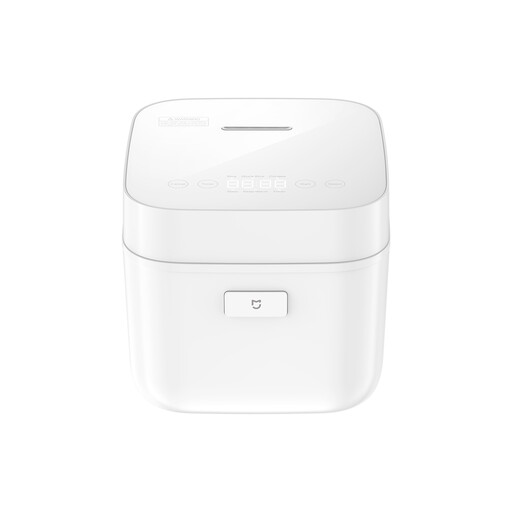
Why This Fits Their Persona: Its smaller format is suitable for a student, solo cook or couple with limited storage space and straightforward rice-making needs.
The compact capacity avoids paying for a large bowl that may be unnecessary for smaller portions. Confirm its available programmes and included accessories before ordering.
1.5-litre format; designed for multifunctional rice cooking in a compact kitchen.

Why This Fits Their Persona: Suitable for users wanting scheduled cooking, digital controls and several rice, soup and steaming options from one appliance.
Its listed functions are clearly specified rather than relying only on an “8-in-1” label. The detachable inner lid and steam valve also make routine cleaning more manageable.
3-litre capacity; 24-hour delay timer, 12-hour keep-warm setting and app integration are listed features.
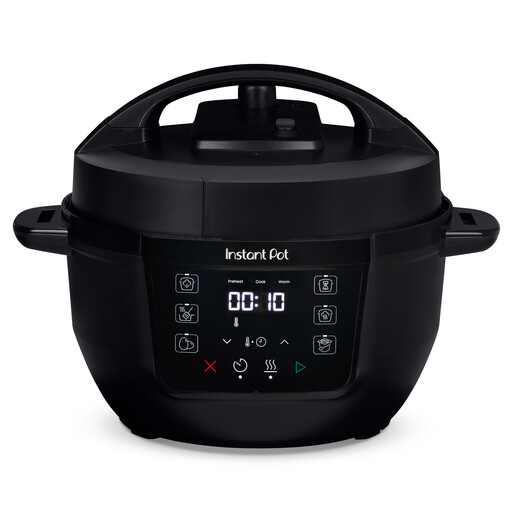
Why This Fits Their Persona: A practical match for meal-prep users who want pressure cooking, slow cooking, steaming, sautéing and rice cooking in one electric unit.
The seven functions are individually stated, helping you assess whether they fit your recipes. Follow the fill lines and pressure-release instructions to avoid unsafe use.
Removable stainless steel inner pot; digital controls and a locking pressure-cooking lid.
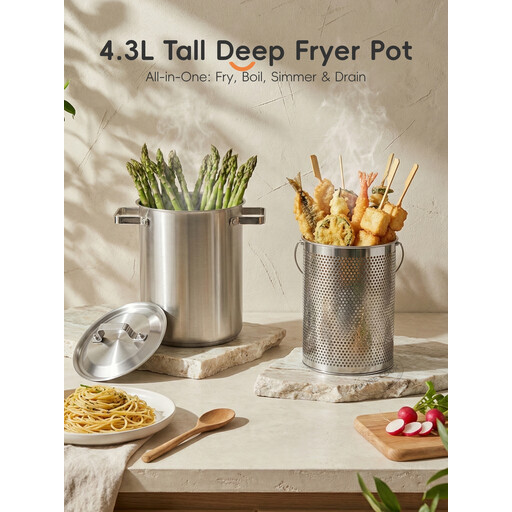
Why This Fits Their Persona: Suitable for cooks who need a separate deep frying pot and versatile hob cookware rather than another electrical appliance.
It does not present frying as an automatic appliance function. Instead, the deep design and draining basket are visibly dedicated to hob frying, boiling and soups.
4.3-litre capacity; 304 stainless steel pot and basket; compatible with induction, gas and electric ceramic hobs.
We have compiled a complete, real-time list of products that fully satisfy these strict selection criteria and UK safety regulations.
Running cost depends on the appliance’s wattage, cooking time, portion size and your electricity tariff. A multicooker may reduce the need to heat a larger oven for small portions, but there is no universal saving. Compare the product’s power rating with your usual cooking duration and avoid leaving keep-warm modes active unnecessarily.
Lifespan depends on frequency of use, cleaning and the availability of consumable parts. Steam valves, sealing rings and non-stick inner pots may need replacement before the main unit. Clean after each use, keep vents clear and follow the supplied maintenance guidance.
Some models combine both functions, but performance and capacity vary. Check whether the appliance includes a dedicated rice programme, slow-cook mode and suitable accessories. For frying, a deep frying pot or separate air fryer may still be more appropriate. Always match the appliance to the cooking method rather than assuming one device can safely perform every task.