One-pot dinner makers
If you want to brown ingredients and finish a canned-bean casserole in the same vessel, prioritise the cooking modes you will actually use. Pressure cooking is more relevant when other ingredients in the meal need it too.


For canned-bean casserole, look for a way to brown ingredients, finish the dish at a suitable pace and clean the pot between shared-kitchen users. Pressure cooking offers another way to prepare a complete meal, but already-cooked canned beans do not make it essential; a guided cooker suits someone who wants on-screen instructions, while a larger slow-cooker-led model makes more sense for regular group meals if there is room to store it.
If you want to brown ingredients and finish a canned-bean casserole in the same vessel, prioritise the cooking modes you will actually use. Pressure cooking is more relevant when other ingredients in the meal need it too.
If several people use the worktop and do the washing-up, consider the removable parts, their care instructions and where the appliance will stand and be stored.
If you regularly make portions for others or plan leftovers, compare your recipe volume with the cooker’s fill limits and decide how portions will be stored and reheated.
Choose the cooking workflow before comparing capacity: a short simmer for canned beans calls for different controls from a pressure-cooked meal or a slow-cooked group casserole.
Consider it when: You want on-screen instructions for complete one-pot meals; Tefal’s Cook4me+ CY851840 offers browning, simmering and pressure-cooking modes.
Trade-off: For a brief canned-bean simmer, the pressure lid and release procedure may add steps you do not need.
Consider it when: You are comfortable choosing the cooking mode yourself and want sautéing, slow cooking and pressure cooking in one appliance, as offered by the Instant Pot Duo 5.7L.
Trade-off: You must follow the exact model’s liquid, fill-limit and pressure-release instructions rather than relying on guided steps.
Consider it when: Group casseroles are routine and there is space for a larger appliance; Ninja positions the 8L PossibleCooker MC1001UK for up to eight portions.
Trade-off: Its larger format takes more shared-kitchen storage space than a smaller vessel.
| Concern | What to check | Who this matters to |
|---|---|---|
| Casserole workflow | Check for browning or sautéing and a finishing mode suited to your recipe, such as simmering or slow cooking. | If I want to brown ingredients and finish the casserole in one pot, clear controls matter more to me than extra programmes. Around 33% of consumers put a straightforward workflow first. |
| Cleaning and space | Check appliance dimensions and the care instructions for the removable pot, lid and any other parts. | When I share the worktop and washing-up, I need a cooker I can put away and clean after dinner. For around 25% of consumers, that is the primary concern. |
| Meal timing | Compare the available finishing modes; if using pressure, check the model’s liquid and release instructions. | Different dinner times make it useful for me to choose how the casserole finishes without treating keep-warm as a leftover-storage plan. Around 25% of consumers prioritise that timing flexibility. |
| Portions and leftovers | Compare recipe volume with the pot’s fill marks, then plan where portions will be stored. | If I cook for housemates or make meals ahead, I need enough usable capacity without crowding the kitchen. Making and managing several portions comes first for around 17% of consumers. |
A 5.7L, 6L or 8L vessel cannot necessarily be filled to that level for every recipe. The Instant Pot Duo manual sets a two-thirds maximum and a lower limit for foods that expand during cooking.
Compare your casserole volume with the fill marks and the instructions for the exact model. Do not automatically apply dried-bean expansion rules to canned beans, but still observe the relevant maximum line.
Canned beans are already cooked. If the rest of your recipe only needs browning and a gentle finish, pressure cooking adds a sealed-lid and release stage without necessarily helping that workflow.
Choose the cooker around your usual recipe: confirm its sauté or browning control and the finishing mode you intend to use before giving weight to its pressure programme.
In a shared kitchen, a hot pot, lid or release of steam affects other people using the worktop. Cleaning also extends beyond the inner pot where a model has additional removable parts.
Agree who will clean the appliance after use, follow the exact model’s care instructions and keep the unit on a stable, heat-safe surface. Do not open or move a pressure cooker while it remains pressurised.
A keep-warm setting is not a substitute for deciding how uneaten casserole will be stored. The Food Standards Agency’s catering guidance says reheated food should be hot at its centre and reheated only once.
Decide which portions will be eaten now and which will be stored, use clean containers and follow appropriate storage and reheating guidance for the food.
The Instant Pot Duo 5.7L illustrates a manual multicooker route for cooks who want sautéing, slow cooking and pressure cooking in one appliance.
The Cook4me+ CY851840 illustrates guided cooking in a stated 6L, up-to-six-serving format.
Ninja’s 8L PossibleCooker MC1001UK illustrates a larger, slow-cooker-led option for regular shared meals.
These multicookers offer different sizes and cooking approaches for canned-bean casserole. Compare their stated modes with your recipe, then check the exact model’s dimensions, care instructions and, where relevant, pressure-cooking manual.
 No image available
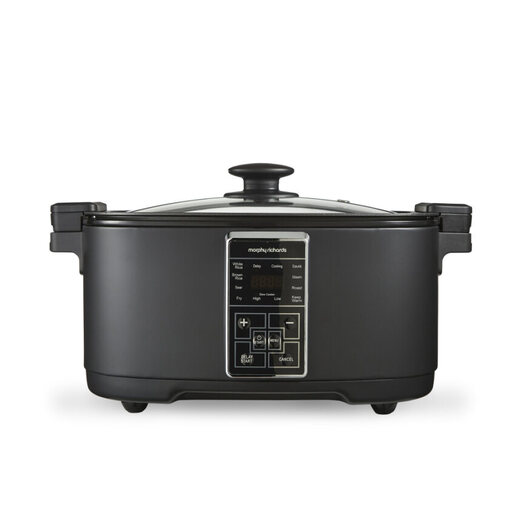
Consider this for a one-pot casserole when you want to brown ingredients and choose a stew or slow-cook finish. The title lists a 5L capacity and stew and slow-cook modes; check its dimensions and the care instructions for the parts you will wash after shared use.
 No image available
Consider this if you want to sauté before choosing a slow-cooked or pressure-cooked finish. Its title lists a 5.7L capacity and sauté and slow-cooker functions; check the exact manual for pressure-cooking liquid, fill and release procedures, as well as the appliance’s fit in your kitchen.
 No image available
Consider this capacity if you often make several portions, provided it fits your shared worktop and storage space. The title states 6.5L, 1350W and a dishwasher-safe pot and accessories; check the sear and slow-cook controls against the way you make casserole.
 No image available
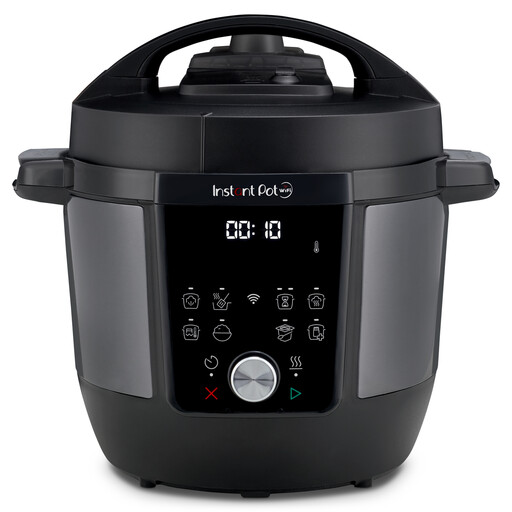
Consider this 5.7L model if you want to choose how a one-pot casserole finishes rather than follow an on-screen recipe. Check its exact cooking modes, dimensions and removable-part care; use its own manual for liquid, fill and release instructions before pressure cooking.
 No image available
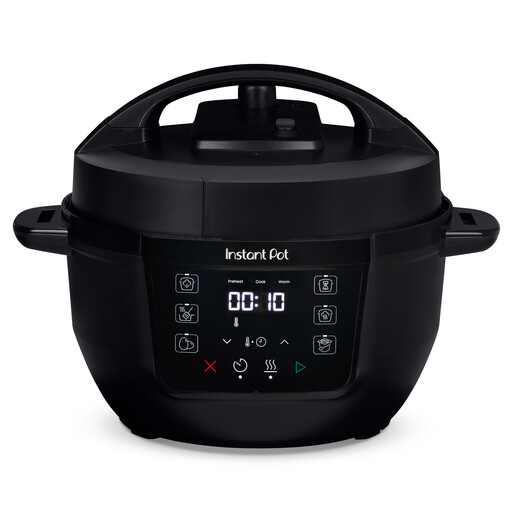
Consider the stated 3.8L capacity for smaller casserole batches, but compare your usual portions with the relevant fill limits before planning group meals. Check this model’s cooking modes, dimensions and cleaning instructions, and follow its own manual whenever using pressure cooking.
No: browning followed by simmering or slow cooking may be enough for your recipe. Pressure cooking remains an option for a complete meal that calls for it; Tefal’s Cook4me recipe uses canned beans in a pressure-cooked stew, but that does not make pressure necessary for every casserole.
Start with the portions you normally make and the space available for storage. Instant Pot and Tefal position the cited 5.7L and 6L models for up to six portions, while Ninja positions its 8L PossibleCooker for up to eight; for pressure cooking, check the exact model’s fill limits rather than treating stated capacity as usable recipe volume.
Follow the manual for your exact cooker, particularly its liquid requirements, fill marks, lid and release procedure. The Instant Pot Duo manual sets a two-thirds maximum fill level and warns against opening or moving the cooker while it is pressurised; do not assume another model has identical instructions.
Plan storage and reheating rather than relying on a keep-warm programme for later meals. Use clean containers and appropriate storage guidance; the Food Standards Agency’s catering guidance says reheated food should be hot at the centre and reheated only once.
It can make washing the pot easier, but it does not cover every part of a multicooker. Check the exact model’s instructions for its lid, seal, valves and any condensation collector, and agree who will clean and dry the appliance between shared-kitchen uses.