The space-limited soup cook
If your worktop or cupboard is crowded, compare external dimensions rather than judging fit by bowl capacity. Instant Pot UK lists its Classic Mini 3.8L at 31.8 × 35.1 × 25.6 cm (depth × width × height).


For modest portions, start with a compact pressure multicooker that has a sauté function, but check its external dimensions before deciding it will fit your kitchen. A larger bowl gives more room for several portions and leftovers; a slow-cook-focused model is another option if planned cooking matters more to you than pressure cooking. Whichever route you choose, follow the exact model’s liquid, fill-limit and lid instructions.
If your worktop or cupboard is crowded, compare external dimensions rather than judging fit by bowl capacity. Instant Pot UK lists its Classic Mini 3.8L at 31.8 × 35.1 × 25.6 cm (depth × width × height).
If you want to sauté ingredients and then pressure-cook in one appliance, check that the exact model includes both functions. The Instant Pot Duo and Tefal Turbo Cuisine ranges include pressure-capable models with sauté functions, according to their manufacturers.
If you regularly make several portions, consider a larger bowl and how you will clean it, while allowing for the appliance’s storage space. Instant Pot UK describes its 5.7L Duo as making up to six portions; actual soup yield depends on the recipe and permitted fill level.
Consider it when: You usually make modest portions and want pressure cooking and sautéing without choosing a larger bowl.
Trade-off: A smaller bowl leaves less room for batches, and its litre capacity alone cannot tell you whether the appliance fits.
Consider it when: You want pressure cooking but expect to make several portions or keep leftovers.
Trade-off: Check whether the larger appliance leaves enough worktop, lid and storage clearance.
Consider it when: You prefer to plan a longer cook and do not need a pressure-cooking function.
Trade-off: Do not assume a slow-cook-focused model also pressure-cooks; check its function list before buying.
For chicken and barley soup in a small kitchen, decide which need comes first: fitting the appliance, cooking in one pot, making leftovers or planning a slow-cooked meal.
| Concern | What to check | Who this matters to |
|---|---|---|
| Footprint and capacity | Compare the appliance’s external dimensions with your worktop and cupboard, allowing room to open the lid and release steam safely. | I need the cooker to fit where I will use and store it, even if that limits how much soup I make at once. Around 36% of consumers would put kitchen fit first. |
| One-pot cooking | If pressure cooking matters, confirm that the exact model has both pressure-cook and sauté functions; follow its liquid and fill instructions. | On a busy evening, I want to start ingredients and continue cooking in the same appliance. Roughly 29% of consumers would prioritise that pressure-capable, one-pot route. |
| Leftovers and cleaning | Check the usable fill limit for soup and which removable parts are dishwasher-safe on the exact model. | I would rather make several portions at once, provided the bowl is manageable to clean afterwards. Around 21% of consumers would make batch capacity and clean-up their main concern. |
| Planned slow cooking | Check the slow-cook and keep-warm functions on the exact model, and plan safe handling of chicken and leftovers. | I can allow a longer cook and want the meal to fit my schedule rather than rely on pressure cooking. About 14% of consumers would put planned slow cooking first. |
Bowl capacity does not establish whether a multicooker will fit a crowded worktop or shallow cupboard.
Measure the place where you will use and store it, including space to open the lid, then compare those measurements with the exact model’s dimensions.
Some multicookers offer slow cooking and other programmes without a pressure-cook function. Tefal’s 5L Multicook 8-in-1, for example, is not presented by Tefal as a pressure cooker.
If pressure cooking is central to your choice, check that the exact model explicitly lists it alongside any sauté function you want.
A keep-warm or delayed-start setting does not replace thorough cooking and proper handling of leftovers.
Cook chicken thoroughly. GOV.UK advises cooling cooked food and refrigerating it within one to two hours, then eating leftovers within 48 hours or freezing them; reheat leftovers only once, until steaming hot throughout.
Pressure cooking requires attention to the model’s liquid, fill and pressure-release instructions. The limits in one manual should not be applied to a different cooker.
Use the supplied lid and follow the exact model’s manual. Never force the lid open while the cooker is pressurised.
Its UK range includes the 3.8L Classic Mini and 5.7L Duo pressure multicookers, with pressure cooking, slow cooking and sautéing among their stated functions.
Its cited UK models include the 4.8L pressure-capable Turbo Cuisine and a 5L Multicook 8-in-1 focused on functions including slow cooking.
Its cited 5.6L models take different approaches: the CSC024 combines sautéing and slow cooking, while the CSC051 also offers pressure cooking, according to Crock-Pot UK.
These choices include smaller and larger multicookers for chicken and barley soup, plus a model suited to a sauté-then-slow-cook approach. Check each cooker’s dimensions against your kitchen before choosing by capacity.
 No image available
Consider this larger-bowl option if you want to sauté before pressure-cooking soup and make several portions. Its title specifies a 5.7L capacity, a ceramic non-stick coating and slow-cook and sauté functions. Check the external dimensions and the model’s pressure-cooking instructions before use.
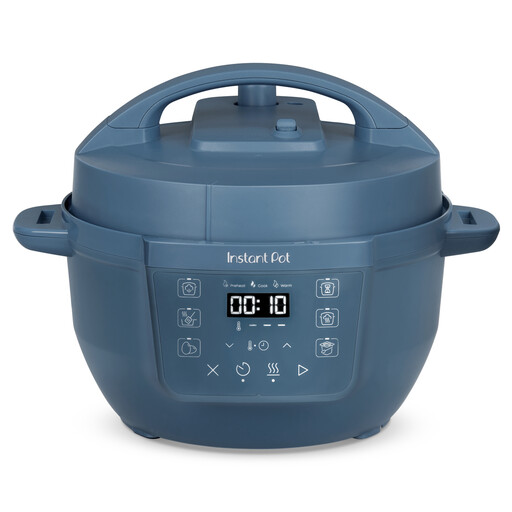 No image available
The 3.8L capacity is worth considering for modest soup batches if you want to sauté and pressure-cook in one appliance. Confirm its external dimensions rather than assuming a smaller bowl means a smaller footprint, and follow its own pressure-cooking manual.
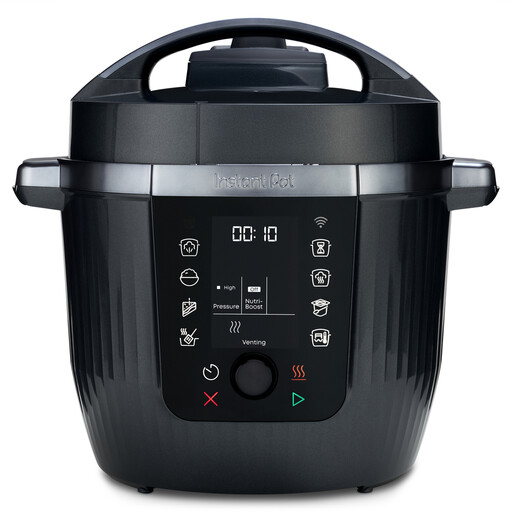 No image available
This 5.7L option suits consumers considering a larger soup batch while keeping sautéing and pressure cooking in one appliance. Measure your available worktop and lid clearance, and use the model-specific manual for liquid, fill and release instructions.
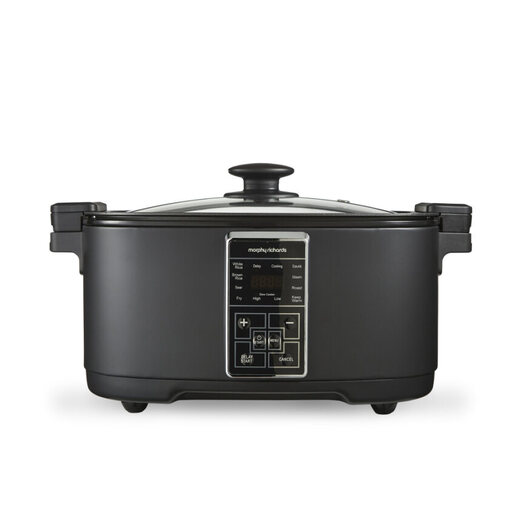 No image available
Consider this for sautéing before slow cooking if you have room for a 6.5L appliance. Its title specifies 1350W and a dishwasher-safe pot and accessories. Check the footprint carefully in a small kitchen; if pressure cooking is essential, confirm whether the exact model offers it.
Choose a pressure-capable multicooker if a quicker cooking route matters to you; choose a slow-cook-focused model if you prefer to plan a longer cook. Check the exact model’s functions, as a multicooker does not necessarily offer pressure cooking or sautéing.
Start with the space available to use and store it, then choose a bowl capacity for your usual portions. Instant Pot UK lists its Classic Mini 3.8L at 31.8 × 35.1 × 25.6 cm and describes its 5.7L Duo as making up to six portions; soup yield also depends on the recipe and the permitted fill level.
Read the exact cooker’s manual for minimum liquid, maximum fill, lid and pressure-release instructions. The Instant Pot Duo manual says not to fill beyond two-thirds of capacity and sets a lower half-full limit for listed expanding foods; do not apply those limits to another model without checking its manual.
Cool it and refrigerate it promptly, or freeze it if you will not eat it soon. GOV.UK advises refrigerating cooked leftovers within one to two hours, eating them within 48 hours or freezing them, and reheating only once until steaming hot throughout.