Solo shared-kitchen cooks
If you make one or a few servings, check where the cooker will sit and be stored, as well as whether its manual permits your intended batch size. A smaller stated capacity does not settle either question.


Choose a compact pressure multicooker if you want pressure cooking alongside other functions and have room to use its locking lid and steam release safely. A rice-and-porridge multicooker makes more sense if a named porridge programme and cooking around a shared timetable matter more. For either route, check the appliance’s dimensions, minimum-fill instructions and cleaning requirements, and do not rely on a programme name to establish that chicken is fully cooked.
If you make one or a few servings, check where the cooker will sit and be stored, as well as whether its manual permits your intended batch size. A smaller stated capacity does not settle either question.
If you prepare several portions, compare bowl capacity, cooking programmes and removable parts. A timer or keep-warm function may help with scheduling, but use it only as the manual directs for the ingredients in your recipe.
If counter space, utensils and fridge shelves are shared, plan how to keep raw chicken apart from ready-to-eat food, check that it is fully cooked and cool leftovers promptly. The cooker does not replace those steps.
Start with the cooking method and the space available, then check the exact model’s fill limits and cleaning instructions. Treat convenience features as part of your cooking routine, not as a substitute for safe chicken and rice handling.
| Concern | What to check | Who this matters to |
|---|---|---|
| Shared-kitchen safety | Check how removable parts are cleaned and whether the plug and appliance load suit the available socket arrangement. | If I share utensils and sockets, I need a workable way to separate raw chicken, cook it thoroughly and use the appliance without overloading a lead. Around 42% of consumers put safe shared-kitchen handling first. |
| Batch size and cleaning | Measure external dimensions and check the manual’s minimum fill and cleaning instructions; do not equate bowl litres with finished portions. | When I cook a modest batch, the appliance and its washing-up must fit around other people’s use of the kitchen. For around 33% of consumers, space and clean-up are the primary concern. |
| Programmes and timing | Look for the cooking modes you intend to use and check the instructions for timers, keep-warm and poultry. | I may need to fit cooking around a shared timetable without assuming a porridge setting will cook raw chicken safely. Timing and programme convenience come first for around 25% of consumers. |
A named grain programme does not establish the right fill level, chicken cooking time or result for your recipe.
Check the model manual before adding raw chicken, and confirm that the chicken is fully cooked before serving. GOV.UK advises checking that no pink meat remains and that the juices run clear.
A bowl’s volume, an uncooked-rice cup measure and a stated portion count describe different things. Yum Asia’s rice-cooker guidance notes that the supplied rice cup is often 180 ml.
Compare the appliance’s physical dimensions and the exact model’s capacity and fill instructions against the batch you intend to make.
Cooking controls do not prevent raw chicken from contaminating shared utensils or make cooked rice-and-chicken leftovers safe to leave out.
Keep raw chicken apart from ready-to-eat food, wash used parts thoroughly, check the chicken is fully cooked and cool leftovers promptly before refrigerating them.
Several appliances connected to the same lead can exceed its rating. Electrical Safety First warns against overloading extension equipment.
Use a suitable wall socket where practical. If you need an extension, check its marked rating against the total connected load, avoid daisy-chaining and fully unwind any cable reel.
Its cited UK Classic models provide a pressure-multicooker route, with sauté, slow-cook and steam functions alongside pressure cooking.
Its cited multicookers offer a rice-and-porridge route for cooks prioritising grain programmes and scheduling features.
The NL-GAQ10 is a rice-focused option if its capacity guidance and cooking instructions fit your intended batch.
These choices include a small pressure cooker, compact rice cookers and a larger rice cooker with a porridge mode. Compare each model’s manual with your intended chicken-and-rice batch, especially where pressure use, minimum fill or cleaning affects a shared kitchen.
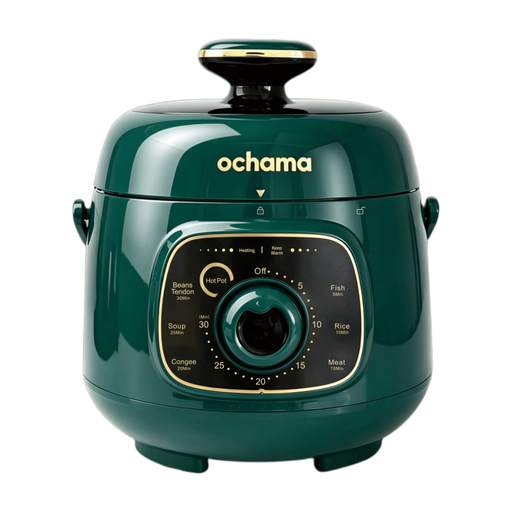 No image available
Consider this pressure cooker if you want to assess a smaller bowl for modest chicken-and-rice batches.
Its named capacity is 1.8 L. Check the manual’s minimum fill, raw-chicken instructions and cleaning procedure before deciding whether it fits your routine.
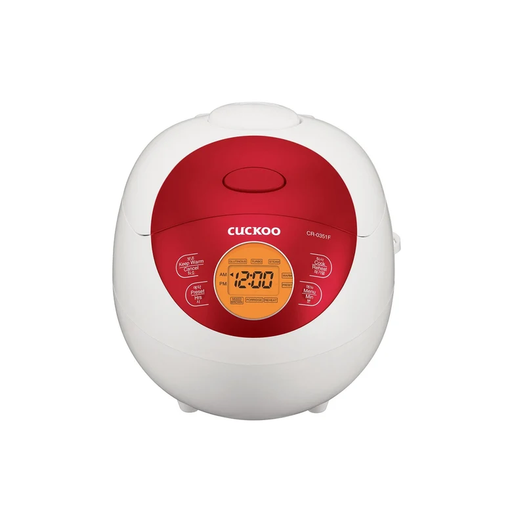 No image available
This is a rice-cooker option to examine if a small stated capacity and a timer matter more to you than a pressure cooker.
The name specifies 0.54 L, 3-cup and 425 W ratings, fuzzy logic, keep-warm and timer features. Check what its cup measure means and follow the manual’s fill, chicken-cooking and cleaning instructions.
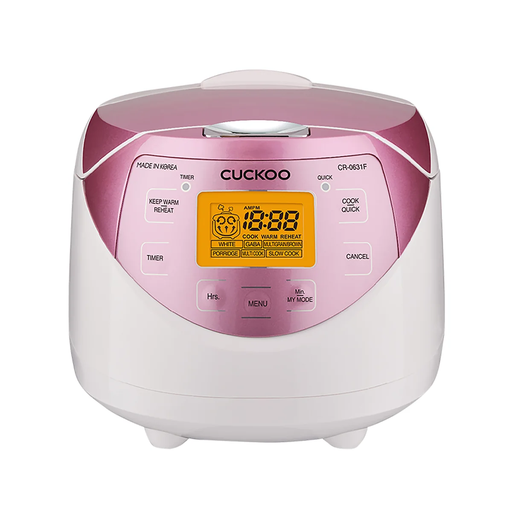 No image available
Consider this model if you want to compare a larger stated rice-cooker capacity with the smaller Cuckoo option while retaining timer and keep-warm features.
The name specifies 1.08 L, 6-cup and 580 W ratings and fuzzy logic. Confirm the cup measure, fill guidance, cleaning method, offered unit’s plug and rating label, and instructions for cooking chicken.
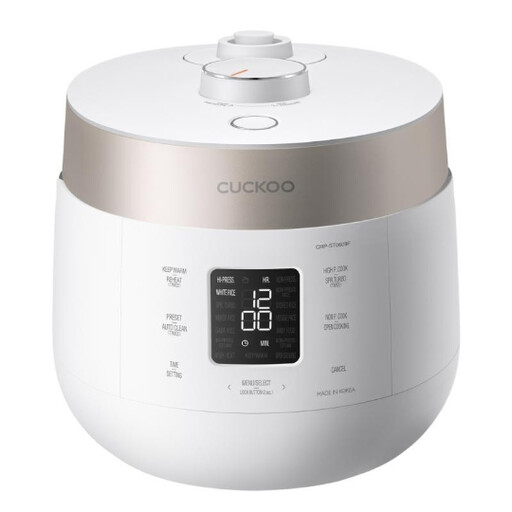 No image available
This model is worth examining if you want rice-cooker functions together with pressure cooking and can accommodate pressure-release steps in a shared space.
Its name specifies a 1.08 L capacity, 6-cup rating and 850 W rating. Check the manual’s fill and pressure instructions, how its parts should be cleaned, and the offered unit’s plug and electrical rating before use.
 No image available
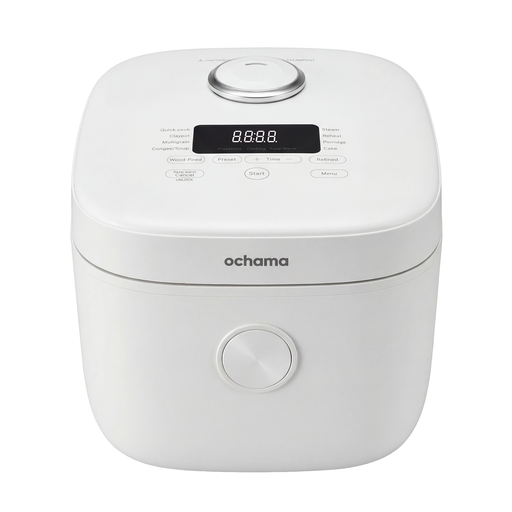
Consider this cooker if you prepare shared meals and want a named porridge mode, but check that its size and minimum batch suit the space and portions you have in mind.
The name specifies 4 L, 860 W, a thick spherical non-stick inner pot, delayed start and keep-warm. Check its external dimensions, cleaning instructions, electrical rating and manual guidance for cooking chicken before buying.
No. A programme name does not establish that a particular recipe cooks chicken thoroughly. Follow the appliance instructions and check the thickest part of the chicken before serving; GOV.UK advises that no pink meat should remain and the juices should run clear.
Cool it promptly in smaller portions and refrigerate it rather than leaving it on a shared worktop. GOV.UK guidance for England, Northern Ireland and Wales says to refrigerate general cooked leftovers within one to two hours and eat them within 48 hours or freeze them. If serving a baby or young child, follow the NHS’s stricter baby-food guidance for rice: cool it within one hour, refrigerate or freeze it immediately, use refrigerated rice within 24 hours and do not reheat it more than once.
Only if the connected appliances’ total load stays within the lead’s marked rating and the setup follows its instructions. Electrical Safety First warns against overloading or daisy-chaining extensions and advises fully unwinding cable reels before use.