Busy family one-pot cooks
If you want to brown a vegetable base and cook lentils and sauce in the same vessel, a 5.7–6L pressure multicooker is a practical starting range. Check that the exact model offers the cooking modes your recipe needs.


Start with a 5.7–6L multicooker if you want to brown the vegetables and cook family-sized lentil ragout in one pot; Instant Pot UK and Tefal UK describe models in this range as making up to six portions or servings. Guided controls may help if you are new to pressure cooking, while a larger vessel makes more sense when you regularly cook extra portions. Whichever route you choose, follow the exact model’s liquid, fill and pressure-release instructions rather than transferring settings from another cooker.
If you want to brown a vegetable base and cook lentils and sauce in the same vessel, a 5.7–6L pressure multicooker is a practical starting range. Check that the exact model offers the cooking modes your recipe needs.
Guided recipes or prompts may make the controls easier to navigate when you are adapting a stovetop ragout. You still need to follow the cooker’s instructions for liquid, filling and pressure release.
If you routinely make extra portions for another meal, compare your recipe yield with each cooker’s usable fill level. A larger model is worth considering when that extra capacity is a regular need, rather than an occasional possibility.
Start with the cooking modes and usable capacity for your usual ragout, then decide whether guided controls or functions for other dishes would earn their space in your kitchen.
| Concern | What to check | Who this matters to |
|---|---|---|
| One-pot weekday cooking | Look for sauté or brown alongside the cooking mode you intend to use. For pressure cooking, read the model’s liquid and fill instructions. | If I want to brown vegetables and leave the lentils cooking while I prepare the rest of dinner, I put one-pot convenience first; around 33% of consumers would share that primary concern. |
| Confidence with controls | Check for step-by-step guidance and clear setup and pressure-release instructions. | When I am new to pressure cooking, I want help choosing settings without assuming a preset fits my recipe; roughly 25% of consumers would put operating confidence first. |
| Portions and leftovers | Compare your recipe yield with the stated serving guide and the pressure maximum-fill marking, not just the nominal litres. | If I cook enough for a family meal and another day’s portions, usable capacity drives my choice; approximately 25% of consumers would make batch yield their main concern. |
| Cooking beyond ragout | Consider an air-frying lid only if you expect to use it; check where separate lids will be stored. | For me, crisping accompaniments and making other meals must justify an extra lid; around 17% of consumers would prioritise that versatility. |
The full bowl volume is not available for pressure cooking. Instant Pot UK says contents in its Classic 5.7L must remain below the PC Max two-thirds line.
Compare your usual recipe yield with the maker’s serving guide, then check the exact manual’s fill marking before choosing a size.
A cooking-speed comparison does not tell you how long your particular ragout will take once preparation, pressure build-up and release are included.
Use a recipe tested for the cooker and lentils you plan to use, and allow time for preparation and pressure release.
An air-frying lid can serve other dishes, but it is not needed to cook lentils and sauce.
Choose a two-lid model when crisping or air frying will be a regular use; otherwise concentrate on the modes, capacity and cleaning arrangements for your ragout.
Separate lids also need storage space and cleaning.
Keeping a finished meal warm is not a substitute for cooling, storing and reheating portions intended for later. For its vegetable-and-lentil soup recipe, the NHS advises covered storage after cooling; the Food Standards Agency says reheating should heat food thoroughly through the centre.
Plan how you will cool and store extra portions, and reheat them thoroughly before serving.
These model ranges illustrate different choices; check the features and instructions of the particular cooker rather than assuming they apply across a brand.
Its Classic 5.7L is a conventional pressure-multicooker option for family one-pot meals.
Its UK range includes distinct choices for guided cooking, manual adjustment and larger batches with air frying.
The Foodi OP350UK is an option to examine if crisping functions matter alongside multicooking.
These choices include family-sized multicookers, a 5L option for a browning-and-stewing approach, and a smaller 3.8L cooker. Match the stated modes and capacity to your ragout before settling on a model.
 No image available
Consider this for a family ragout if its programmes and usable fill level suit your recipe.
The product name states a 5.7L capacity, a sauté function and a ceramic non-stick coating. Check the exact manual for pressure-cooking liquid and fill requirements.
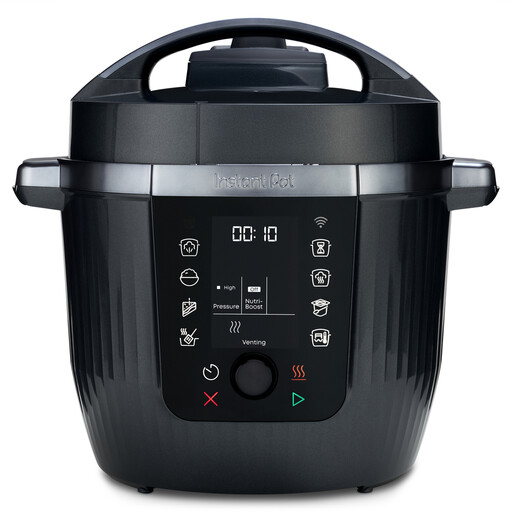 No image available
The 5.7L size is worth considering for family portions if your usual recipe fits the cooker’s usable capacity.
Confirm the modes you need and follow the Pro model’s own liquid, fill and release instructions; the Classic 5.7L instructions do not establish the rules for this model.
 No image available
Its stated pressure- and slow-cooking functions make it a model to consider for different approaches to family ragout.
The product name states 6L and 10 programmes. Confirm the model identifier against the appliance and its manual before following model-specific cooking instructions.
 No image available
This is a route to consider if you plan to brown ingredients and then stew or slow-cook the ragout.
The product name states a 5L capacity and stew and slow-cook modes. If pressure cooking is essential, confirm that the exact model has that mode before choosing it.
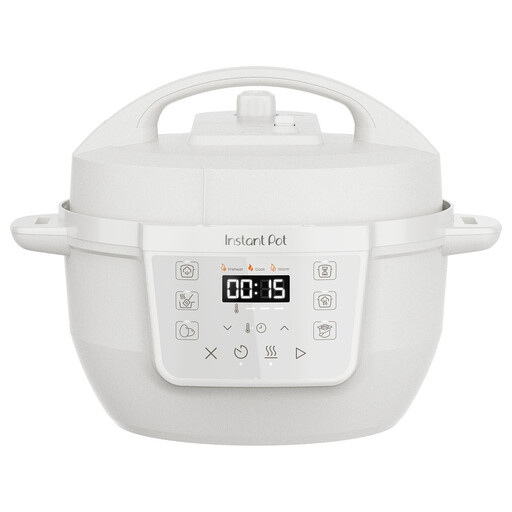 No image available
Consider the smaller 3.8L vessel if your family recipe makes fewer portions; check its usable fill level against the quantity you normally cook.
Confirm the cooking modes you need and use this model’s own instructions for liquid, filling and pressure release.
It can be a useful starting range, but check your recipe yield. Instant Pot UK describes its Classic 5.7L as making up to six portions, and Tefal UK describes its 6L Cook4me+ as making up to six servings; those guides do not override the exact cooker’s pressure maximum-fill marking.
No: an air-frying lid is an extra feature for crisping food, not a requirement for cooking lentils and sauce. Tefal UK’s Turbo Cuisine & Fry has separate pressure-cooking and air-frying lids, so consider it when you expect to use both functions and have room to store them.
No; follow the manual for the exact model and the recipe you are making. Instant Pot UK specifies water-based liquid for pressure cooking in its Classic 5.7L and gives model-specific fill instructions, which should not be transferred to another cooker.
Cool and store portions appropriately, then reheat them thoroughly before serving. For its vegetable-and-lentil soup recipe, the NHS advises covered storage for up to three days after cooling, or freezing for up to three months; follow any instructions specific to your ragout as well. The Food Standards Agency says reheating means heating food thoroughly through the centre, not merely warming it.