Family batch-soup cooks
You make split pea soup as a main meal and want enough for leftovers or meal preparation. Pot capacity matters, but the pressure-cooking fill limit determines how much of that capacity you can use for a particular recipe.


For family split pea soup, start with a pressure-capable multicooker that leaves enough room below its pressure-cooking fill limit for the peas and liquid. A 5.7L–6L model may suit a family meal, while a larger pot is worth considering for regular leftovers; guided controls and air frying matter only if you will use them beyond making soup.
You make split pea soup as a main meal and want enough for leftovers or meal preparation. Pot capacity matters, but the pressure-cooking fill limit determines how much of that capacity you can use for a particular recipe.
You want to cook dried peas without prolonged attention at the hob. Pressure cooking and straightforward controls may matter more to you than functions for crisping food.
You want controls you can understand, removable parts you can clean and clear instructions for filling the pot and releasing pressure. Extra programmes are less useful if the everyday routine feels difficult to manage.
Decide how large a soup batch you actually make, then choose the cooking method and controls you will use regularly. Nominal pot capacity is a starting point, not the permitted pressure-cooking fill volume.
| Concern | What to check | Who this matters to |
|---|---|---|
| Batch capacity | Compare the pot size with your recipe volume and the exact model's pressure-cooking fill marks. Check its dimensions if worktop or storage space is tight. | If I want soup for the family and leftovers, I need room for both liquid and expanding peas without overfilling the pot. Around 42% of consumers put batch headroom first. |
| Cooking routine | Check for pressure cooking and sautéing if you want both methods; consider slow cooking, manual timing and keep-warm controls if they fit your routine. | After a busy day, I would rather prepare the ingredients and let the cooker handle the main cooking stage than supervise a pan for a long stretch. Around 33% of consumers prioritise a lower-attention routine. |
| Controls and clean-up | Look at the lid and pressure-release instructions, the clarity of the controls and which removable parts the exact model allows you to put in a dishwasher. | As a new pressure-cooker user, I want to understand how to finish the cycle safely and clean up afterwards. Around 25% of consumers make ease of operation and clean-up their primary concern. |
Pressure-cooking fill limits leave less usable space than the pot's nominal capacity. Dried peas and liquid make the intended recipe volume particularly important.
Compare your batch with the fill marks and instructions for the exact cooker before choosing a size. If leftovers are a regular goal, consider a larger pot rather than planning to fill a smaller one past its limit.
Air frying adds a dry-cooking option, but it is not needed to pressure-cook or slow-cook split pea soup. A second lid also needs somewhere to be stored.
Choose that combination if you expect to use its crisping or roasting functions for other meals; otherwise, concentrate on the soup functions and pot size.
A claim about pressure-cooking speed does not account for every stage of preparing a meal, including heating, reaching pressure and releasing it.
When planning a family meal, follow a recipe suitable for the exact cooker and allow for the complete cooking and pressure-release process rather than relying on a headline speed claim.
A full pot of hot soup and a pressure-release step both require careful handling. Lid and placement instructions vary by model.
Read the exact manual before use, including its placement, filling, lid and steam-release directions. Keep hands clear of escaping steam and take care with hot removable parts.
These product lines illustrate different ways to cover family soup; the brand name alone does not settle the right capacity or set of functions.
Its pressure multicookers include a 5.7L Duo and a larger 7.1L Classic XL, both relevant to one-pot soup.
Its referenced pressure multicookers range from dial-operated Turbo Cuisine to the screen-guided Cook4me+ and the larger Turbo Cuisine & Fry.
The referenced Foodi MAX line combines pressure cooking with air frying and other dry-cooking functions.
These choices include pressure-oriented multicookers for family soup and larger pots suited to a slower-cooking approach. If pressure cooking is essential, check the exact model's functions before choosing one of the slower-cooking options.
 No image available
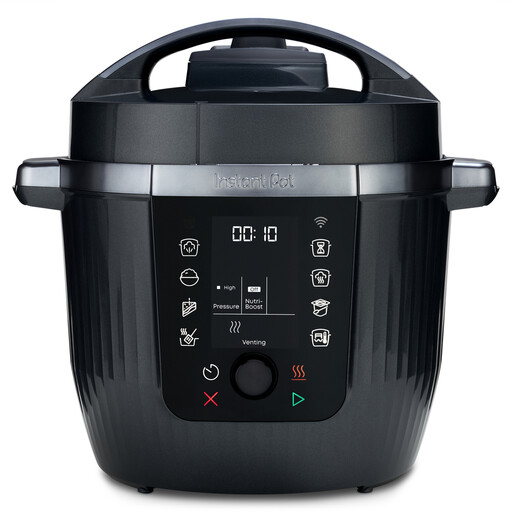
Consider this size for a family soup batch when the recipe fits the model's pressure-cooking fill limit. The product name lists a 5.7L pot, pressure cooking, slow cooking and sautéing; check the exact instructions for dried peas before setting your batch size.
 No image available
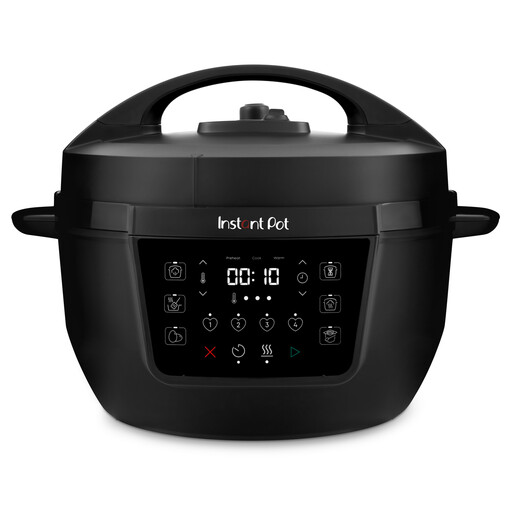
The 5.7L size makes this a candidate for family soup when your intended batch fits the exact model's fill marks. If you want to sauté before pressure cooking, confirm those controls in the model instructions, along with the pressure-release and inner-pot cleaning directions.
 No image available
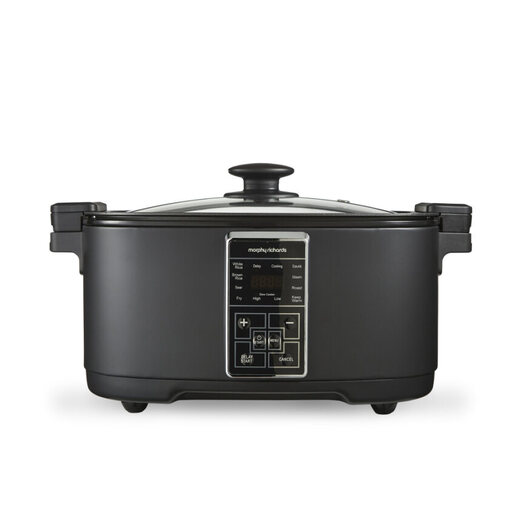
The stated 7.1L capacity is worth considering if you routinely make soup for leftovers as well as the family meal. Check this model's pressure-cooking fill marks against your recipe and its dimensions against the space where you will use and store it.
 No image available
Consider this 6.5L option if a slower soup routine suits you. Its product name specifies a dishwasher-safe pot and accessories; if cooking dried peas under pressure is part of your plan, confirm that capability and the relevant instructions for model 560007 before choosing it.
 No image available
This larger hot pot may suit a family soup prepared by simmering rather than by relying on a pressure setting. The product name lists a 7L capacity and slow-cooking use; check the model instructions for a suitable soup volume and cooking method before preparing dried split peas.
A 5.7L–6L pressure multicooker is a starting point for a family meal, while a 7.1L–7.6L model may better suit regular leftovers. Instant Pot UK describes its Duo 5.7L as a six-portion model and its Classic XL 7.1L as making up to eight portions, but those claims do not replace checking your recipe against the exact pot's pressure-cooking fill limit.
No. Follow the fill marks and instructions for your exact pressure multicooker rather than using its full stated capacity. The cited Instant Pot Duo Plus manual sets a general pressure-cooking maximum at the line marked PC MAX — 2/3 and gives a lower limit for expanding dried vegetables; check how your chosen model instructs you to load dried split peas.
No. Air frying is an additional dry-cooking function, not a requirement for pressure-cooked or slow-cooked split pea soup. Consider a model with an air-frying lid if you also expect to use it for other meals, and account for the extra lid when planning storage.
Read the exact model's instructions for placement, fill limits, the correct lid and steam release before the first cook. For the Instant Pot Duo Plus, Instant Pot UK instructs users to place the appliance on a stable, level, non-combustible surface; you can also check GOV.UK's product-safety alerts, reports and recalls service for notices relevant to an appliance.