Shared-kitchen batch cooks
If you make broth for several portions or housemates, capacity matters alongside containers and fridge space for the cooled leftovers. A removable bowl can also make clearing the shared worktop easier.


For vegetable broth in a shared kitchen, choose a capacity that fits both the portions you need and the cooled broth you can store, with removable parts you can clean promptly. A pressure multicooker suits a shorter cooking window if its users are comfortable following lid and steam-release instructions; a non-pressure model suits a longer slow-cook schedule without those pressure steps.
If you make broth for several portions or housemates, capacity matters alongside containers and fridge space for the cooled leftovers. A removable bowl can also make clearing the shared worktop easier.
If your kitchen access is brief, sauté and pressure-cook functions offer a one-appliance route, provided everyone using it can follow the locking-lid and steam-release instructions.
If cupboard and worktop space are limited, check the appliance’s dimensions and handling features as well as its capacity. Parts that can be cleaned promptly matter when someone else needs the kitchen next.
Choose when: A shorter broth-making window matters and the users are willing to follow pressure-lid instructions.
Trade-off: Locking the lid and managing steam release add steps; check that the finished batch can be stored.
Choose when: A longer slow-cook schedule suits the household better than a pressure-cooking workflow.
Trade-off: It does not offer a pressure-cook mode, so do not choose it expecting that option for a shorter cycle.
| Concern | What to check | Who this matters to |
|---|---|---|
| Clean-up and shared surfaces | Check which bowl, lid and accessories are removable and dishwasher-safe, and how seals or valves must be cleaned. | When several people share utensils and a worktop, I need to clear and clean the cooker before the next person uses it; roughly 37% of consumers put clean-up first. |
| Cooking-time flexibility | Confirm the model has sauté and the pressure-cook or slow-cook mode you intend to use. For pressure cooking, follow its filling and release instructions. | If my access to the kitchen is brief, I need a cooking route that fits that window; around 27% of consumers make cooking-time flexibility their main concern. |
| Batch size and storage | Compare capacity and stated portion guidance with your containers and available fridge space. | Making broth for housemates means I need enough portions without taking more fridge space than we can spare. Roughly 18% of consumers prioritise batch size and storage. |
| Worktop and cupboard space | Measure the intended storage spot and check the appliance’s full dimensions, weight and cord arrangement. | When the worktop needs clearing after cooking, I need a cupboard space the appliance will fit. About 18% of consumers put storage footprint first. |
A larger bowl can produce more broth than your allotted containers or shared fridge space can accommodate.
Choose capacity around the portions you will use and the cooled broth you can store; arrange suitable containers before making a large batch.
A dishwasher-safe bowl does not establish how the lid, seals, valves or accessories should be cleaned. Shared equipment and surfaces still need attention after cooking.
Check the model’s care instructions part by part, then clean and dry food-contact components before putting the cooker away.
Pressure cooking adds locking-lid and steam-release steps. Those steps matter when several people may use the same appliance.
Choose pressure cooking only if its users will follow the model instructions. Otherwise, consider a non-pressure model with the slow-cook and sauté functions you need.
Food-business hygiene guidance does not, by itself, establish the legal obligations of a shared household kitchen.
If the broth is prepared for sale or catering, check the requirements that apply to that activity. At home, agree how you will clean equipment, label containers and share fridge space.
Pressure-capable multicookers for households that want pressure cooking, slow cooking and sautéing in one appliance.
A non-pressure option for a longer broth-making schedule with sauté and slow-cook functions.
A non-pressure multicooker option when a hinged lid and removable cord are useful in a shared space.
These multicookers offer different capacities and cooking approaches for vegetable broth. Compare the space needed for the appliance and leftovers, then check the cleaning instructions for the exact model you choose.
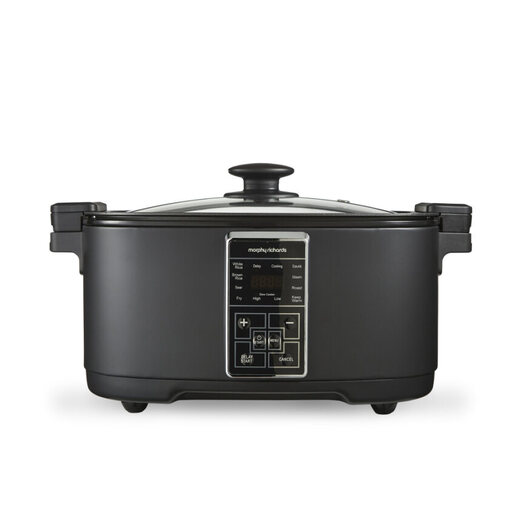 No image available
Consider this for a larger batch if you plan to sauté vegetables and use a slow-cook setting, and have space to store the finished broth.
The product title specifies 1350W, a 6.5L capacity and a dishwasher-safe pot and accessories. Check the cleaning instructions for the lid and whether the appliance’s dimensions fit your shared kitchen. If pressure cooking is important, confirm that function before choosing it.
 No image available
Consider this if you want a pressure-cooking option alongside sautéing and slow cooking, and are comfortable following its lid and steam-release instructions.
The product title specifies a 5.7L capacity and ceramic non-stick coating. Check how to clean the lid and pressure-related parts, as well as whether the appliance fits your storage space.
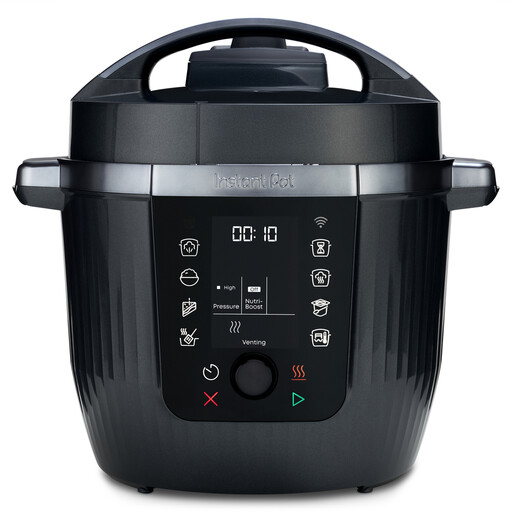 No image available
Consider this for a mid-size broth batch if you want to compare pressure cooking with sauté and slow-cook use in one appliance.
The product title specifies a 5.7L capacity. Check the exact model’s cleaning instructions, dimensions and pressure-release procedure before deciding whether it suits a shared kitchen.
No: a non-pressure multicooker with a slow-cook function is also an option for broth. Choose a pressure model if a shorter cooking window is important and its users can follow the lid and release instructions; manufacturer speed claims should not be read as a cooking time for every broth recipe.
Choose capacity according to the portions you need and the cooled broth you can store. Instant Pot UK describes its Classic Mini 3.8L as serving up to four portions and its Classic 5.7L as serving up to six; check the portion guidance for any other model rather than assuming that capacity alone determines the number of servings.
Plan containers and fridge space before making a batch, and cool and divide leftovers into manageable portions. GOV.UK food-business guidance for England, Wales and Northern Ireland states that chilled food must be kept at 8°C or below and recommends setting a fridge to 5°C or below; that business guidance does not, by itself, determine a shared household’s legal obligations.
Where a kitchen operates as a food business, cleaning and separation procedures need to follow the requirements applicable to that activity. GOV.UK food-business guidance addresses cross-contamination through equipment and surfaces; in a domestic shared kitchen, agree how boards, utensils and worktops will be cleaned between uses rather than assuming the business rules establish household legal duties.
Use the multicooker for reheating only if the exact model’s instructions allow it, and reheat the broth thoroughly. Food Standards Agency guidance for caterers says reheating means cooking again rather than merely warming food, and advises reheating food only once; its caterer scope should not be mistaken for a determination of domestic legal duties.