One-pot batch soup cooks
If you want to soften onions, carrots and celery before making the soup in the same bowl, look for in-bowl sauté alongside slow cooking. Crock-Pot describes its 5.6L CSC024 as combining those functions in a removable bowl.


For batch minestrone with canned beans, start with a removable bowl of roughly 5–5.6L, an in-bowl sauté or brown function for the vegetables, and a stew or slow-cook setting for the soup. Choose a pressure multicooker if you also expect to use pressure cooking for other meals; it is not essential to this soup workflow. Rated bowl capacity is not usable soup volume, so check the model’s fill guidance before scaling your recipe.
If you want to soften onions, carrots and celery before making the soup in the same bowl, look for in-bowl sauté alongside slow cooking. Crock-Pot describes its 5.6L CSC024 as combining those functions in a removable bowl.
If minestrone is one part of your meal prep, pressure cooking and other modes may justify a broader-function cooker. Instant Pot UK lists pressure cook, slow cook and sauté among the Pro 5.7L model’s functions.
If stew, browning, reheating and keep-warm settings matter more to you than pressure cooking, a menu-led cooker is worth considering. Tefal lists those functions for its 5L SpheriCook.
For a batch of canned-bean minestrone, decide how much soup you need to make before choosing between a straightforward soup workflow and functions you would use for other meals.
Choose it when: You also want to pressure-cook other meals, as well as sauté and slow-cook in one appliance.
Allow for: Pressure use brings a sealed-lid and release routine that a canned-bean soup does not necessarily need.
Choose it when: Your priority is to prepare the vegetable base in the bowl, then stew or slow-cook the soup without transferring it to the hob.
Allow for: A non-pressure model will not cover recipes for which you specifically want pressure cooking.
| Concern | What to check | Who this matters to |
|---|---|---|
| Usable batch capacity | Compare rated bowl size, then check the maximum-fill guidance for the cooking mode and a liquid-heavy recipe. | If I am portioning soup for later meals, I need enough usable space without overfilling the bowl. Around 40% of consumers put batch capacity and headroom first. |
| One-pot soup workflow | Look for a named sauté or brown function and a suitable stew or slow-cook setting. | I want to prepare the vegetables and finish the soup in one vessel rather than wash an extra pan. Around 30% of consumers place that workflow first. |
| Other uses and cleaning | Check which additional modes you would use and which removable parts the manufacturer says are dishwasher-safe. | If the cooker will also handle other meals, I need its extra functions to earn their place in my routine without making washing up harder. Around 30% of consumers prioritise those wider uses and clean-up. |
A 5L or 5.6L rating describes the bowl, not necessarily the amount of liquid-heavy soup you can cook in it.
Use capacity to shortlist cookers, then check the manual’s fill limits for your intended programme before setting a batch size.
If sauté or brown is not a function you can use in the cooking bowl, your preferred vegetable-preparation step may need a separate pan.
Check the exact model’s functions if keeping the preparation and soup stages in one vessel matters to you.
Using the hob for that step also means another pan to wash.
Making several portions means planning how to cool and store the soup after cooking, not just how to keep it warm for serving. A Food Standards Agency literature review published in 2022 reports a recommendation to refrigerate leftovers within two hours.
Have storage containers ready, portion and chill the leftover soup promptly, and thoroughly reheat the portion you intend to eat. Food Standards Agency reheating material says food should be heated through to a safe temperature at its centre.
Instant Pot UK lists the Pro 5.7L as a pressure multicooker with slow cook and sauté among its ten functions.
Crock-Pot UK describes the 5.6L CSC024 as a non-pressure multicooker with in-bowl sauté and slow cooking; its Turbo Express range also includes pressure cooking.
Tefal UK positions the 5L SpheriCook for family meals or batch cooking and lists brown, stew, slow cook, reheat and keep-warm functions.
These choices cover a 5L cooker with soup and stew modes and two 5.7L pressure multicookers for cooks considering wider uses. For any of them, check the manual’s soup fill guidance before deciding how many portions to make.
 No image available
Consider this model if you want named soup, stew and slow-cook modes for a batch of minestrone. Its title states a 5L capacity; check the exact model’s in-bowl browning function if preparing the vegetables without another pan is important to you.
 No image available
This is a route to consider if you want to sauté a vegetable base and slow-cook soup, with pressure cooking available for other meals. The title states a 5.7L capacity and a ceramic non-stick coating. Check the fill and pressure-release instructions for the exact model before use.
 No image available
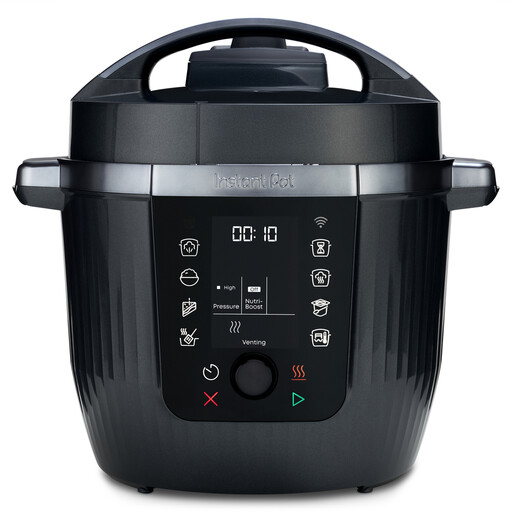
Consider the Pro if you want a 5.7L multicooker for batch soup and expect to use other cooking modes too. For your vegetable-base and soup routine, confirm the functions and fill guidance for this exact variant; follow its instructions whenever using pressure cooking.
Look for sauté or brown to prepare the vegetables in the bowl, followed by a suitable stew or slow-cook mode for the soup. Pressure cooking is worth considering if you also want it for other recipes, rather than treating it as a requirement for canned-bean minestrone.
It may be suitable for a household batch: Tefal UK describes its 5L SpheriCook as intended for family feeding or batch cooking. The amount of minestrone you can make depends on the exact model’s maximum-fill guidance and cooking mode, so check those before scaling your recipe.
Use the multicooker for reheating only as its instructions permit, and heat the soup thoroughly through its centre. Food Standards Agency reheating material emphasises reaching a safe temperature at the centre of reheated food.
Plan to portion and refrigerate leftovers promptly after cooking. A Food Standards Agency literature review published in 2022 reports a recommendation to put leftovers in the refrigerator within two hours; having containers ready makes that step easier after a large batch.