One-pot weeknight cooks
You want to cook vegetables and finish a soup or stew in one appliance, with less need to move ingredients between pans.


For canned-bean minestrone in a shared kitchen, look for a cooking method that lets you prepare the vegetables and finish the soup, alongside a bowl you can realistically wash and store. Choose a pressure multicooker if you will use pressure mode for other meals and are willing to follow its liquid, fill and cleaning instructions; otherwise, a non-pressure sauté-and-cook model or a programme-led soup cooker may fit your routine more closely.
You want to cook vegetables and finish a soup or stew in one appliance, with less need to move ingredients between pans.
You want room for several servings or leftovers, but need a bowl and cleaning routine that work around other people using the sink and storage space.
You are deciding whether pressure cooking, soup and reheat programmes, or a simpler non-pressure cooking routine will be useful beyond this recipe.
Choose it when: you also want pressure cooking for meals beyond canned-bean minestrone.
Trade-off: pressure mode adds model-specific liquid, fill, steam-release and cleaning procedures.
Choose it when: sautéing vegetables and then cooking without a pressure lid suits your usual meals.
Trade-off: the cited Crock-Pot CSC024 does not list pressure cooking, so it will not meet a need for that function.
Choose it when: named stew or soup, reheat and delayed-start functions matter more to you than pressure cooking.
Trade-off: the cited Tefal RK705840 does not list a clearly named sauté programme; check whether its cooking modes suit how you prepare vegetables.
| Concern | What to check | Who this matters to |
|---|---|---|
| One-pot soup cooking | Check the exact model for a usable sauté or browning mode and a way to finish soup or stew in the same bowl. | If I want to cook the vegetables before adding liquid, I would rather not transfer them between pans. Around 36% of consumers would put this one-pot workflow first. |
| Cleaning and handover | Check which bowl, lid and accessories are dishwasher-safe, and whether other parts need cleaning after use. | When someone else needs the kitchen after me, I want to clean and put away every used part promptly. Roughly 29% of consumers would make cleaning and handover their primary concern. |
| Capacity and storage | Compare the intended number of servings with the stated capacity; measure the appliance and its storage space, allowing for lid opening. | I may want leftovers, but I cannot leave a large cooker on a shared counter. About 21% of consumers would prioritise balancing batch size with available space. |
| Pressure-cooking versatility | Decide whether you will use pressure mode beyond this soup; read the exact manual for liquid, fill and steam-release instructions. | If I plan to pressure-cook other meals, I can make use of that extra mode despite its additional procedures. Around 14% of consumers would put pressure-cooking versatility first. |
Pressure mode adds procedures that may offer little value if your main task is to cook vegetables and finish a soup. The cited Instant Pot Classic 5.7L, for example, has specific liquid, fill and steam-release instructions for pressure use.
Decide whether you will use pressure cooking for other meals before choosing it over a non-pressure cooker with suitable cooking modes.
A bowl that holds several portions does not tell you whether the cooker fits your allocated space. Instant Pot UK states dimensions of 30.8 × 35.1 × 32 cm and a weight of 5 kg for its Classic 5.7L model.
Measure the counter and storage area, then decide where the cooker, lid and accessories can dry without obstructing other users.
The main bowl may be dishwasher-safe while other parts still need attention. Instant Pot UK instructs users to empty and rinse the cited model’s condensation collector after each use; Tefal advises care to avoid damaging its cited non-stick bowl on dishwasher racks.
Read the care instructions for every removable part of the exact model and agree how the appliance will be handed over after cooking.
A delayed-start setting does not establish that every combination of soup ingredients is suitable for unattended cooking in a shared kitchen.
Follow the exact manufacturer instructions and the rules of the kitchen before using a delayed-start programme.
Its cited Classic 5.7L pressure multicooker is relevant if you want pressure cooking alongside other modes.
Its cited CSC024 is a non-pressure digital option for cooking vegetables and then making one-pot meals.
Its cited MultiCook Plus RK705840 focuses on programmes including stew, steam/soup and reheat.
These multicookers cover a non-pressure sauté-and-cook option and pressure-capable options for cooks who expect to use that extra function beyond minestrone. Compare their cleaning instructions and physical fit before choosing one for a shared kitchen.
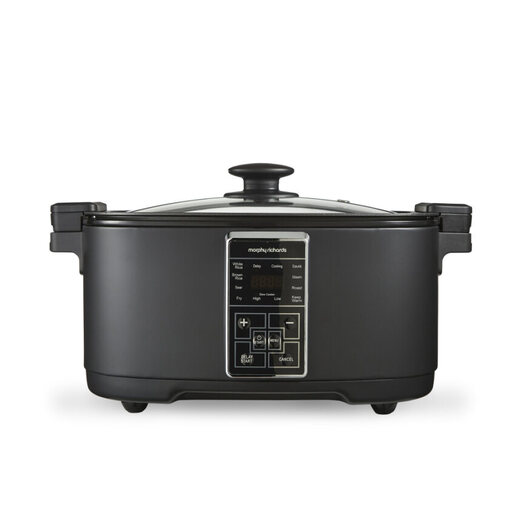 No image available
Consider this model if you want to sauté vegetables and then use a non-pressure cooking mode for your one-pot meal. Its stated specifications include 1350W, 10 preset functions and a dishwasher-safe pot and accessories; measure your shared storage space before buying.
 No image available
Consider this pressure model if you want to sauté before making soup and will use pressure cooking for other meals. It has a stated 5.7L capacity and ceramic non-stick coating; check the exact manual for pressure-liquid, fill, release and lid-cleaning instructions.
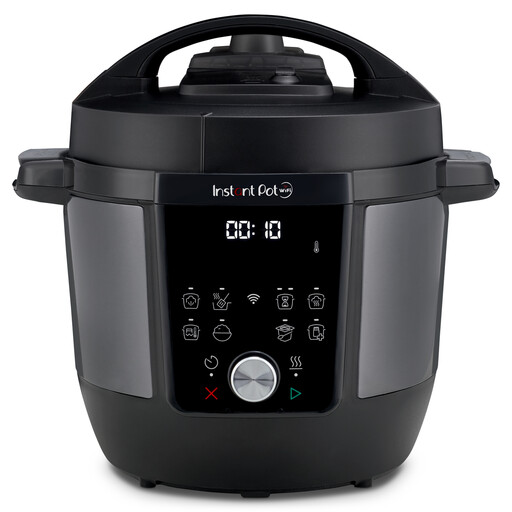 No image available
Consider this model if you want to sauté vegetables for soup and use pressure cooking for other dishes. It is the 5.7L Plus 9-in-1 variant; check its own manual for pressure operation and cleaning, rather than applying instructions for the different Instant Pot Classic model.
No: pressure cooking is not necessary for a suitable sauté-and-soup method. If pressure mode would be useful for other meals, compare it with non-pressure models while allowing for the extra operating and cleaning steps.
No: use the manual for your exact cooker. For the Instant Pot Classic 5.7L specifically, Instant Pot UK instructs users to use water-based liquid, provide at least 375 ml of liquid for canned, condensed or cream-based soup, stay below the PC Max 2/3 fill line and complete the specified first-use test run.
Check which parts of the exact model can go in the dishwasher and which need separate attention. A removable bowl may simplify handover, but lids, seals and condensation components can have their own cleaning instructions.
If the kitchen is part of a food business, follow its food-handling and cleaning procedures as well as the appliance instructions. Food Standards Agency business guidance highlights contamination, cleaning and allergen controls where facilities are shared; those business procedures should not be assumed to apply to an ordinary domestic shared flat.