Large-batch broth planners
You want several meals or freezer portions from one session. Bowl size matters, but so does having containers and space to cool and store the finished broth.


For regular batches of mushroom broth, start with a bowl large enough for your intended portions, then choose between a pressure-cooking route and a non-pressure sear-and-slow-cook workflow. Check usable fill volume before choosing by headline capacity: the Instant Pot Duo manual, for example, limits filling to two-thirds of the vessel in pressure mode.
You want several meals or freezer portions from one session. Bowl size matters, but so does having containers and space to cool and store the finished broth.
You want the option of pressure cooking while keeping other modes available for different meals. Check the chosen model’s pressure-fill and lid instructions before deciding how much broth to make at once.
You want to cook mushrooms and aromatics before adding liquid, then simmer or slow cook in the same vessel. A sear or sauté function and practical pot-cleaning instructions matter more to you than a pressure lid.
Choose when: You want pressure cooking as an option for broth batches, alongside other cooking modes.
Accept: Batch size must follow the exact model’s fill limit, and its lid and steam-release instructions add steps to the workflow.
Choose when: You mainly want to sear mushrooms, then boil or slow cook broth without a pressure-cooking lid.
Accept: This route does not provide the pressure-cooking option; check whether searing happens in the appliance or requires a separate hob.
For batch-made mushroom broth, consider which part of cooking and storing several portions you most need to simplify.
| Concern | What to check | Who this matters to |
|---|---|---|
| Usable batch capacity | Compare bowl capacity with the exact model’s maximum-fill instructions, particularly in pressure mode. | If I make broth for several meals, I need the planned batch to fit within the permitted fill level. Around 31% of consumers put usable batch capacity first. |
| Cooking route | Check for the pressure, slow-cook and sauté or sear modes you intend to use. | If I want a pressure option for some sessions but a slower route for others, the available modes shape my choice. Roughly 31% of consumers prioritise that flexibility. |
| One-pot workflow | Check where searing takes place and how the cooking pot must be cleaned. | I would rather cook the mushrooms and aromatics before adding liquid without switching vessels. Around 23% of consumers place that one-pot process first. |
| Cooling and storage | Plan portion containers and fridge or freezer space before making a large batch. | When I cook several portions, I need a practical way to cool and store what I will not serve straight away. About 15% of consumers put batch storage first. |
An 8L vessel does not necessarily hold 8L of ingredients in pressure mode. The Instant Pot Duo manual says not to fill its vessel beyond two-thirds of capacity.
Plan your broth volume using the manual for the exact model and cooking mode, rather than the advertised bowl size alone.
Tefal’s Turbo Cuisine & Fry has a separate lid for its additional cooking functions. That is another component to store and clean, while broth-making centres on the cooking modes you will actually use.
Decide whether you will use the additional lid for other meals; otherwise, focus on capacity and the broth-relevant modes.
Food Standards Scotland advises against leaving cooked food at room temperature for longer than one to two hours. GOV.UK recommends dividing food into smaller portions to help it cool quickly.
Have portion containers and fridge or freezer space ready before cooking, then cool and store the remaining broth promptly.
Portioning a batch also takes containers and fridge or freezer space.
A keep-warm mode does not replace cooling and storing broth that will be eaten later. Food Standards Scotland and GOV.UK food-hygiene guidance advise reheating leftovers only once, until steaming hot throughout.
Portion the broth after cooking so you can reheat only what you intend to use.
Instant Pot UK positions the Duo 8L for up to eight portions and batch cooking, with pressure, sauté and slow-cook functions.
The Good to Go 28270 is a 6.5L non-pressure option for searing, boiling or slow cooking in one cooking process.
Tefal’s Turbo Cuisine & Fry CY778840 pairs a 7.6L bowl with pressure and slow-cook modes, plus a separate lid for additional cooking methods.
These choices cover different bowl sizes and cooking workflows, from slow cookers and electric pots to multicookers. Check each model’s modes and fill instructions against the batch you plan to make.
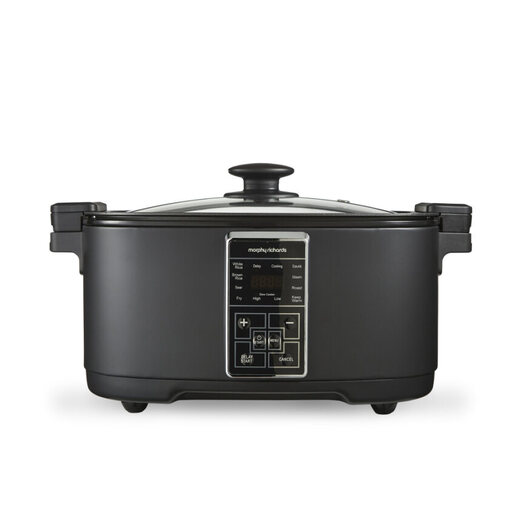 Image unavailable
A 6.5L choice to consider if you want a multicooker for regular broth batches.
The product title specifies 1350W, 10 preset functions and a dishwasher-safe pot and accessories. If pressure cooking matters to you, confirm the exact model’s modes before choosing it.
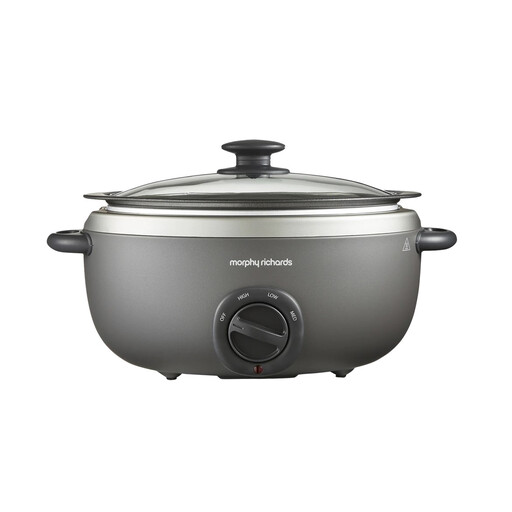 Image unavailable
Consider this 6.5L slow cooker if you want to sear ingredients before slow cooking broth in the same pot.
Searing requires moving the pot to a gas or electric hob; do not use it on an induction hob.
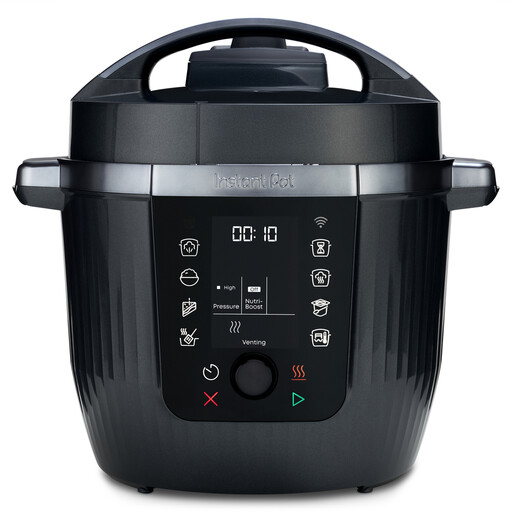 Image unavailable
Consider its 5.7L bowl if that size fits the number of portions you intend to make.
Before planning a pressure-cooked batch, check the fill limit and operating instructions for this exact Pro model; the Duo manual’s limit should not be applied to it automatically.
 Image unavailable
The 7L pot is worth considering when bowl size and a simmering workflow matter more than a pressure-cooking route.
The product title lists stir-frying and simmering. If browning mushrooms in the appliance or a particular cleaning method is essential, check the model’s instructions first.
 Image unavailable
Consider this 5L pot for a smaller broth batch when boiling or simmering is the main task.
Its product title specifies dual power control and a steamer. Check the care instructions for the pot and steamer if easy cleaning is a priority.
Choose by the portions you intend to store and the usable fill level, not a family-size label alone. The manufacturers’ examples include the 6.5L Russell Hobbs Good to Go, 7.6L Tefal Turbo Cuisine & Fry and 8L Instant Pot Duo; pressure-mode fill instructions may further limit a planned batch.
No: follow the fill instructions for the exact model and mode. The Instant Pot Duo manual says not to fill its vessel beyond two-thirds of capacity, but that instruction should not be treated as the rule for every multicooker.
Divide the broth into smaller portions so it can cool more quickly, then refrigerate or freeze what you will not use promptly. GOV.UK recommends smaller portions for faster cooling, while Food Standards Scotland advises not leaving cooked food at room temperature for longer than one to two hours.
Plan to reheat a stored portion only once, until it is steaming hot throughout. Food Standards Scotland and GOV.UK food-hygiene guidance give that advice for leftovers; portioning the batch before storage helps you warm only what you need.