What matters when choosing?
Start with your usual portion count and storage space, then decide how you want to cook and clean up. If your kitchen has appliance rules, check permission before settling on a model.
| Concern |
What to check |
Who this matters to |
| Capacity and footprint |
Compare pot capacity and external dimensions with your usual servings, clear worktop and cupboard space. |
If I cook small portions, I do not want a large cooker taking up the cupboard; if we share meals, I need room for the portions we make. Around 33% of consumers would put capacity and space first. |
| Cooking workflow |
Check whether the exact model offers pressure cooking, sautéing or simmering, and whether those modes suit your pasta recipe. |
On a busy evening, I want to make pasta without moving between appliances, but I need a cooking method I am comfortable using. For around 25% of consumers, that workflow would be the main concern. |
| Cleaning and handover |
Confirm which parts can be removed and which, if any, are dishwasher-safe. |
When someone else needs the kitchen after me, I want to wash and put away the cooking parts promptly. Cleaning would come first for around 25% of consumers. |
| Permission and electrical use |
Check your kitchen’s appliance rules and any conditions on wattage or testing; inspect the plug and lead before use. |
In managed accommodation, I need to know I can use a personal cooker in the communal kitchen before choosing its features. Around 17% of consumers would make permission and electrical use their primary concern. |
Joybuy product choices for one-pot pasta
These choices include compact electric cooking pots, larger hot pots and multicookers. Match their stated capacity and cooking method to your portions, then check cleaning instructions, storage space and any rules for your shared kitchen.
 Image unavailable
CleverChef 14-in-1 5L Multi Cooker, Charcoal
Consider the 5L pot if you make shared meals or leftovers and want several cooking modes in one appliance.
The title lists slow-cook, steam, rice and soup-making functions. Check the instructions for your pasta method and for cleaning the cooking parts; do not assume it pressure-cooks.
View on Joybuy
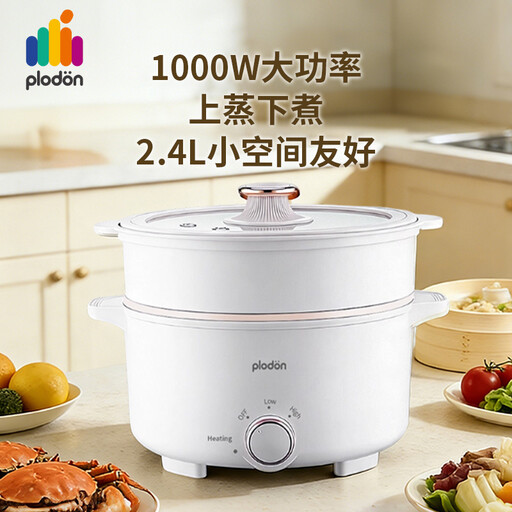 Image unavailable
Plodon 1000W 2.4L Electric Hot Pot with Steamer
This smaller hot pot is a choice to assess for modest pasta meals rather than regular large shared batches.
Its title specifies a non-stick pot, dual power control, pasta use and a UK plug. Check its full dimensions and cleaning instructions against your available space and shared sink setup.
View on Joybuy
 Image unavailable
Plodon 1200W 5L Electric Hot Pot with Steamer
Consider this 5L hot pot if your shared meals call for a larger vessel and you prefer boiling or simmering to pressure cooking.
The title lists dual power control, frying and simmering. Check its external dimensions, pot-cleaning instructions and any wattage conditions imposed by your accommodation.
View on Joybuy
 Image unavailable
COSORI 5.7L 9-in-1 Electric Pressure Multicooker
This model is worth considering if you want a larger pot with pressure cooking and sautéing in the same appliance.
The title lists a ceramic non-stick coating and recipe book. Check the instructions for your pasta and sauce, including fill limits and pressure release, as well as the appliance’s dimensions and electrical requirements.
View on Joybuy
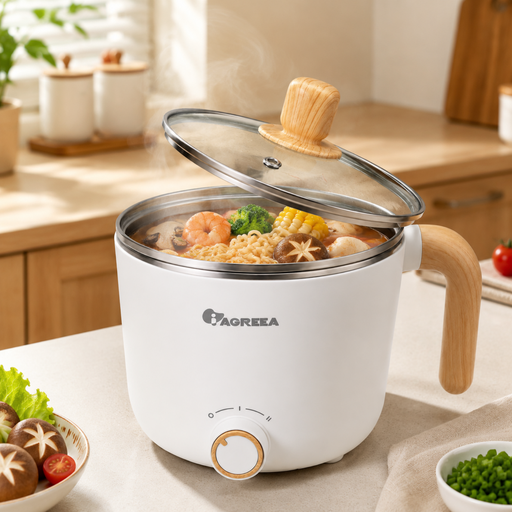 Image unavailable
IAGREEA MS-AFX004 1.0L Mini Electric Cooking Pot
Consider its 1.0L capacity for a small pasta meal, not for cooking a larger shared batch.
The title specifies a stainless-steel inner pot, pasta use and 300W/600W settings. Check its dimensions and whether the pot can be removed for washing before relying on it in a crowded kitchen.
View on Joybuy
Common questions
What size cooker makes sense for pasta in a shared kitchen?
Choose by the portions you normally cook and the space you can spare, not the total number of flatmates. Instant Pot UK positions its 3.8L Classic Mini for up to four portions and its 5.7L Duo for up to six; an 8L model merits a storage check if you only occasionally cook for a group.
Can I use my own multicooker in student accommodation?
Check your own residence rules before buying: permission can depend on the appliance and where it will be used. The University of Surrey permits specified cooking appliances subject to electrical requirements, while a University of Nottingham shared-kitchen exception has conditions concerning power, appliance age and PAT certification; neither policy grants permission in another residence.
What electrical checks matter before I use a multicooker?
Check the product’s marking and manufacturer identification, then inspect its plug and lead before use. GOV.UK advises checking marking and manufacturer details; Electrical Safety First warns against leaving electrical appliances on unattended, and Home Office guidance for shared or rented accommodation advises against overloading sockets.
Does my multicooker legally need a PAT test every year?
The Health and Safety Executive says the relevant regulations do not impose a general annual inspection or testing requirement. Your accommodation provider may still require PAT certification as a condition of using an appliance, so check its rules rather than assuming a general timetable applies.
What after-sales cover should I compare?
Check the guarantee for the exact model and the seller’s terms, rather than assuming every product from a brand has the same cover. Instant Pot UK lists a one-year guarantee for the cited Classic Mini and Duo models, while SharkNinja UK lists a two-year guarantee for the cited PossibleCooker MC1001UK; cover does not resolve whether an appliance fits or is permitted in your kitchen.


