Large-batch broth planners
You make enough vegetable broth to portion for several meals or freeze. Vessel capacity, room to handle the ingredients and a plan for transferring the finished broth matter to you.


Choose capacity and cooking method before counting programmes. A 7L-plus multicooker is worth considering if you regularly portion broth for several meals; a 5L model may suit moderate batches. Choose pressure cooking if you want that cooking option alongside slow cooking, or a slow-cook-led model if you mainly want a long simmer, while checking the permitted fill level and controls on the exact appliance.
You make enough vegetable broth to portion for several meals or freeze. Vessel capacity, room to handle the ingredients and a plan for transferring the finished broth matter to you.
You want to sauté vegetables and cook broth in one appliance, with pressure cooking available when you would rather use that route than a long simmer.
You prefer straightforward slow cooking, useful timing controls and a removable bowl over pressure-cooking features you may rarely use.
Choose when: You want pressure cooking as an option alongside slow cooking and sautéing.
Trade-off: A pressure model brings a locking lid and pressure-release steps; check its size and storage space too.
Choose when: You chiefly want a large broth batch cooked by a long slow-cook or simmer route.
Trade-off: Check for pressure cooking separately if you also want that option.
Choose when: Your batches are moderate and straightforward programmes matter more than maximum capacity.
Trade-off: Check whether the exact model can sauté or pressure-cook if either step is part of your routine.
| Concern | What to check | Who this matters to |
|---|---|---|
| Batch capacity and portioning | Compare stated capacity with your usual batch, then check the model’s maximum-fill guidance and where you will cool and store the broth. | I want one cooking run to provide broth for several meals, with room to portion it afterwards. Around 40% of consumers put batch capacity and portioning first. |
| Cooking method | Check the exact model for pressure cooking, slow cooking and sautéing if you need all three. | When time is tight, I want the option of pressure cooking without giving up a slow-cook route for other days. Roughly 30% of consumers make cooking-method flexibility their primary concern. |
| One-pot preparation and cleaning | Look for an explicitly listed Sauté or Sear function; check the removable pot’s care instructions. | If I brown vegetables before adding liquid, I would rather avoid transferring them between pans and keep the clean-up manageable. Around 20% of consumers prioritise one-pot preparation and cleaning. |
| Controls and footprint | Check the programmes, timing controls, dimensions and weight against your routine and storage space. | I make moderate batches and would rather have controls and an appliance I can manage than modes I will not use. About 10% of consumers put simple operation and footprint first. |
A stated 7.1L or 8L capacity does not replace the model’s fill guidance or a plan for cooling and storing the batch.
Choose for your usual quantity, check the permitted fill level and have containers and fridge or freezer space ready.
Portioning a large batch may call for additional storage containers.
Programmes differ by model: Tefal’s Multicook 8-in-1 RK302E15 lists slow cooking but does not list a dedicated sauté or pressure-cook programme.
If browning vegetables in the cooker or using pressure is important, confirm those functions on the exact model. Otherwise, plan to use a separate pan for browning.
Keep Warm is an appliance function, not a substitute for deciding how to store a completed broth batch. GOV.UK advises cooling cooked food and refrigerating it within one to two hours.
Divide finished broth into smaller portions and make space to chill or freeze them promptly.
A large cooker needs a workable position for cooking and storage. Electrical Safety First advises checking an extension lead’s rating against the appliances connected to it.
Measure your intended space and check the electrical load before connecting a multicooker alongside other appliances.
Its UK range offers a useful comparison between a large pressure multicooker and a large slow-cook-focused appliance.
Relevant if a large vessel and a slow-cook or simmer workflow are your priorities.
Relevant to moderate batches when a 5L programme-led cooker suits your routine.
These multicookers range from 5L to 7.1L. Compare their stated capacity with your usual broth batch, then check the cooking functions and permitted fill level on the exact model.
 No image available
Consider this for moderate broth batches if you want to choose between pressure and slow cooking. The 5.7L title also lists sautéing and a ceramic non-stick coating; check the permitted liquid fill and follow the pressure-release instructions.
 No image available
Consider this for moderate batches when slow-cook and soup programmes fit your routine. The stated capacity is 5L; check the permitted broth fill and confirm any additional functions you need on the exact model.
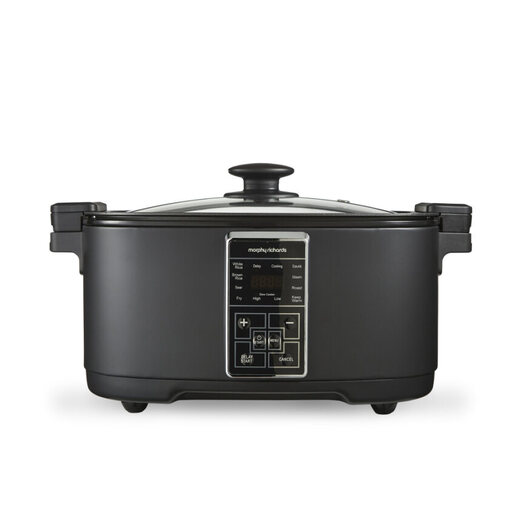 No image available
The 6.5L capacity is worth comparing if your usual batch falls between the 5L and 7L-plus choices. Its title specifies 1350W, ten preset functions and a dishwasher-safe pot and accessories; check the exact cooking modes and permitted fill before deciding.
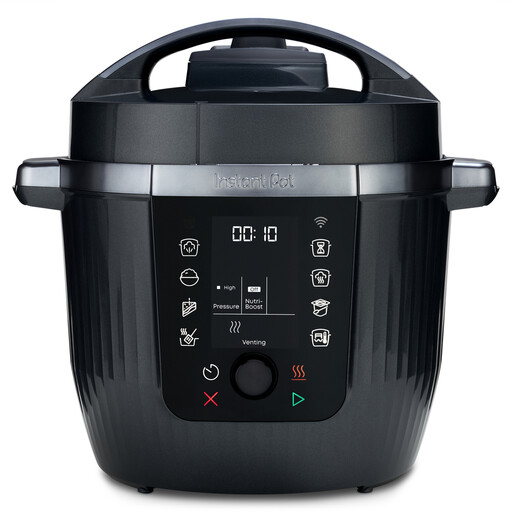 No image available
Consider the 5.7L size for moderate batches rather than choosing it solely by its programme count. Check that the exact cooking modes meet your pressure, slow-cook or sauté needs, and follow the model’s fill and pressure-release instructions.
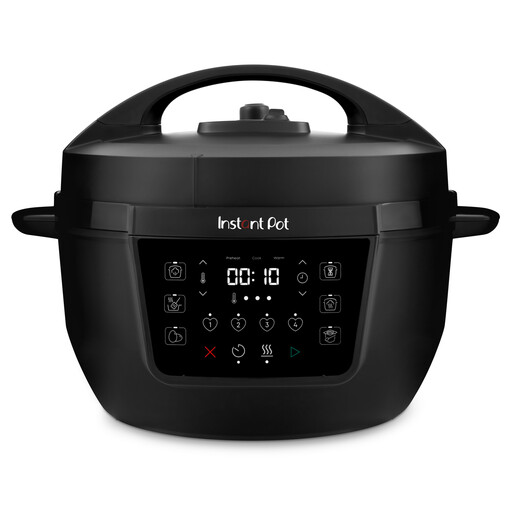 No image available
The stated 7.1L capacity makes this a choice to examine for larger broth batches. Confirm its functions and permitted liquid fill against your recipe, allow space for the appliance and follow its pressure-release instructions.
Divide the cooked broth into smaller portions and chill it promptly. GOV.UK advises cooling cooked food at room temperature and placing it in the fridge within one to two hours; plan your containers and storage space before making a large batch.
No. Those are appliance functions, not a storage plan for finished broth. Once cooking is complete, follow GOV.UK’s advice to cool cooked food and refrigerate it within one to two hours.
Follow the instructions for your exact model before its first pressure-cooking run. Instant Pot UK calls for a pressure-cooking test run for the Classic XL; its instructions are specific to that model rather than every multicooker.
Check the lead’s current rating and the combined load of everything connected to it first. Electrical Safety First advises against exceeding an extension lead’s rating or daisy-chaining leads.