Family batch cooks
If you make broth for a meal and save portions for later, compare the pot capacity with its cooking fill limit. A sauté setting is worth checking if you want to soften vegetables in the same pot first.


For family vegetable broth, start with the amount you make and whether you prefer pressure cooking or a slower method. A 5.7–6L cooker is a useful size to consider for a family meal, while a larger vessel may suit batches intended for leftovers; in either case, the marked fill limit, worktop space and cleaning routine matter more than the number of programmes.
If you make broth for a meal and save portions for later, compare the pot capacity with its cooking fill limit. A sauté setting is worth checking if you want to soften vegetables in the same pot first.
If broth needs to fit around other tasks, choose a cooking method you will use regularly. Pressure cooking involves sealing and releasing pressure; slow cooking fits a different, longer schedule.
If unfamiliar controls or steam release give you pause, compare on-screen guidance with the instructions and release procedure for the exact model. You still need to follow its fill and cleaning directions.
Settle the batch size and cooking method first, then decide how much guidance you want from the controls. Nominal litres describe the vessel, not how high you may fill it for pressure cooking.
| Concern | What to check | Who this matters to |
|---|---|---|
| Usable capacity | Compare the bowl size, pressure-cooking fill mark and appliance dimensions with the broth quantity you intend to make. | If I want broth for dinner and portions to save, I need room for both liquid and vegetables without crossing the fill mark. Around 50% of consumers would put batch capacity first. |
| Cooking routine | Look for sauté and your preferred pressure-cook or slow-cook mode; read the pressure instructions if you plan to use that mode. | When I cook on a weeknight, I want a method that fits the time I have and the steps I am willing to manage. Cooking routine would be the main concern for around 30% of consumers. |
| Controls and cleaning | Check the exact model's lid, steam-release and cleaning instructions, along with any guidance offered on its controls. | If I am new to electric pressure cooking, I need to understand the controls and be comfortable cleaning the cooker afterwards. Around 20% of consumers would prioritise that confidence. |
Broth contains both liquid and bulky vegetables, so the full bowl capacity is not necessarily available for a pressure-cooked batch.
Check the maximum-fill marking and the exact model's instructions against your intended recipe before choosing a size.
Air frying or grilling may be useful for other meals, but neither replaces the cooking method you want for broth.
Decide whether you will sauté the vegetables and pressure-cook or slow-cook the broth; assess other functions against meals you actually make.
A pressure multicooker has model-specific lid, sealing and release steps that affect how you use it.
Read the manual for the exact model, including its first-use and cleaning instructions, before making broth.
A large volume of cooked broth can take longer to cool before storage.
Divide leftovers into smaller containers. For England, Northern Ireland and Wales, Food Standards Agency guidance says to refrigerate cooked food within one to two hours and eat leftovers within 48 hours or freeze them.
Instant Pot UK describes the Duo 5.7L as a six-portion multicooker with pressure cooking, sautéing, steaming, slow cooking and other core functions.
Ninja UK lists the Foodi MAX SmartLid OL750UK as a 7.5L multicooker with pressure cooking, slow cooking, grilling, steaming and air frying.
Tefal UK describes the Cook4me Touch CY912840 as a 6L, six-portion cooker with on-screen, step-by-step guidance.
These multicookers have stated capacities from 5.7L to 7.1L and offer different ways to approach a family-sized broth batch. Check the exact model's cooking modes and permitted fill level before settling on one.
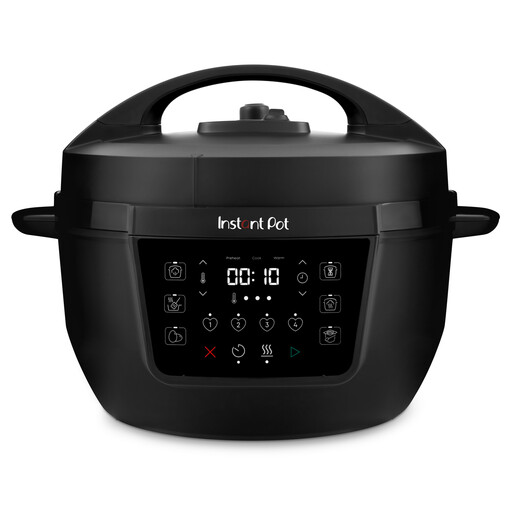 No image available
Consider the larger bowl if you regularly make broth for several meals. It is a stated 7.1L, 7-in-1 model; compare your recipe with the exact model's pressure-cooking fill mark and instructions.
 No image available
This mid-size option is relevant if you want to sauté vegetables and choose between pressure and slow cooking for broth. The title specifies a 5.7L bowl and a ceramic non-stick coating; follow the exact model's MAX line rather than treating 5.7L as usable pressure-cooking volume.
 No image available
A 6L cooker is worth comparing with your usual family batch. Its title lists pressure cooking, slow cooking, steaming, 10 programmes and a stainless-steel pot. Check whether the appliance is marked MC6SBUK or HMC6SBUK before using model-specific instructions, including its pressure-cooking fill limit.
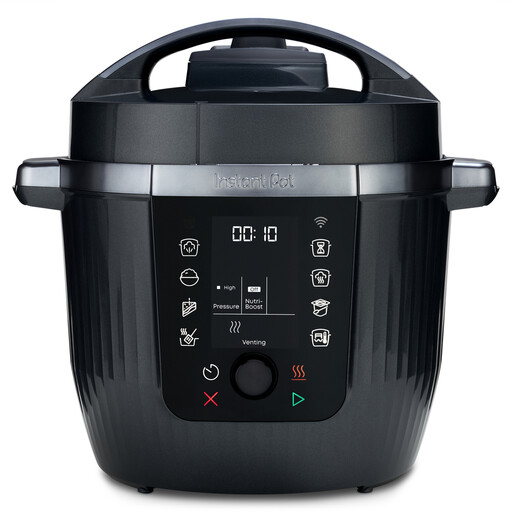 No image available
Consider this 5.7L option for a mid-size broth batch if its cooking modes match your routine. Check the Pro model's manual for the modes you intend to use, the pressure-cooking fill limit and the release procedure.
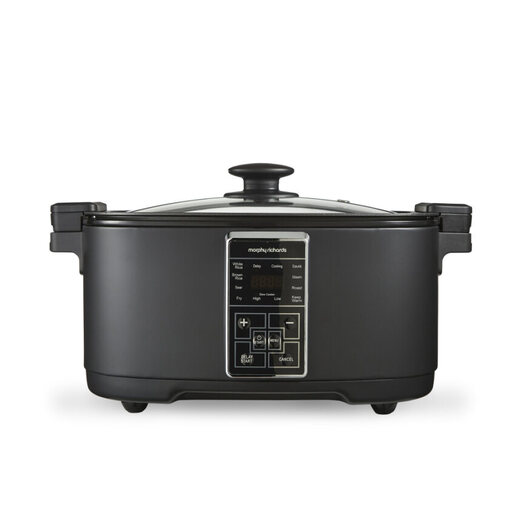 No image available
For a larger broth batch made with a slower cooking routine, check whether this model's programmes fit your method. Its title specifies 10 presets and a dishwasher-safe pot and accessories. Confirm the exact functions if pressure cooking is important to you.
Compare a 5.7–6L cooker with a larger model according to your usual batch and the worktop space available. Instant Pot UK describes its Duo 5.7L as a six-portion cooker, while Ninja UK lists the Foodi MAX OL750UK at 7.5L; neither stated capacity replaces the exact model's pressure-cooking fill limit.
No: a slow-cook mode is another option if that routine suits you. If you choose pressure cooking, follow the exact model's instructions for liquid, filling, sealing and releasing pressure.
Read and follow the manual for your exact model, including its cleaning, lid and first-use instructions. Instant Pot UK's Duo Plus guidance, for example, includes a pressure-cooking test run; do not assume another model has identical steps.
Divide cooked broth into smaller containers so it can cool more quickly. For England, Northern Ireland and Wales, Food Standards Agency guidance says to refrigerate cooked food within one to two hours, eat leftovers within 48 hours or freeze them, and keep the fridge between 0°C and 5°C.