A multifunction printer with a flatbed is the cautious choice for delicate, folded or unusually sized family letters, while an automatic document feeder (ADF) can reduce repeated handling of sound, loose pages. If notes or postmarks appear on the reverse, check for two-sided scanning specifically; if the printer will remain in regular use, consider its printing supplies and paper handling too.
Who needs which scanning approach?
Careful family archivists
If your letters are fragile, folded, marked or unusually sized, prioritise placing each original on a flatbed over working through the stack quickly. Check that the scanning area accommodates your letters without forcing them flat, and try the workflow with a low-risk sheet before handling an irreplaceable one.
Batch letter organisers
If you have many tidy, loose letters of similar size, an ADF can save repeated page placement. Check the feeder instructions against the originals before loading them, and look for two-sided scanning if information on the reverse must be captured automatically.
Households keeping the printer
If you will continue printing and copying after the archive is complete, weigh the printing supplies, paper capacity and connections you will use day to day. Those needs may matter more over time than speeding up a one-off scanning job.
What matters when choosing?
Start with the condition of the letters, then decide whether batch speed, complete digital records or later printing use is the requirement you would be least willing to compromise on.
| Concern |
What to check |
Who this matters to |
| Handling originals |
Confirm a flatbed and check its maximum document size against your largest letter or envelope. |
If a folded or fragile letter might not feed safely, I want to position it myself rather than risk a feeder; around 36% of consumers put careful handling first. |
| Scanning batches |
Check ADF capacity and the exact model’s instructions for suitable originals. Confirm two-sided scanning separately if needed. |
With a large stack of sound, loose sheets, I want to avoid placing every page individually; roughly 29% of consumers prioritise batch throughput. |
| Usable records |
Compare optical scan resolution and output formats, and check how you would capture any information on the reverse. |
If handwriting or annotations matter, I need files I can read and organise without overlooking a side; around 21% of consumers put record usability first. |
| Use after archiving |
Compare replacement supplies, paper capacity and the connections needed for routine printing. |
Once the letters are scanned, I still need a practical household printer; approximately 14% of consumers make ongoing use their primary concern. |
Mistakes to avoid
-
Confusing two-sided printing with two-sided scanning
A printer that prints on both sides does not necessarily scan both sides automatically. That distinction matters when letters have writing or postmarks on the reverse.
Check the exact model’s scanning specifications for “two-sided scanning”, “duplex scanning” or a “double-sided ADF”. Epson notes that duplex ADF scanning is available only on certain models.
-
Assuming an ADF can handle every old letter
Feeder capacity describes how many suitable sheets can be loaded, not whether a fragile, folded or unusually shaped original should pass through it.
Sort letters by condition. Use the ADF only for originals that meet the model’s handling instructions, and place uncertain items on a confirmed flatbed instead.
-
Using print resolution to judge scans
Print resolution and optical scan resolution describe different functions. A print-resolution figure cannot tell you whether a scan will preserve the detail you need.
Compare optical scanning specifications and make a trial scan of a representative low-risk letter before settling on file settings for the archive.
-
Choosing only for the archive project
The scanning job may finish long before you stop using the printer. Printing supplies and paper handling can therefore affect whether the machine suits your household afterwards.
Compare the relevant replacement supplies and any subscription terms. If you are replacing an old printer, check the seller’s electrical-waste take-back arrangements before ordering.
Relevant brands to consider
Epson
Consider the EcoTank ET-4950 if letter scanning will be followed by regular home printing and refillable ink tanks suit that longer-term use.
- Epson lists the ET-4950 as an A4 multifunction printer with a double-sided ADF and refillable ink tanks.
- A double-sided feeder does not make delicate originals suitable for feeding; check handling instructions and use a flatbed route where appropriate.
Canon
Canon’s PIXMA TS7650i and TR7650 illustrate different priorities: documented flatbed specifications for individual capture, or an ADF for straightforward batches.
- Canon specifies an A4/LTR flatbed and 1200 × 2400 dpi optical scan resolution for the TS7650i; it lists a 20-sheet ADF for the TR7650.
- The TR7650’s ADF is specified as one-sided. Do not assume it will capture both sides automatically.
Brother
The MFC-J4540DW is relevant if you want batch scanning alongside continued household or home-office printing.
- Brother lists a 20-sheet ADF, 400-sheet paper capacity and print, copy, scan and fax functions for the MFC-J4540DW.
- If automatic capture of both sides is essential, confirm that scanning feature for the exact model rather than relying on its two-sided printing specification.
HP
The Color LaserJet Pro MFP 3302fdw is an office-oriented option to examine when automatic two-sided capture matters.
- HP lists an ADF, two-sided scanning and scan-to-PDF for the MFP 3302fdw.
- For occasional family archiving, weigh those office-oriented functions against how much printing you expect to do afterwards.
Joybuy products for different workflows
These multifunction printers offer choices to examine for individually placed letters or sound, loose batches. Check the exact model’s scanner and feeder instructions against your originals before deciding on a workflow.
 Image unavailable
Brother MFC-L3740CDWE Colour Wireless LED Multifunction Printer
Consider this model for sound, loose batches when you also want an option for placing uncertain originals individually. Check its feeder instructions before loading old letters, and confirm automatic two-sided scanning if reverse-side capture matters.
View on Joybuy
 Image unavailable
Canon MAXIFY GX6150
Consider this model if you have tidy, loose batches to scan and expect to keep printing afterwards. Before choosing it for delicate letters, confirm that its scanner offers the individual-placement workflow you need; check two-sided scanning separately.
View on Joybuy
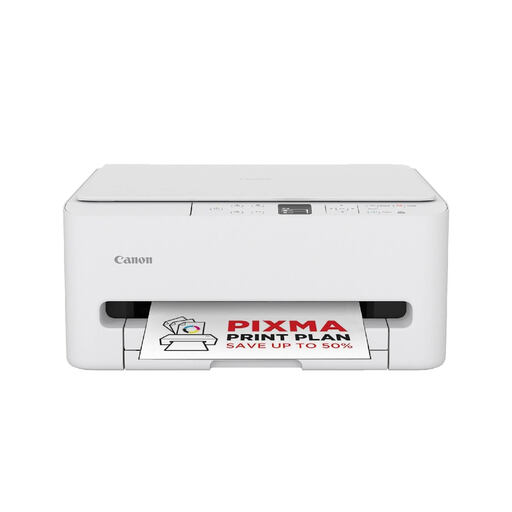 Image unavailable
Canon PIXMA TS6550i
Consider this model for letters you would rather place on a flatbed one at a time. Check the flatbed dimensions against your originals, and confirm the available feeder and optical scanning specifications if batch work or fine detail will influence your choice.
View on Joybuy
Questions about digitising letters
Can I put old family letters through an ADF?
Use an ADF only for flat, loose originals that meet the exact model’s feeding instructions. Place fragile, folded, curled or otherwise uncertain letters on a confirmed flatbed instead; age alone does not establish whether every sheet can or cannot be fed.
Do I need two-sided scanning for family letters?
Two-sided scanning is useful when information appears on both sides and you want the printer to capture them automatically. Otherwise, you can turn suitable originals manually; check scanning specifications because automatic two-sided printing is a separate feature.
Which resolution figure matters for scanning handwriting?
Compare optical scan resolution, not print resolution, and make a trial scan to judge whether the writing and paper detail remain readable for your intended use. Canon specifies 1200 × 2400 dpi optical resolution for the PIXMA TS7650i flatbed, but that figure alone does not establish the quality of your finished archive.
What should I do with an old printer when replacing it in the UK?
Check the seller’s electrical-waste take-back arrangement before ordering the replacement. GOV.UK sets out distributor duties concerning waste equipment of the same type as a newly purchased item, including online purchases; the available collection or drop-off process depends on the seller’s applicable arrangement.


