Family-archive postcard scanners
You want to digitise a manageable collection at home for viewing and sharing, while keeping printing and copying in the same machine.


Choose a multifunction printer with a flatbed scanner if you want to place old postcards on the glass individually and also need printing and copying; an automatic document feeder is not the feature to prioritise for fragile cards. If restoration-focused capture matters more than having one machine, Image Restore favours a dedicated flatbed scanner. For regular printing, compare cartridge and refillable-tank models without assuming either ink system improves the scans.
You want to digitise a manageable collection at home for viewing and sharing, while keeping printing and copying in the same machine.
Your postcards may be curled, delicate, handwritten or unusually sized, so you want to position and inspect each one on a flatbed rather than feed a stack through a machine.
Postcard scanning is one task among regular colour or document printing, making the printer’s ink system relevant after the archive project is finished.
Start with how you will handle the originals and what detail you need to capture. Then consider how often you will print; for restoration-focused work, Image Restore recommends considering a dedicated flatbed scanner instead of relying on an all-in-one device.
| Concern | What to check | Who this matters to |
|---|---|---|
| Scan detail | Compare the exact model’s optical scanner resolution, not its print resolution, and check the scan area and file formats you need. | If I want to inspect handwriting, stamps and picture detail later, I need a scan I can save at suitable settings. Capturing detail would come first for around 45% of consumers. |
| Careful handling | Check that each postcard fits on the flatbed; use the glass rather than an automatic document feeder for delicate originals. | With a curled or fragile card, I would rather position it myself, even if scanning takes longer. Around 33% of consumers would make gentle handling their main concern. |
| Ongoing printing | Consider how often you will print afterwards, along with ink yields, replacement-ink availability and supported print media. | If the machine will keep printing documents or photos after I finish archiving, its ink system matters to my decision. That would be the primary need for around 22% of consumers. |
A printer’s print-resolution figure does not tell you the optical detail its scanner captures.
Look up the exact model’s scanner type and optical scan resolution, then check its scan area and available output settings.
An automatic document feeder helps with suitable document batches, but curled or delicate postcards call for more controlled placement.
Place old postcards individually on the flatbed, reserving the feeder for suitable loose paperwork.
A refillable ink system addresses ongoing printing needs; it does not, by itself, establish better postcard scans.
Decide whether you will print regularly after digitising the collection. If not, compare the scanner features of cartridge multifunction printers and dedicated scanners too.
The UK Intellectual Property Office says photographs and other images are generally protected by copyright; copying or sharing them online will usually require the copyright owner’s permission.
Before publishing or reproducing a scan, establish who owns the rights and whether permission or an applicable exception covers your intended use.
Canon’s PIXMA TS7750i and MG3650S are multifunction examples with flatbed photo and document scanning.
Epson’s EcoTank multifunction range pairs scanning with refillable ink tanks for people who also expect regular printing.
HP’s ENVY Inspire range is a home multifunction option for printing, copying and scanning.
This Canon PIXMA option is relevant if you want to scan postcards individually and keep home printing in the same device. Check its exact scanner specifications against your postcards before choosing it.
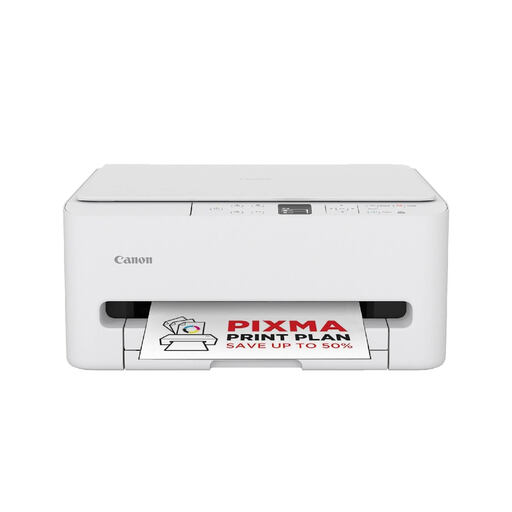 No image available
Consider this model if you want to place postcards individually for scanning and also print at home. Confirm that its flatbed scan area fits your cards, and check its optical scan resolution and file options before buying.
Use the flatbed for old postcards, particularly if they are curled, fragile or mounted. Position each card on clean scanner glass so you can check its condition and placement before scanning.
Compare the exact model’s scanner type and optical scan resolution first, rather than its print resolution. Canon UK lists a CIS flatbed scanner and 1,200 × 2,400 dpi optical resolution for the PIXMA TS7750i and MG3650S; check other models individually.
Gently remove loose dust or lint away from the scanner, clean the glass with a soft lint-free cloth and position the postcard within the marked scan area. If you need control over the saved image, review the scanning software’s settings rather than relying only on a one-button default.
A dedicated flatbed is worth considering when restoration-focused capture is the priority rather than having printing and scanning in one machine. Image Restore recommends a dedicated flatbed for professional restoration work while treating an all-in-one scanner as an acceptable alternative.
Do not assume that owning an old postcard gives you permission to share every image on it. The UK Intellectual Property Office says photographs and other images are generally copyright-protected and online sharing will usually require the copyright owner’s permission; check the rights and any applicable exception for your intended use.