For bound recipe notebooks, start with a multifunction printer that has a flatbed scanner: the notebook goes on the glass, while an automatic document feeder (ADF) is for loose pages. Check the glass size and how the lid accommodates your notebook’s binding before choosing between occasional scanning, batches of loose sheets and frequent printing.
Who is this for?
Bound-notebook preservers
If you want to digitise recipes without removing pages, prioritise access to the scanner glass, the original-size limit and room for the binding. Canon’s scanner guidance describes placing thick originals such as books on the glass.
Mixed recipe archivists
If notebooks sit alongside loose recipes and handouts, use the glass for bound pages and consider an ADF for suitable loose sheets. Canon, Epson and Brother list feeders on selected multifunction models.
Frequent hobby-room printers
If you regularly print recipes or hobby documents as well as scan them, consider how the ink is replenished. Epson and Brother offer refillable-ink multifunction models, but their stated page yields are manufacturer ratings rather than predictions of your own use.
What matters when choosing?
Check the notebook against the scanner glass and lid first. Then decide whether loose-sheet feeding or your printing routine warrants a different set of features.
| Concern | What to check | Who this matters to |
|---|
| Notebook fit |
Confirm a flatbed, its maximum original size and safe lid clearance around the binding. Canon specifies a 216 × 297 mm maximum document size for the PIXMA MG3650S. |
If I want to keep my recipe notebook intact, I need its pages to sit on the glass without forcing the spine. Roughly 50% of consumers put bound-notebook handling first. |
| Loose-page batches |
Check for an ADF and whether your loose sheets meet its stated size and paper requirements; keep the glass for bound pages. |
When handouts and loose recipes accumulate, I want to feed suitable sheets without positioning each one by hand. Around 30% of consumers prioritise that workflow. |
| Printing supplies |
Compare cartridge and refillable-tank systems, the conditions behind any stated ink yields and the supplies your printing routine requires. |
If I print recipes and hobby documents regularly, I care about how often I will need to replenish ink. Approximately 20% of consumers make printing supplies their primary concern. |
Mistakes to avoid
-
Treating an ADF as a notebook scanner
An ADF handles loose sheets; it does not replace the glass-scanning workflow for a bound recipe notebook.
Confirm the flatbed and your notebook’s fit before considering feeder capacity for loose pages.
-
Assuming an A4 page limit settles notebook fit
A thick spine, oversized cover or writing near the gutter can make a page difficult to position even when its nominal size fits.
Measure the opened notebook and allow for its binding. Scan a page at a time without pressing a delicate notebook under the lid.
-
Reading ink yields as your expected output
Epson and Brother publish manufacturer-rated yields for their refillable-ink models; actual printing patterns need not match those ratings.
Check the conditions attached to the yield figures and consider how frequently you will print alongside scanning.
Brands to consider
Canon
Its PIXMA range includes flatbed multifunction printers and models with a feeder for loose sheets.
- Canon specifies a CIS flatbed, 1200 × 2400 dpi optical resolution and a 216 × 297 mm maximum document size for the PIXMA MG3650S.
- The PIXMA G4570’s stated 35-sheet ADF does not establish whether a particular bound notebook will fit on the glass or beneath the lid.
Epson
Its EcoTank range includes refillable-ink multifunction printers for people who also print regularly.
- Epson lists the ET-5170 as an A4 multifunction printer with a 35-page ADF.
- The feeder is relevant to loose sheets, not bound notebook pages; check the notebook against the scanner glass separately.
Brother
Its refillable-ink multifunction range includes models combining scanner glass and loose-sheet feeding.
- Brother specifies scanner glass and a 20-sheet ADF for the DCP-T780DW.
- Its feeder capacity does not change the need to place bound notebook pages on the glass individually.
Joybuy product choices
These multifunction printers are relevant to scanning notebook pages on a flatbed, with different options for loose pages and printing. Check your own notebook’s dimensions and binding against any model before buying.
 No image available
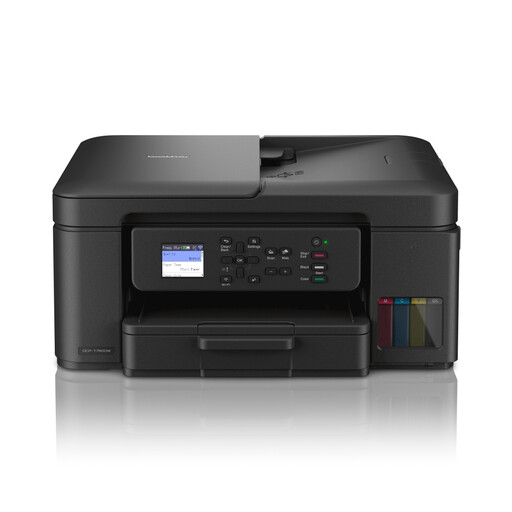
Brother DCP-T780DW 3-in-1 Wireless Ink Tank Printer
Consider this model if you have bound notebooks as well as batches of loose recipe sheets. Use the flatbed for the notebook; check its size and lid clearance against the binding. Its listed 20-sheet ADF is for suitable loose pages, while the title identifies a refillable ink-tank system.
View on Joybuy
 No image available
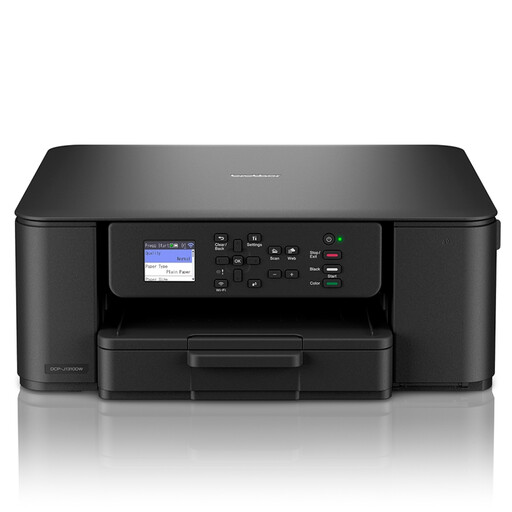
Brother DCP-J1310DW Wireless Inkjet Printer
For notebook pages, check the stated flatbed against your notebook’s open size and binding before buying. If you also plan to scan loose sheets in batches, confirm the feeder capacity and supported paper with the product details.
View on Joybuy
 No image available
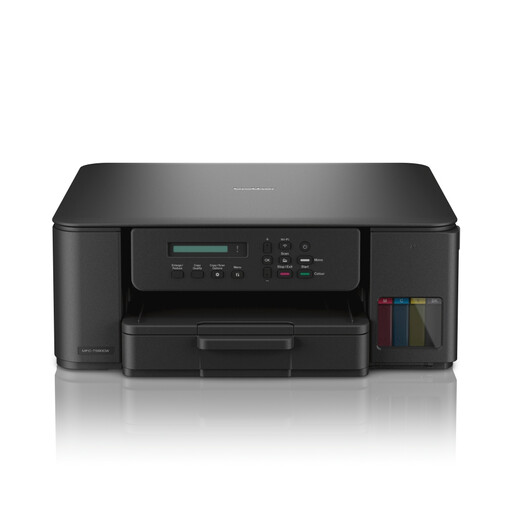
Brother DCP-T580DW 3-in-1 Wireless Ink Tank Printer
Consider this flatbed-led option if notebook scanning accompanies regular recipe or hobby printing. The title identifies a refillable ink-tank system. Check scanner-glass dimensions and lid clearance for your notebook, and confirm feeder details if loose-page batches matter.
View on Joybuy
Common questions
Do I need an ADF to scan a bound recipe notebook?
No: use a flatbed scanner for the bound notebook and reserve an ADF for suitable loose sheets. Canon’s scanner instructions distinguish placing thick originals such as books on the glass from feeding documents through an ADF.
How can I tell whether my notebook will fit?
Compare the opened page with the scanner’s maximum original size, then account for the spine, cover and lid clearance. Canon specifies a 216 × 297 mm maximum document size for the PIXMA MG3650S, but a notebook with writing close to its gutter may still need repositioning or more than one scan.
Does a refillable ink tank help with scanning recipes?
The tank matters to the printing you do alongside scanning, not to placing recipe pages on the glass. If you print frequently, compare replenishment requirements and read the conditions attached to manufacturer-rated ink yields.
What can I do with an old printer in the UK?
Use an electrical-waste collection or take-back route rather than ordinary household waste. GOV.UK says retailers supplying new electrical equipment must offer take-back for waste equipment of the same type; check the retailer’s arrangements or your local authority’s collection options.


