What matters when choosing?
Start with the condition of the letters; assess batch handling and shared printing once there is a suitable way to scan originals that cannot enter a feeder.
| Concern |
What to check |
Who this matters to |
| Preserving handwritten originals |
Confirm A4 flatbed access and check the model’s ADF exclusions. Test a non-sensitive handwriting sample if legibility is important. |
If letters may be creased or delicate, I need to capture the writing without feeding the original through rollers. Around 33% of consumers would put preserving originals first. |
| Handling repeatable batches |
Check ADF capacity, supported paper sizes and weights, and whether the required scanning workflow handles both sides. |
When loose, suitable sheets arrive in batches, I want staff to spend less time placing pages individually. Roughly 42% of consumers would prioritise batch handling. |
| Managing a shared device |
Compare paper input, required connectivity, consumable replacement and the manufacturer’s stated support arrangements. |
If the printer also makes classroom copies and handouts, I need a workflow staff can manage alongside scanning. Around 25% of consumers would make shared use their primary concern. |
Joybuy products for individual letters
This wireless ink-tank multifunction printer is a choice to examine when individual handwritten letters take priority. Confirm its flatbed arrangements in the current listing, and check feeder details separately if staff also need routine batch scanning.
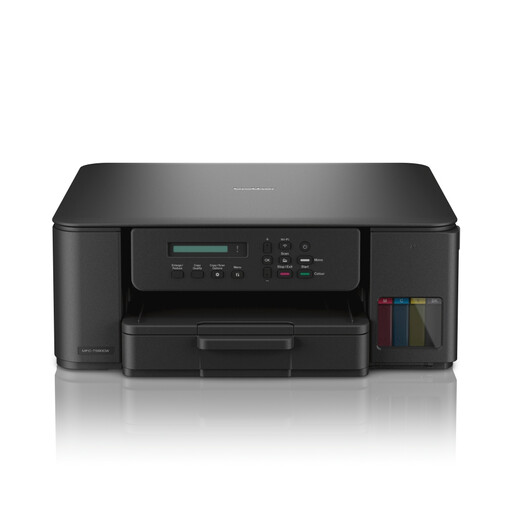 Image unavailable
Brother DCP-T580DW 3-in-1 wireless ink-tank printer
Consider this model for shared classroom printing and individual-letter scanning, subject to confirming that its flatbed suits the originals you handle.
If batch scanning is important, check whether the exact model has an ADF and which documents it accepts. Test a non-sensitive sample if faint handwriting must remain legible.
View on Joybuy
Common questions
Can every handwritten letter go through an ADF?
No. Use an ADF only for originals that meet the selected model’s paper and document-condition rules. Brother UK’s DCP-T780DW instructions exclude curled, wrinkled, folded, ripped, stapled, clipped, pasted, taped and wet-ink documents from its feeder; use a flatbed for originals that cannot be fed safely.
Will a higher scan resolution make faint handwriting readable?
Not necessarily. Canon UK specifies 1,200 × 2,400 dpi optical resolution for the MAXIFY GX4050, but that figure alone cannot establish how a faint or low-contrast original will look. Scan a non-sensitive representative sample and inspect the saved file at the size staff will use.
Where should staff save scanned classroom letters?
Save letters containing personal data through the destination and process approved by the school, rather than choosing a phone, USB drive, email account or cloud service independently. Department for Education guidance places responsibility for protecting personal data on school staff; ask the school’s data-protection lead if the approved workflow is unclear.


