Volunteers scanning batches
For recurring piles of loose, multi-page records, an ADF reduces individual page placement. If those records are double-sided, check that the scanner itself can capture both sides automatically.


Choose an A4 multifunction printer with an automatic document feeder (ADF) if volunteers regularly scan loose, multi-page records. If many pages have information on both sides, confirm automatic duplex scanning rather than relying on a duplex-printing specification. Keep a flatbed option for originals that need individual placement, and plan who can access scans containing personal data as well as where those files will go.
For recurring piles of loose, multi-page records, an ADF reduces individual page placement. If those records are double-sided, check that the scanner itself can capture both sides automatically.
If the collection includes both loose sheets and items volunteers prefer to position individually, look for a flatbed alongside the ADF. Canon UK lists both scanning paths for the MAXIFY GX7050.
When several volunteers use one printer, consider its connection and scan-destination options alongside decisions about file access. For records containing personal data, the Information Commissioner’s Office advises security measures appropriate to the circumstances and risk.
Start with the originals the group scans most often, then check how volunteers will share the device and handle the resulting files. An ADF, a flatbed and duplex scanning solve different parts of that job.
| Concern | What to check | Who this matters to |
|---|---|---|
| Batch and double-sided scanning | Check ADF capacity and accepted document sizes; confirm that automatic two-sided operation applies to scanning, not only printing. | If I regularly face loose stacks with information on both sides, I want to avoid placing and turning every page by hand; roughly 42% of consumers put batch handling first. |
| Mixed originals | Confirm both an ADF and a flatbed, then check the feeder’s listed size and paper-weight limits against the originals. | Some records need individual placement while others can go through a feeder; for roughly 33% of consumers, that scanning flexibility is the primary need. |
| Shared access and files | Check connection and scan-destination options, and decide who should be able to access files containing personal data. | When several volunteers share the printer, I need a workable destination for scans without giving everyone unnecessary access; around 25% of consumers prioritise this shared-file workflow. |
Volunteers may still have to turn every double-sided original. Epson United Kingdom specifies duplex scanning for the WorkForce Pro WF-C4810DTWF, but describes single-sided scanning for the WF-3920 despite its duplex printing.
Read the scanner specification for the exact model and look specifically for automatic two-sided scanning.
An ADF handles batches, but it is not the same as having a surface for individual placement when the collection contains varied originals.
Choose a model explicitly listing both a flatbed and an ADF if the group needs both routes, and check which originals the feeder accepts.
A network or cloud destination does not decide who may open, retain or back up scans. Those decisions matter when records contain personal data.
Before enabling shared folders, email or cloud scanning, agree who may create and access files and choose proportionate organisational and technical controls. The Information Commissioner’s Office advises assessing security against the circumstances and risk.
A manufacturer’s stated yield depends on its test conditions; the group’s mix of documents and colour use may differ.
Compare the exact model’s stated consumables and maintenance items with the group’s expected printing workload rather than using the yield figure alone.
These examples show why scanner features need checking by model, even within a familiar multifunction-printer range.
Canon’s MAXIFY GX range includes refillable-ink multifunction models relevant to groups combining document scanning with regular printing.
Epson WorkForce models offer office-style A4 multifunction features, with scanning capabilities that vary by model.
Brother’s multifunction range includes shared desktop devices for groups that print and copy as well as scan.
These multifunction printers are choices to assess for loose-document batches or a shared group device. Match the feeder, scanning paths and file destinations to the collection; a model’s duplex-printing feature alone does not establish duplex scanning.
 No image available
Consider this model for recurring loose-document batches on a shared device. Check its feeder limits and scan destination against the group’s workflow, and confirm duplex scanning and a flatbed if either is needed.
 No image available
For recurring batches on a shared device, Canon UK lists a 50-sheet ADF, Wi-Fi and Ethernet for this model. Confirm automatic duplex scanning if records are double-sided, and check for a flatbed if volunteers need to place originals individually.
 No image available
Consider this A4 model for loose-document scanning where volunteers will share a device. Check the feeder’s limits and available scan destinations, then confirm duplex scanning and flatbed access against the originals.
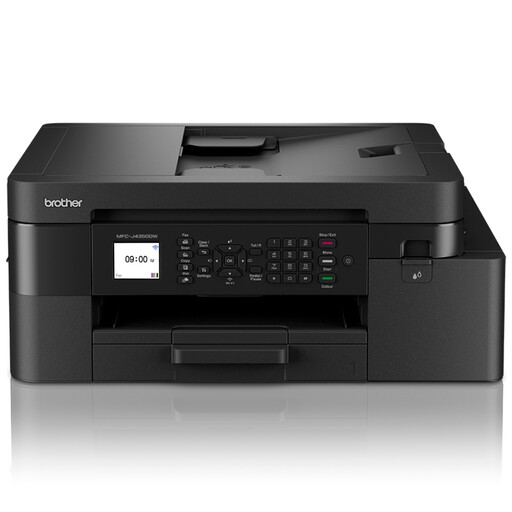 No image available
Consider this model if the group usually scans smaller batches and wants a shared wireless workflow. Check how often its feeder would need reloading, and confirm duplex scanning and a flatbed if the collection calls for them.
Choose confirmed duplex scanning if volunteers regularly need to digitise both sides of loose pages without turning each sheet. Duplex printing does not establish that capability: Epson United Kingdom specifies duplex scanning for the WF-C4810DTWF but single-sided scanning for the WF-3920.
A flatbed provides an individual-placement route alongside the ADF’s batch-feeding route. If the archive includes originals volunteers prefer not to feed, check that the exact model lists both; Canon UK specifies a flatbed/D-ADF scanner for the MAXIFY GX7050.
Yes, if the work involves personal data within the rules’ scope. The Information Commissioner’s Office explains that personal data relates to an identified or identifiable person and that electronic processing is covered; the group should assess the content and context of its particular records rather than treating every historical document alike.
No printer feature alone settles the group’s data-handling arrangements. Where scans contain personal data, the Information Commissioner’s Office advises security measures appropriate to the circumstances and risk; agree who may access files, where they are stored and which scan destinations volunteers may use.