
24/7 Customer Support

Free returns

Same-day & Next-day Delivery

Quality Guaranteed

Unlock Your Welcome Offers: FREE Delivery | Up to 80% OFF | Free 30-day JoyPlus trial
Download the APP
A good pair of multipurpose scissors should be a reliable staple in any UK household. Yet, too often, the reality is a drawer full of flimsy, dull tools that struggle with anything more demanding than a piece of paper. They rust after a few encounters with the dishwasher, the handles pinch your fingers and they fail the moment you attempt to cut through a plastic clamshell package.
Finding a truly versatile and durable pair of scissors means looking past the marketing hype. Many products fall short due to a few common but easily overlooked design flaws. Before you make another purchase you might regret, let's look at the three most common pitfalls that lead to wasted money.
To choose a pair of all-purpose scissors that will last, you need to focus on a few core parameters that define quality and performance.
The heart of any cutting tool is its blade. Understanding the material is the first step to avoiding a poor purchase.
The shape and features of the blades determine what tasks the scissors can handle effectively.
Instead of a generic list, we've matched specific products to the people who will get the most value from them.
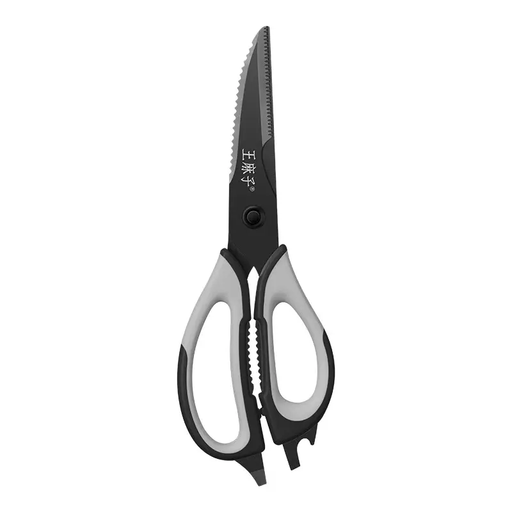
Why This Fits Their Persona: For the UK home cook who needs a reliable tool for everything from spatchcocking a chicken to snipping herbs. Hygiene and power are paramount in a busy kitchen.
The detachable design directly solves the hygiene problem of cleaning non-separable shears. Its food-grade titanium material avoids the rust and corrosion pitfall of cheap stainless steel.
Engineered for heavy-duty kitchen tasks like cutting through poultry bones. The large, non-slip handles provide excellent leverage and control.
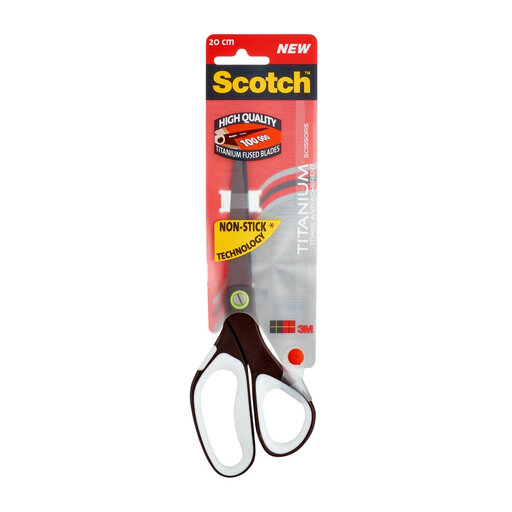
Why This Fits Their Persona: Ideal for hobbyists, students or office workers who frequently cut materials like packing tape, labels or double-sided adhesives and need a clean, precise cut every time without residue build-up.
The non-stick coating directly counters the common problem of blades becoming gummed up and useless. The titanium-fused blades are designed to stay sharper for longer, avoiding the quick-dulling pitfall of generic scissors.
Delivers an extremely smooth cutting action. The ergonomic handle is designed for comfort and control during extended use, reducing hand strain.
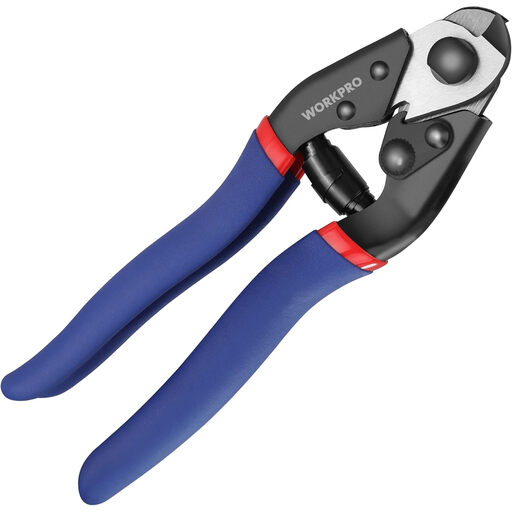
Why This Fits Their Persona: For the person whose "multipurpose" needs go beyond cardboard and string. This is for the DIY enthusiast, cyclist or homeowner who needs to cut wire rope, bicycle cables or other tough materials that would destroy standard scissors.
It completely sidesteps the "one-size-fits-all" trap by being a specialised tool. The Chrome Vanadium (CR-V) steel construction is a clear indicator of industrial strength, far surpassing generic stainless steel.
Designed to deliver clean cuts on metal wire without fraying the ends. Features a safety lock and expansion spring for safe storage and user-friendly operation.
We have compiled a complete, real-time list of products that fully satisfy these strict selection criteria and UK safety regulations.
For kitchen shears, especially those used on raw meat, hygiene is paramount. If your model is detachable, separate the blades after each use and wash them thoroughly with hot, soapy water, then dry completely. For non-detachable scissors or those used for crafts, wipe the blades clean with a damp cloth and dry immediately. To keep the pivot smooth, apply a single drop of food-safe mineral oil (for kitchen tools) or general-purpose 3-in-1 oil (for other scissors) to the joint every few months.
It's important to clarify that most "titanium scissors" are not made of solid titanium. They are typically high-quality stainless steel scissors with a titanium nitride coating. This coating makes the blade surface significantly harder, more resistant to wear and corrosion and helps it retain a sharp edge for longer. While a pair of premium, uncoated stainless steel scissors can be excellent, the titanium coating adds a layer of durability that is particularly beneficial for heavy use. The quality of the underlying steel remains a crucial factor.
While the terms are often used interchangeably in everyday language, there is a technical difference. Shears are generally larger and more robust than scissors, designed for tasks requiring more force. They often feature one handle that is larger than the other to accommodate multiple fingers, providing greater leverage. Good examples include kitchen shears for cutting bone or heavy-duty gardening shears. Scissors are typically smaller, with symmetrical finger holes, and are intended for lighter tasks like cutting paper, fabric or thread.