
24/7 Customer Support

Free returns

Same-day & Next-day Delivery

Quality Guaranteed

Unlock Your Welcome Offers: FREE Delivery | Up to 80% OFF | Free 30-day JoyPlus trial
Download the APP
Muscle recovery massage tools can make post-training mobility work more convenient, whether you run outdoors, lift weights, attend yoga classes or spend long hours at a desk. However, the product that looks most advanced is not always the most practical for your routine.
Before buying, UK shoppers should look beyond bold claims about rapid recovery or “professional” performance. The right choice usually depends on pressure control, portability, construction and the muscle areas you want to target.
A very firm roller or aggressively spiked surface may feel unsuitable for someone new to myofascial release. Conversely, a soft product may not provide enough pressure for larger muscle groups. A useful tool should let you adjust pressure through your body position, grip or vibration setting.
For trigger point massage, controlled and gradual pressure is generally more practical than forcing the tool into a painful area. Discomfort is a reason to reduce pressure or stop, not to push harder.
Bluetooth controls, multiple vibration settings and app guidance can be useful, but they may add cost and charging requirements. If you mainly want a portable tool for your gym bag, a non-powered massage ball or stick may be more convenient.
Check whether a vibrating foam roller includes a rechargeable battery, how it is controlled and whether you are comfortable charging it regularly. A feature only adds value when it fits your normal routine.
Low-quality plastic, weak bearings or a surface that is difficult to clean can make a product frustrating to use. For equipment used against skin or gym clothing, look for clearly stated materials and simple cleaning instructions.
You should also inspect massage balls, rollers and handles regularly for cracks, loosened parts or surface damage. Do not use damaged equipment, and follow the supplied safety guidance.
Different surfaces suit different purposes:
Firmness is subjective, so consider whether you prefer gentle pressure or a more concentrated feel. A smaller ball usually concentrates pressure into a smaller area, while a larger roller distributes it more broadly.
A full-size roller may be useful for the back, thighs and glutes, but it takes up more room in a cupboard or sports bag. Compact massage balls and sticks are easier to carry to the gym, workplace or sports field.
Check the actual dimensions before ordering. For example, a 17.7-inch massage stick offers a longer reach, while a small ball can fit into a coat pocket or travel pouch.
For non-powered tools, examine the material, grip design and moving components. A massage stick with a solid core and smooth bearings should be easier to guide than one with stiff or poorly supported rollers.
For powered equipment, check the number of intensity settings, battery capacity, charging method and operating controls. A vibrating foam roller with a stated battery runtime can be easier to plan around than one with no clear power information. Keep rechargeable devices dry and follow the manufacturer’s charging instructions.
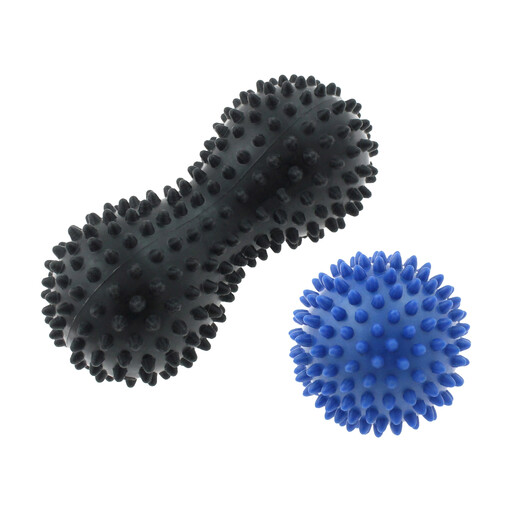
Why This Fits Their Persona: This compact, non-powered set suits beginners who want to try both focused and broader myofascial release at home, in the gym or while travelling around the UK.
It avoids unnecessary electronics and includes two ball formats, allowing users to compare pressure and surface feel without buying separate tools.
The set uses durable PVC, requires no assembly and includes a hard lacrosse-style ball alongside a spiky massage ball.
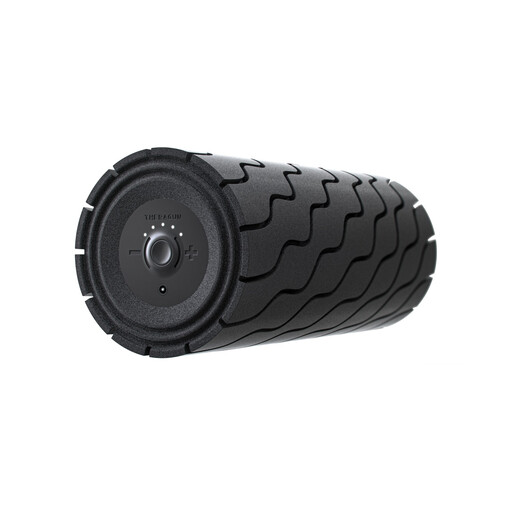
Why This Fits Their Persona: This full-size option is suited to regular gym-goers, runners and athletes who want powered rolling for larger areas such as the legs, back and glutes.
The five vibration settings provide adjustable intensity rather than a single fixed output, while the travel pouch supports organised storage and transport.
It has a wave-textured surface, firm inner core, rechargeable lithium-ion battery with up to 180 minutes of cordless use and Bluetooth app controls.
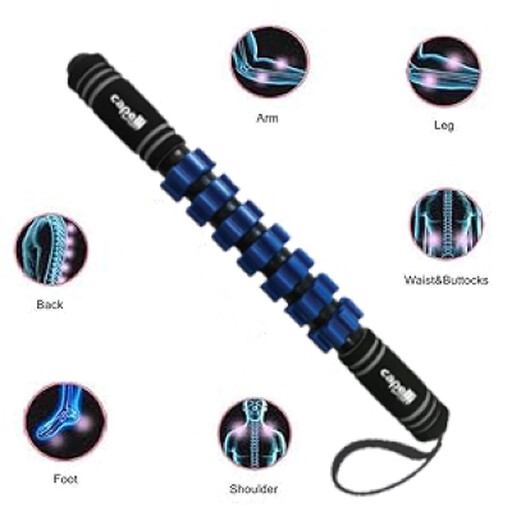
Why This Fits Their Persona: The longer format works for users who prefer hands-on pressure control for the calves, thighs, arms and shoulders before or after training.
Its dual grips reduce the need to press directly with the hands, and the rolling design offers more controlled movement than a small fixed ball.
It measures 17.7 inches, uses a solid steel rod core with industrial-grade ball bearings and has textured TPR grips with foam rollers.
Start with light pressure and short sessions, particularly when using a spiky massage ball or firm deep tissue massage tool for the first time. Move slowly over the intended muscle area and avoid rolling directly over joints, the spine, open wounds, bruises or inflamed areas.
For a ball, a stable floor or wall can help you control pressure. For a stick, hold both grips and guide the rollers over the muscle rather than applying sudden force. A vibrating foam roller should be used on a stable surface, with the lowest comfortable setting selected initially.
These products are intended for general self-massage and mobility routines. If you have an injury, ongoing pain or a medical condition, seek appropriate professional advice before use.
We have compiled a complete, real-time list of products that fully satisfy these strict selection criteria and UK safety regulations.
Massage balls are more compact and target smaller areas with concentrated pressure. A foam roller covers larger muscle groups, such as the thighs and back, and may be easier to incorporate into a warm-up or cool-down. The suitable option depends on the area, your preferred pressure and available storage space.
There is no single schedule that suits everyone. Many users include brief sessions around training or mobility work, beginning with gentle pressure. Avoid repeatedly working an area that feels painful, bruised or irritated. Follow the product instructions and allow your body to guide the intensity.
They require charging, but the running cost is generally linked to electricity use and charging frequency. The more practical consideration is battery management. The WaveRoller specification lists up to 180 minutes of cordless use, although actual runtime can vary according to the selected setting and usage conditions.