For text-led museum label work, choose the required software and file workflow before choosing a desktop format. A compact computer makes sense if you have a suitable monitor, while an all-in-one puts the screen and computer in one unit; a more expandable desktop is worth considering if you expect to add storage or peripherals. Confirm the museum’s templates, fonts and print or PDF submission requirements before deciding between macOS and Windows.
Who is this for?
Text-first label writers
You mainly draft, edit and proofread label text, then prepare documents or PDFs. Choose a display and keyboard you can use comfortably, and check the museum’s required file format before paying for graphics capability you may not need.
Layout and print-proofing users
You may place images, arrange pages or prepare files for print. If Adobe InDesign is part of the workflow, compare the exact computer and monitor with Adobe’s requirements, then check the museum’s fonts, printer and export settings.
Space-conscious home-office users
Your desk has limited room, so the choice between a small computer with a separate monitor and an all-in-one matters. Consider where the screen, keyboard and cables will go, as well as whether you want to replace the display independently later.
What matters when choosing?
For museum label work at home, establish the required software and submission method first. Then choose a screen-and-computer arrangement that fits your desk and any plans to add storage or peripherals.
| Concern |
What to check |
Who this matters to |
| Software and files |
Confirm the museum’s applications, versions, templates, fonts and submission formats; check printer drivers if you will produce proofs. |
If I cannot open the supplied template or submit the finished file correctly, the desktop will not serve the task. Around 42% of consumers put software and file compatibility first. |
| Compact, separate-screen setup |
Match the computer’s display connection to your monitor and check the keyboard, mouse and cable arrangements. |
I already have a monitor, or want to choose one separately, but need the computer to take up little desk space. For around 25% of consumers, that modular setup is the primary concern. |
| Integrated display |
Check the exact screen size and resolution, comfortable positioning and connections for your peripherals. |
Without a monitor to reuse, I would rather arrange one computer-and-screen unit than assemble separate components. Around 17% of consumers place an integrated setup first. |
| Storage and expansion |
Check the exact model’s storage capacity, ports and available upgrade options rather than assuming every small desktop can expand. |
If my image archive and peripheral needs grow, I want room to adapt the computer later. Future storage and expansion come first for around 16% of consumers. |
Common buying pitfalls
-
Buying to the Windows minimum rather than the workload
Microsoft lists 4GB RAM and 64GB storage among the minimum Windows 11 requirements, but those figures do not establish what your document and layout applications need. Adobe lists 8GB RAM as the minimum and 16GB as recommended for current InDesign on Windows.
Write down the applications you will use together. If InDesign is required, compare the chosen Windows configuration with Adobe’s application requirements.
-
Choosing an operating system before checking museum files
A computer can meet an application’s general requirements yet still be unsuitable for a particular template, font, printer driver or submission process.
Ask the museum for its required software versions, file formats, fonts and print or export method before choosing macOS or Windows.
-
Expecting an all-in-one to offer separate-monitor flexibility
An all-in-one combines the screen and computer. Scan UK’s desktop form-factor guidance distinguishes that arrangement from larger desktops that allow varying levels of component additions.
Choose an integrated unit if that arrangement suits your desk; choose a separate desktop and monitor if changing the screen independently matters to you.
-
Planning the computer but not the complete desk setup
A compact desktop still needs a usable display and input devices. Replacing an old computer also means planning what to do with the electrical equipment you no longer use.
Check the package contents, monitor connection, UK keyboard layout and required cables. Ask the retailer about its like-for-like electrical take-back process.
A separate monitor, keyboard, mouse or suitable display cable may also be needed for the setup you choose.
Relevant brands to consider
Apple
Mac mini is a compact route for a separately chosen display; iMac is an integrated-display route for a macOS setup.
- Apple’s UK specifications list a 24-inch 4.5K display for iMac and external-display connections for Mac mini.
- Check that the museum’s applications, fonts and printer workflow work with macOS; display and connection details depend on the exact model.
Dell
The Dell Pro Micro line offers a small, separate-box Windows desktop route.
- One Dell UK Pro Micro configuration lists Windows 11 Pro, 16GB DDR5 memory and a 512GB SSD.
- Confirm the exact configuration’s ports, warranty and included keyboard before treating those details as part of another Pro Micro package.
HP
HP’s OmniStudio X line is an all-in-one option when you want the computer and display in one unit.
- HP’s UK range includes configurations with an integrated 27-inch 4K display.
- Memory, storage and display specifications vary by configuration; check the exact model rather than applying range-wide options to every unit.
Lenovo
ThinkCentre M-series small-form-factor desktops are relevant if you want a compact machine with configuration choices.
- Lenovo describes its UK ThinkCentre M-series small-form-factor range as configurable, with expansion options on particular models.
- Check the selected model’s operating system, ports and actual upgrade capacity; the range description does not establish them for every configuration.
Joybuy desktop choices
These choices cover an all-in-one and compact desktops for a separate-monitor setup. Decide which arrangement suits your desk, then confirm the museum’s software requirements and the accessories supplied with the exact product.
 No image available
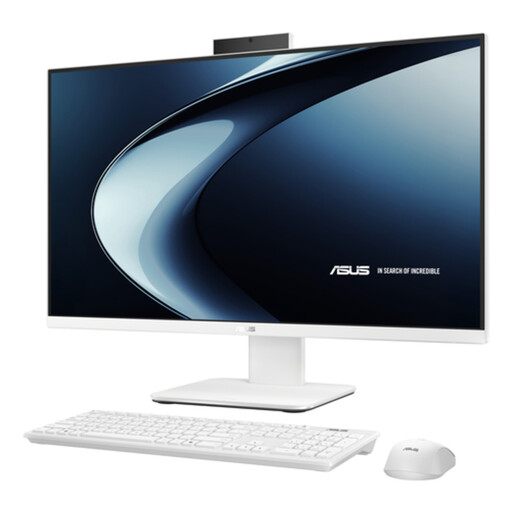
ASUS V400 AiO V470VAK-WPE032W 27-inch Full HD
Consider this all-in-one if you want the computer and screen together for writing and layout work. This configuration lists an Intel Core i7-13620H, 16GB DDR5 RAM, a 512GB SSD and Windows 11 Home. Check that the museum’s software works on this configuration and confirm the keyboard and mouse supplied.
Joybuy
 No image available
SOYO S4PLUS Ryzen 7 H 255, 24GB LPDDR5, 512GB SSD
Consider this mini desktop if you want to choose a separate monitor for a space-conscious desk. The product name lists Windows 11, 24GB LPDDR5 memory and a 512GB PCIe 3.0 SSD. Check monitor connections, package contents and the museum’s required applications before ordering.
Joybuy
 No image available
SOYO M5 AMD Ryzen 4300U, 16GB LPDDR4, 512GB SSD
Consider this mini desktop if a separate-screen setup suits your home office. Its product name lists 16GB LPDDR4 memory, a 512GB SSD and HDMI, Type-C and DisplayPort display connections. Confirm the operating system supplied with this exact SKU, as well as monitor and input-device arrangements, before checking software compatibility.
Joybuy
 No image available
Lenovo IdeaCentre Mini 01IRH10R 91B2000XUK
Consider this mini desktop if you want to pair a compact computer with your own screen. Its product name lists an Intel Core 5 processor, 16GB RAM and a 512GB SSD. Confirm the supplied operating system, monitor connection and keyboard and mouse arrangements for this configuration.
Joybuy
 No image available
Apple Mac mini (2026) M6 12-Core CPU, 12-Core GPU, 24GB, 512GB
Consider this Mac mini if you want a compact computer with a separately selected display and the museum’s workflow supports macOS. The product name specifies 24GB memory and a 512GB SSD. Check the exact monitor and peripheral connections, package contents, fonts and printer requirements before choosing it.
Joybuy
Questions about desktop requirements
Do I need a dedicated graphics card for museum labels?
Not usually for text editing, ordinary document layout and PDF export alone. Scan UK describes most home-office applications as not graphically intensive; if your work includes demanding image editing, check that application’s specific graphics requirements.
What should I check if the museum uses InDesign on Windows?
Compare the exact desktop with Adobe’s requirements for the InDesign version you will use. Adobe lists 8GB RAM as a minimum and recommends 16GB for current InDesign on Windows; it also recommends an SSD and a 1920 × 1080 monitor resolution. Those are application-specific references, not requirements for writing text alone.
Are the Windows 11 minimum requirements enough to choose a desktop?
No: they establish operating-system eligibility, not suitability for your complete label workflow. Microsoft lists 4GB RAM and 64GB storage among the Windows 11 minimums; compare any desktop with the requirements of the document, layout and image applications you intend to run.
How should I arrange disposal of an old desktop in the UK?
Ask the retailer about electrical take-back when replacing it. GOV.UK guidance says retailers must offer to take back electrical waste of the same type as the item purchased; confirm the retailer’s arrangements before ordering.


