One- or two-portion cooks
If you make mushroom casserole for yourself or two people, check both the cooker’s capacity and its worktop and cupboard dimensions. Morphy Richards and Tower position their 1.5L models for this portion range.


Choose a 1.5L slow cooker if mushroom casserole is usually for one or two people and a compact, measured fit matters most. A 3.5L model makes more sense for several portions or planned leftovers, provided you have room for it. Hob-safe bowls and programmable controls are worth considering only if their specific uses suit your hob and routine.
If you make mushroom casserole for yourself or two people, check both the cooker’s capacity and its worktop and cupboard dimensions. Morphy Richards and Tower position their 1.5L models for this portion range.
If you want several servings from one casserole, allow for the larger cooker as well as space to chill or freeze the portions you save. Crock-Pot describes its 3.5L digital model as serving three to four people.
If you brown mushrooms or onions before slow cooking, a bowl approved for your type of hob can avoid a transfer from a frying pan. Crock-Pot specifies gas and electric hob use for the CSC085X bowl.
For a small-kitchen mushroom casserole, settle your usual portion count and available space before deciding whether timing controls or in-bowl browning would change how you cook.
| Concern | What to check | Who this matters to |
|---|---|---|
| Capacity and fit | Compare the stated capacity and maximum-fill guidance with the cooker’s external dimensions and your available space. | When I cook one or two servings, I need a cooker that fits my limited worktop and cupboard space; around 33% of consumers put compact fit first. |
| Leftovers | Check portion guidance and usable bowl capacity before choosing a larger model for batch cooking. | If I want to cook once and save several servings, I need room for the casserole and somewhere to store the leftovers; about 27% of consumers prioritise batch portions. |
| Timing | Check the exact model’s timer range and what happens when its cooking cycle ends. | A changing mealtime makes a set cooking duration useful to me; around 20% of consumers place timing flexibility first. |
| Browning and cleaning | Confirm the bowl’s approved hob types and the care instructions for the pot and lid. | Browning mushrooms in the cooking bowl would spare me a separate pan, while straightforward washing matters afterwards; roughly 20% of consumers put this routine first. |
Capacity does not tell you whether the cooker fits your kitchen or how much food its bowl can hold in use. The Cookworks 1.5L listing gives a maximum food and liquid volume of 1.2L.
Measure the intended space and check the exact model’s maximum-fill instructions against your usual casserole quantity.
Crock-Pot specifies gas and electric hob use for the CSC085X bowl, while the Cookworks 1.5L inner pot is not approved for hob or oven use. A removable bowl alone establishes neither capability.
If you plan to brown mushrooms in the bowl, confirm that its instructions name your hob type.
If the bowl cannot be used on your hob, browning ingredients will require a separate pan.
A keep-warm setting can help with serving time, but it is not a substitute for storing portions intended for another meal. Food Standards Scotland advises refrigerating cooled leftovers promptly and eating refrigerated leftovers within two days.
Portion leftovers for refrigeration or freezing rather than leaving them in the cooker for a later meal.
Its 460300 1.5L model is a reference point for one- or two-portion cooking where measured size matters.
Its cited 3.5L models offer different ways to handle browning and meal timing.
The cited T16020 is a compact 1.5L option positioned for two portions and smaller kitchens.
The cited 23200 is a 3.5L cooker with a removable pot and high, low and keep-warm settings.
The retailer-listed 1.5L model offers another compact, one- or two-portion reference point.
These 3.5L models are choices to consider when you want more than a one- or two-portion casserole. Compare their controls and removable pots, then check that the exact cooker will fit your small kitchen.
 No image available
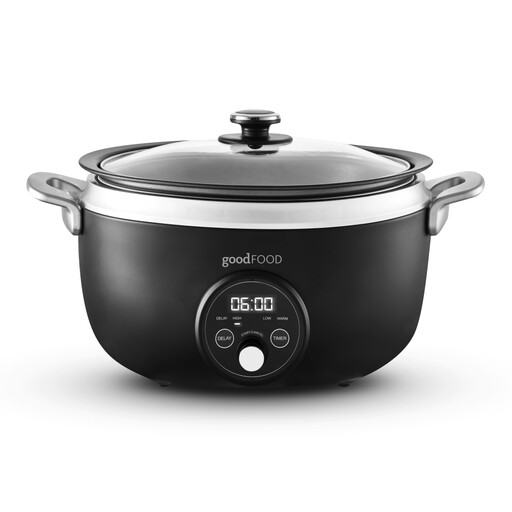
Consider this model if you want a 3.5L casserole cooker with a removable pot and digital timing controls. Its name specifies 170W, an LED display, a delay function and a timer; check the exact timing settings for your routine. If you intend to sear ingredients in the pot, confirm its compatibility with your hob before buying.
 No image available
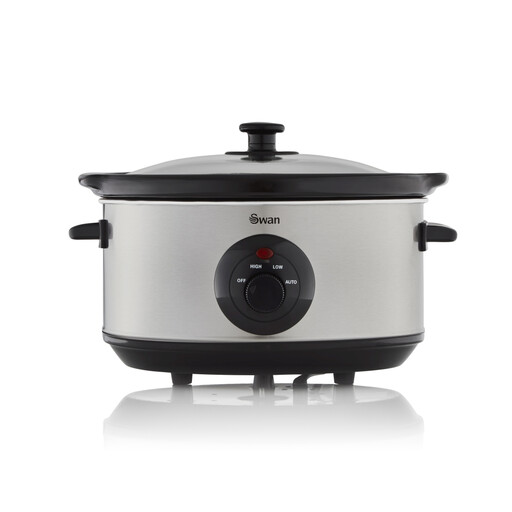
Consider this 3.5L model when you want to make more than a compact one- or two-portion casserole. Its name specifies a 200W rating and three cooking settings. Check its maximum-fill instructions for your batch size and its external dimensions for your available space.
 No image available
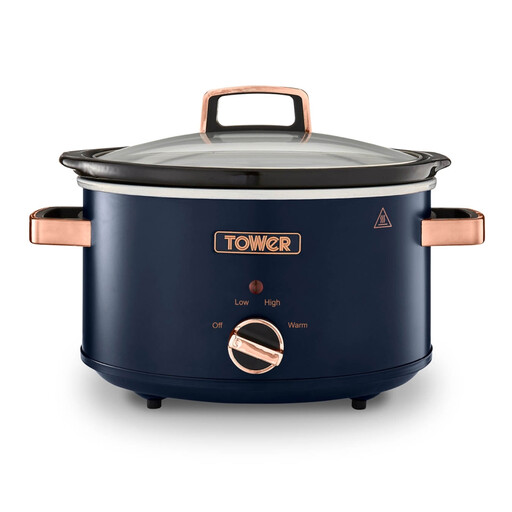
Consider this 3.5L model if you want a removable pot and three heat settings for a larger casserole. Its name also specifies cool-touch handles. Check the maximum-fill guidance before planning a full batch, and confirm hob compatibility before trying to brown ingredients in the pot.
Start with a 1.5L model if you normally make one or two portions, but measure the exact cooker before deciding. Morphy Richards positions its 1.5L model for one or two people and specifies L20.3 × H23.9 × W21.2 cm; a 3.5L model is worth considering when several servings or leftovers matter more than minimum size.
You can do so only when the exact bowl is approved for your hob type. Crock-Pot specifies gas and electric hobs for the CSC085X bowl; that does not establish induction compatibility or approval for other slow-cooker bowls.
It depends on the exact model’s care instructions. Morphy Richards states that the pot and lid of its cited 1.5L cooker are dishwasher-safe, while the Cookworks 1.5L listing says to hand-wash both; check the instructions for the cooker you choose.
Cool and refrigerate portions promptly rather than using the cooker’s keep-warm setting for later meals. Food Standards Scotland advises against leaving food at room temperature for more than one to two hours, recommends a fridge temperature of 0–5°C, and says to eat refrigerated leftovers within two days and reheat them no more than once.