
24/7 Customer Support

Free returns

Same-day & Next-day Delivery

Quality Guaranteed

Unlock Your Welcome Offers: FREE Delivery | Up to 80% OFF | Free 30-day JoyPlus trial
Download the APP
Mushroom extract supplements are increasingly popular with UK adults looking for convenient daily wellness support. Reishi, Lion’s Mane, Chaga and Maitake products are available as capsules, powders and multi-mushroom blends, but the label can make meaningful comparison difficult.
A higher milligram figure does not automatically indicate a more concentrated extract. Likewise, phrases such as “full spectrum”, “high potency” and “immune support” may provide little useful information unless the product also explains the mushroom species, extraction method and active-compound content.
This guide from the Joybuy Product Recommendation Officer focuses on the practical details that can help you avoid paying for a poorly specified product.
A simple mushroom powder is usually ground material. An extract has been processed to concentrate selected compounds, often using hot water, alcohol or both. These products should not be compared solely by the number of milligrams on the front of the pack.
Check whether the label clearly states:
A product listing that only says “mushroom complex” without quantities for each species makes it harder to judge value.
Organic mushroom supplements may use certified organic raw materials, but buyers should still check the complete ingredients list. Capsule shells, anti-caking agents and carriers may be listed separately.
For a vegan mushroom extract, look for a vegetable capsule shell, commonly hypromellose, and check for statements covering dairy, gluten and other relevant allergens. Organic status is useful, but it does not replace checking dosage, sourcing or formulation details.
Reishi mushroom supplements and Lion’s Mane supplements are often marketed for immunity, focus, relaxation or energy. These descriptions should be treated as intended wellness positioning rather than guaranteed medical outcomes.
Food supplements should not replace a varied diet, adequate sleep or professional medical care. In the UK, always read the supplied label and follow the stated daily intake. Speak to a GP or pharmacist before use if you are pregnant, breastfeeding, taking prescription medicines or managing a medical condition.
A fruiting body mushroom extract comes from the visible mushroom structure. Some products instead use mycelium, which is the filamentous part of the fungus and may be grown on a grain substrate. Neither term alone proves that a product is suitable for every buyer, but the distinction helps you understand what you are purchasing.
If you specifically want fruiting bodies, look for clear wording such as “100% fruiting body” in the ingredients or product specification. Also check whether grain carriers, starch or other fillers are present.
A dual-extracted mushroom capsule typically uses more than one processing method to produce a broader extract profile. Hot-water extraction is commonly associated with water-soluble compounds, while some formulas also use alcohol extraction for other constituents.
Do not assume dual extraction means every product has the same strength. Compare the stated serving size, extract quantities and standardisation. A transparent label is more useful than a large front-of-pack claim.
Polysaccharides and beta-glucans are commonly listed in mushroom products. Beta-glucan supplements may appeal to shoppers seeking clearly quantified mushroom compounds, but percentages are only meaningful when you know whether they refer to the extract, the serving or a particular fraction.
For example, a product may state more than 30% beta-glucans or more than 40% polysaccharides per serving. This is easier to compare than an unspecified “high-strength” claim. Also check whether each mushroom in a blend has its own quantity or whether the total is shared across several species.
The following options suit different buying priorities. Product formulations and packaging can change, so check the current product page and label before ordering.
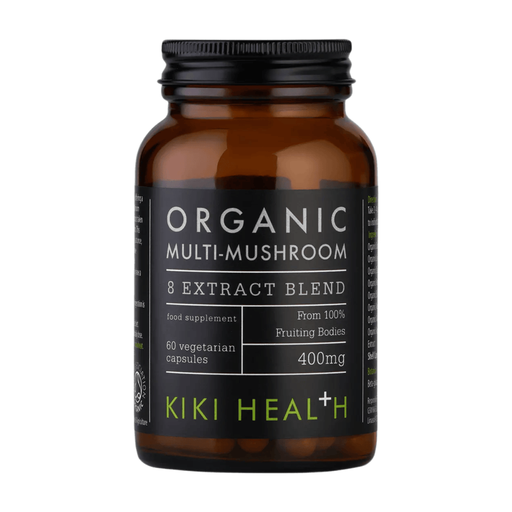
Why This Fits Their Persona: A practical starting point for shoppers who want several mushroom species in one daily capsule routine rather than buying separate products.
The listing identifies five organic species and gives 150 mg of each per two-capsule serving, avoiding an unspecified proprietary blend.
Includes Reishi, Lion’s Mane, Shiitake, Cordyceps and Maitake; uses vegan capsules and is listed as free from gluten and dairy.
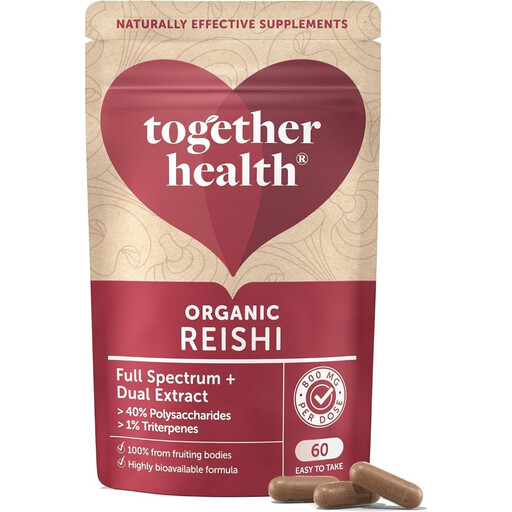
Why This Fits Their Persona: Suits buyers who prioritise a single, clearly specified Reishi formula with organic fruiting-body sourcing and quantified compounds.
The specification states 100% fruiting bodies, a 20:1 dual extract, a 1:1 full-spectrum extract and no grain carriers.
The two-capsule serving lists more than 40% polysaccharides and more than 30% beta-glucans, with vegetable capsules.
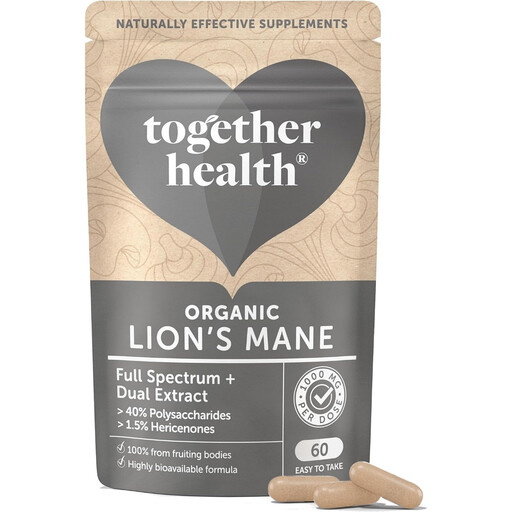
Why This Fits Their Persona: A focused option for students, office workers and other adults specifically comparing cognitive support supplements.
It identifies Lion’s Mane as the sole mushroom and states that the formula uses 100% organic fruiting bodies rather than an unnamed blend.
The two-capsule serving provides 1,000 mg across dual and full-spectrum extracts, with stated polysaccharide and beta-glucan levels.
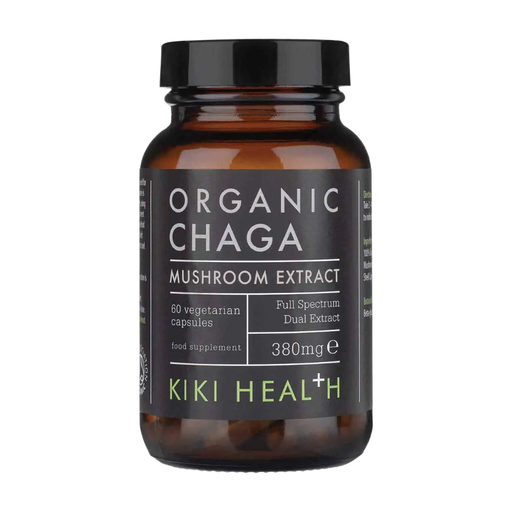
Why This Fits Their Persona: Suitable for adults seeking a single Chaga mushroom extract in a compact capsule format for a straightforward daily routine.
The ingredient list specifies organic Chaga fruiting body extract and does not present the product as a vague multi-ingredient proprietary blend.
Each capsule contains 380 mg and the listing describes hot-water and alcohol extraction, with a vegan capsule shell.
Capsules are convenient for commuting, studying and travel because the serving is pre-measured. Powders can be mixed into porridge, smoothies or drinks, but require a reliable kitchen scale. A single-species product makes it easier to assess your chosen mushroom, while a blend may reduce the number of capsules in a daily routine.
If you are comparing a Lion’s Mane powder, Reishi mushroom supplement or Chaga product, compare the cost per stated serving, not just the pack price. Check the recommended intake and the number of servings in the container.
Some are, but not all. Check that the capsule shell is vegetable-based and review the full ingredients list. Also look for clear vegan or vegetarian suitability statements, particularly when buying organic mushroom supplements.
Shelf life varies by product. Follow the best-before date and storage instructions on the packaging. Most should be kept tightly closed in a cool, dry place away from direct sunlight and moisture.
Possible interactions depend on the mushroom, extract strength and medicine involved. Reishi, Chaga and multi-mushroom formulas may not be appropriate for everyone. Consult a GP or pharmacist before use if you take prescription medicines or have an underlying condition, and never exceed the stated daily intake.