Dinner-party batch cooks
You want to prepare a shared starter or canapé spread without repeatedly processing small portions. Compare the amount you can actually process with the quantity your recipe makes.


For a thick mushroom pâté, start with a food processor bowl—or a processor-blender combination—if you want to stop at a coarse texture. A jug blender is more relevant to a smoother mixture that can circulate around its blades. For a dinner-party batch, check usable capacity and processing controls, and let cooked ingredients cool before using an ordinary blender unless its instructions expressly permit hot ingredients.
You want to prepare a shared starter or canapé spread without repeatedly processing small portions. Compare the amount you can actually process with the quantity your recipe makes.
You want to decide whether the pâté stays rustic or becomes finely processed. Short pulses give you opportunities to inspect the mixture as you go.
You may also use the appliance for dips, sauces or other preparation, but need to weigh those uses against the space taken by bowls, jugs and accessories.
Decide whether your recipe calls for a textured or smooth pâté, then compare usable batch capacity. A processor-blender combination adds a jug for other recipes, but also gives you more parts to store and clean.
| Concern | Buying checks | Who this matters to |
|---|---|---|
| Usable batch capacity | Compare your recipe yield with the stated working capacity, where available; do not treat total bowl size as the amount you can process. | I want to make enough pâté for my guests without splitting it into several runs; around 42% of consumers put batch capacity first. |
| Coarse or smooth texture | Look for pulse or manual control if you want to stop while mushroom pieces remain; check the model’s instructions for thick mixtures. | If I prefer a rustic spread, I want to inspect it between short bursts rather than let it become uniformly smooth. Around 33% of consumers prioritise texture control. |
| Other uses and storage | Check which bowls, jugs and accessories come with the model, where you would keep them and how they must be cleaned. | I host occasionally and want the appliance to earn its cupboard space through other preparation tasks; versatility is the primary need for around 25% of consumers. |
A small cup may mean repeated batches, while the controls may not give you the stopping points you want for a rustic pâté.
Check for a processor bowl and compare its usable capacity with your recipe, even if the appliance also includes a jug or cup.
Kenwood advises cooling hot ingredients to room temperature before putting them in a blender; instructions for appliances designed to handle heat can differ.
Let the mushrooms cool before blending unless the exact model’s instructions expressly allow hot ingredients under conditions you can follow.
Magimix lists a 2.6 L total bowl capacity but a 1 L working capacity for its 3200XL, so the headline figure alone cannot establish batch fit.
Compare the stated working capacity with your recipe yield before deciding whether you can make the pâté in one batch.
Food residue can remain around components that need particular attention during cleaning. The Food Standards Agency’s guidance and review address cross-contamination and cleaning, rather than treating a dishwasher-safe label as an allergen-free assurance.
If a guest has declared an allergy, follow the model’s instructions for dismantling and cleaning food-contact parts, including the blade assembly and seals where applicable. Do not promise an allergen-free result on the basis of the appliance label.
The BN800UK combines a processor bowl, multi-serve jug and personal cup, making its format relevant if pâté is one of several party-preparation tasks.
Its food-processor range is relevant if chopping and other countertop preparation matter more to you than having a separate blending jug.
Its blender and processor-blender guidance is useful when deciding how you want to control a thick pâté mixture.
These food processors, processor-blender combinations and choppers are relevant to preparing mushroom pâté. Compare the vessel supplied, usable batch capacity and texture controls against your recipe; a stated vessel size alone does not settle how much you can process.
 No image available
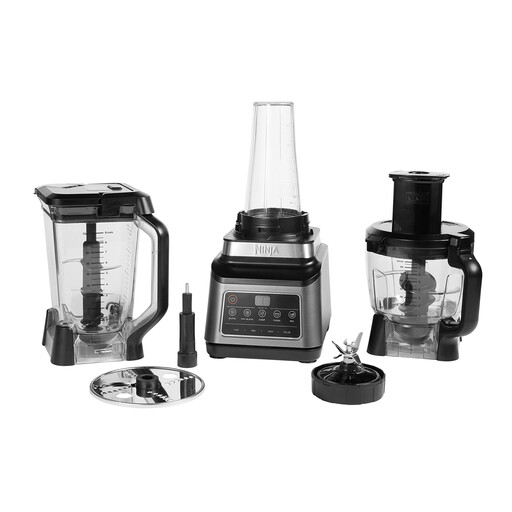
A processor-blender format to consider if you also expect to prepare other party food. The title lists a 2 L bowl and a separate 1.8 L capacity; check the usable amount for your pâté and the model’s instructions before processing cooked ingredients.
 No image available
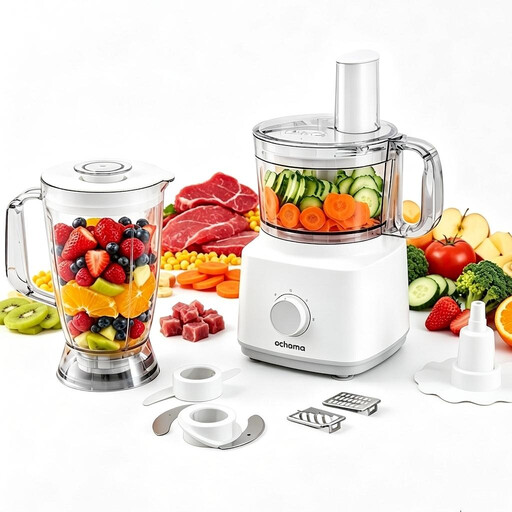
Consider this combination if you want a processor bowl for pâté and separate vessels for other recipes. The listed set has a 1.8 L processor bowl, 2.1 L jug and 700 ml cup. Check the bowl’s usable capacity and follow the model’s instructions on thick mixtures and hot ingredients.
 No image available
This processor-blender format is relevant if you want an appliance for pâté alongside other chopping tasks. Its listed capacity is 1.8 L; check the working capacity and whether its controls let you stop at the texture you want.
 No image available
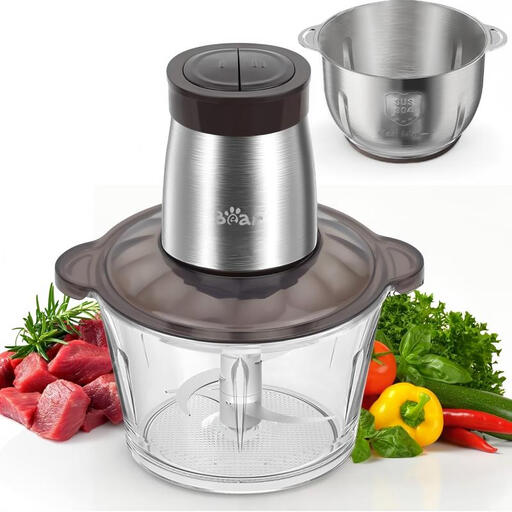
The two listed containers may suit preparation that calls for separate batches or ingredients. The title specifies 2 L and 1.8 L containers and two speed settings. Check their working capacities and the exact model’s operating instructions before planning your batch.
 No image available
A chopping-focused option to assess if you plan to prepare the mushrooms in a bowl rather than a blending jug. The title lists a 2 L capacity and two speeds. Confirm which vessel comes with this variant, its usable capacity and whether the instructions permit your pâté mixture.
Choose a food processor bowl if you want to pulse the mushrooms and inspect a coarse-to-smooth texture as you go. A jug blender is more appropriate when you want a smoother result and have enough mixture to circulate; Kenwood places pâté among thicker mixtures and recommends higher blender speeds for them.
Let them cool before putting them in an ordinary blender unless the exact model’s instructions expressly permit hot ingredients. Kenwood advises cooling hot ingredients to room temperature before blending; any heat-handling permission must be checked for the appliance and quantity you intend to use.
Follow the exact model’s cleaning instructions and pay attention to removable food-contact parts, including blades and seals where applicable. The Food Standards Agency’s work on allergen cleaning and cross-contamination does not make a dishwasher-safe label an assurance that food residue or allergen risk has been eliminated.