Musical-theatre detail listeners
If you replay cast albums or live recordings to follow lead vocals, ensemble parts and orchestral placement, you may prefer two speakers positioned for stereo listening.


Choose a stereo pair if you can position two speakers and want a conventional left-right presentation of voices and instruments. An active pair avoids a separate amplifier; passive speakers need one, while a single wireless speaker reduces placement demands but cannot provide the same physical separation. In a converted loft, check speaker positions, source connections and how your listening volume may affect neighbours before deciding.
If you replay cast albums or live recordings to follow lead vocals, ensemble parts and orchestral placement, you may prefer two speakers positioned for stereo listening.
Sloped ceilings, uneven walls or limited clearance may constrain where speakers can go. You are prepared to try different positions before deciding whether the room needs further changes.
You mainly play recordings from streaming services or a phone and would rather keep the number of separate components down.
The choice is between physical stereo separation, simpler placement and a system you can build around a separate amplifier. Check which approach fits the loft before comparing individual models.
Choose it when: You want two speaker positions without adding a separate amplifier; KEF LSX II LT is an example.
Allow for: Space for both speakers and a connection between them.
Choose it when: Straightforward streaming and finding one speaker position matter more than a conventional two-speaker layout; Sonos Era 300 is an example.
Allow for: A single enclosure cannot give its left and right speakers separate positions across the room.
Choose it when: You want a component hi-fi setup and can select an appropriate amplifier; KEF Q Concerto Meta is a passive example.
Allow for: Amplification, speaker cable and more setup work in addition to the speakers.
| Concern | What to check | Who this matters to |
|---|---|---|
| Stereo staging | Can you position two speakers approximately symmetrically around your listening seat? KEF suggests an equilateral listening triangle as a starting point, not a rule for every room. | If I want to follow where voices and orchestral parts sit in a recording, I need room for a deliberate left-right layout; around 42% of consumers put stereo staging first. |
| Room interaction | Measure the available space behind and beside the speakers, then test their positions before fixing shelves or brackets. KEF notes that rear-ported designs are sensitive to distance from the wall behind them. | With sloped or uneven boundaries, I want to adjust placement if the bass or stereo image seems unbalanced. Room control is the main concern for around 33% of consumers. |
| Source connections | Match your playback device to the actual inputs and wireless options; check separately whether an analogue source needs an adapter. | If I switch between recordings on my phone and another source, I want playback without building a complicated component system; around 25% of consumers prioritise simple connections. |
Passive speakers need external amplification. KEF specifies a 15–180 W amplifier requirement for its Q Concerto Meta, so the speaker pair alone is not the whole system.
Plan the amplifier, speaker cable, source connections and suitable positions before comparing passive and powered options.
A compatible amplifier and speaker cable are additional purchases; stands may be needed for your chosen layout.
KEF notes that rear-ported speakers can be sensitive to their distance from the wall behind them. That makes a fixed position a risk in a loft where placement is already constrained.
Measure the available clearance and try movable positions and toe-in before committing to brackets, shelves or acoustic treatment.
A wireless speaker may still need accessories for an analogue source. Sonos specifies a separate Line-In Adapter and auxiliary cable for the Era 300 line-in route.
List the outputs on each device you intend to use, then check the speaker inputs and required accessories.
Using the Era 300 line-in route adds an adapter and auxiliary cable to the setup.
In England, GOV.UK says councils investigate noise that may amount to a statutory nuisance, including noise that unreasonably and substantially interferes with use or enjoyment of premises. The impact of listening matters, not just a speaker's stated output.
Consider controllable volume, placement and listening hours alongside the system's connections and layout.
These product lines illustrate different system approaches; a brand's inclusion does not establish that every model suits the loft.
KEF offers both the active LSX II LT pair and the passive Q Concerto Meta standmount speaker.
The Era 300 is a one-box option for listeners who favour Wi-Fi playback and room-tuning controls over a conventional separated stereo pair.
The HD6 illustrates a powered stereo-pair approach with built-in amplification.
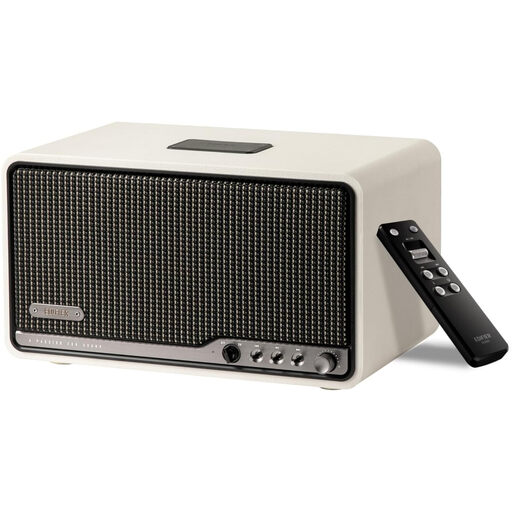
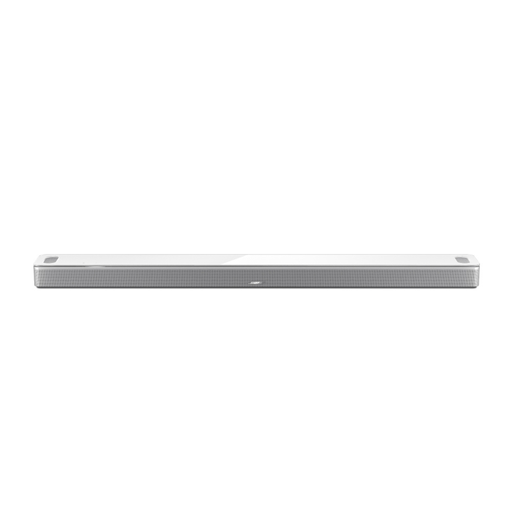
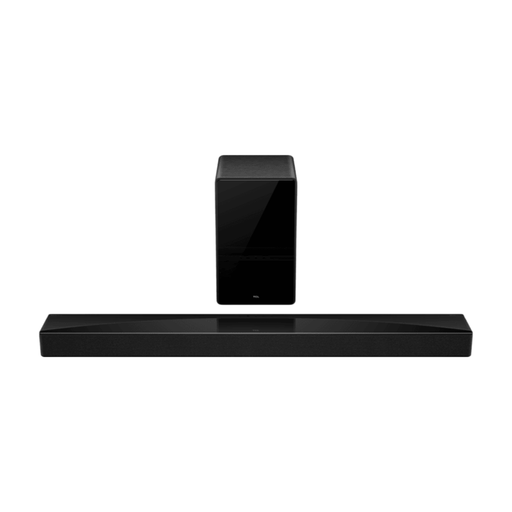
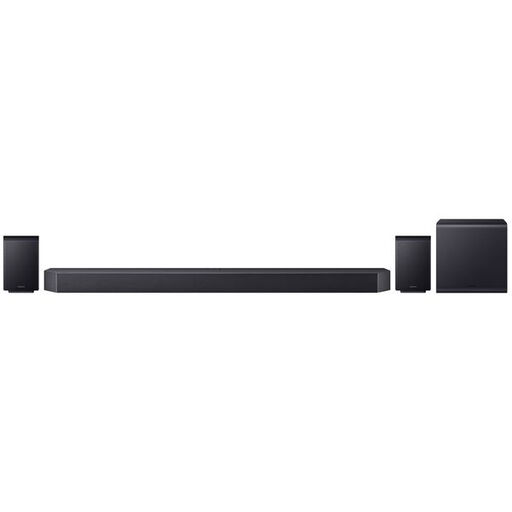
These products span a tabletop speaker, a passive stereo pair and soundbars. Compare each format with the space available in your loft and the way you play recordings; the soundbars are not conventional separated stereo pairs.
 No image available
Consider this single tabletop speaker if finding space for a compact setup is your priority. If you want separated left and right playback, confirm compatibility with a second matching unit before planning a pair.
 No image available
This pair suits a planned left-right layout if you are prepared to add a compatible amplifier and speaker cable. Check amplifier compatibility and try speaker positions in the loft before fixing the layout.
 No image available
A soundbar is worth considering if a single main speaker position fits your room better than two spaced speakers. Check your intended music source and accept that this format does not provide a conventional separated stereo-pair layout.
 No image available
This soundbar format may suit a listening area where placing a conventional stereo pair is difficult. Confirm that your playback source connects as intended and that the soundbar setup fits the available space.
 No image available
Consider this multi-channel soundbar system only if its component layout works in your loft and you prefer that format to a conventional stereo pair. Check the connections needed for your recordings and plan where the system will go.
Choose a stereo pair if you can position two speakers separately and want a conventional left-right soundstage. A one-box speaker is a practical alternative when simpler placement matters more; it does not create the same physical separation.
Start by adjusting the speakers' positions and, where practical, keeping their distances to the listening seat similar. KEF recommends experimenting with wall distance and suggests an equilateral listening triangle as a starting point, rather than a fixed requirement for every room.
No. Passive speakers require external amplification. Check the requirements of the exact model: KEF, for example, specifies a 15–180 W amplifier requirement for its Q Concerto Meta.
Yes, if the noise has the relevant impact; a speaker's advertised power alone does not decide the issue. GOV.UK says councils in England investigate noise that may be a statutory nuisance, including noise that unreasonably and substantially interferes with use or enjoyment of premises or injures, or is likely to injure, health.