Listeners with little room to move speakers
You play musical-theatre recordings in stereo but cannot pull the speakers far into the room. Placement guidance and a way to manage bass matter more than cabinet size alone.


For a fixed position near a wall, consider purpose-designed on-wall stereo speakers or active monitors with room-response controls before choosing ordinary bookshelf speakers that you cannot reposition. Genelec notes that wall proximity can increase low-frequency output; the choice then depends on your amplifier, source connections and willingness to adjust the setup. Listen to familiar vocal and orchestral passages where possible rather than assuming either format will suit your recordings.
You play musical-theatre recordings in stereo but cannot pull the speakers far into the room. Placement guidance and a way to manage bass matter more than cabinet size alone.
You want to follow lyrics and ensemble voices alongside strings, brass and percussion. A suitable stereo arrangement matters as much as a speaker’s description of its sound.
You need to work around a TV, furniture or limited floor space and can plan for the mounting, power or additional equipment required by your chosen system.
If the speaker position is fixed, choose a format you can install and connect there, then assess its bass behaviour and stereo presentation at your listening seat.
Consider when: You listen from a desk-scale position and can provide power, a suitable audio connection and time to adjust the response in your room.
Allow for: Connections and calibration equipment that vary by model. Genelec specifies an analogue XLR input for the 8320A and a separately sold GLM Calibration Kit for its calibration.
Consider when: The wall position is permanent, keeping floor space clear matters, and you can install a stereo pair.
Allow for: A compatible amplifier, speaker cables and safe mounting. Focal recommends 25–130 W amplifier power for its On Wall 301.
Consider when: You can vary both speaker positions and the listening seat, then assess the result at the intended wall distance.
Allow for: Bass that may change with distance from the wall. Genelec describes both cancellation from rear-wall reflections and increased low-frequency output close to boundaries.
| Concern | What to check | Who this matters to |
|---|---|---|
| Bass near the wall | Check the exact model’s placement guidance and whether it offers bass adjustment or room calibration. | When I cannot move the speakers far from the wall, I want bass that does not overwhelm the orchestra. Roughly 36% of consumers put boundary control first. |
| Voices and stereo image | Try familiar solo and ensemble passages; plan a symmetrical stereo pair aimed towards the listening seat. | If lyrics get lost in busy passages, I care most about following voices while hearing the instruments separately. Around 29% of consumers prioritise vocal and orchestral clarity. |
| Installation and space | Confirm the mounting method and wall suitability, then plan the cable route or power access. | In a shared room, I need the speakers to fit without stands obstructing the floor. About 21% of consumers put installation and space first. |
| System connections | Match the playback source to the speaker inputs and check whether amplification or calibration equipment is needed. | I want to play recordings from my existing source without discovering that another component is required. Roughly 14% of consumers make system simplicity their primary concern. |
A rear port does not, by itself, determine the bass you will hear. Genelec describes how wall reflections and proximity can either cancel or increase low-frequency output.
Follow the exact speaker’s placement guidance and, where possible, test or measure it in the intended position.
A passive stereo pair needs appropriate amplification; the wall installation also needs a suitable fixing method.
Check amplifier compatibility, speaker-cable routing, mounting hardware and the wall before ordering.
Plan for the space and work needed to route cables and mount both speakers safely.
A calibration-capable monitor still needs a compatible source connection and the equipment required to measure the room.
Check the inputs, power access and calibration contents for the exact model and package.
Genelec says calibration of the 8320A requires its separately sold GLM Calibration Kit.
Clearing floor space does not ensure that both speakers reach the listening seat from suitable positions.
Plan the speakers and seat together. Genelec’s placement guidance recommends left-right symmetry and an approximately 60-degree angle between the speakers.
Active monitors with room-response controls, including models intended for measured calibration.
Passive On Wall 300-series speakers intended for mounted stereo or home-cinema installations.
Low-profile on-wall speakers across stereo and multichannel applications.
These soundbars offer a TV-adjacent way to play musical-theatre recordings. They are not separate stereo speaker pairs, so consider whether that format suits your listening position and check the intended wall placement before choosing one.
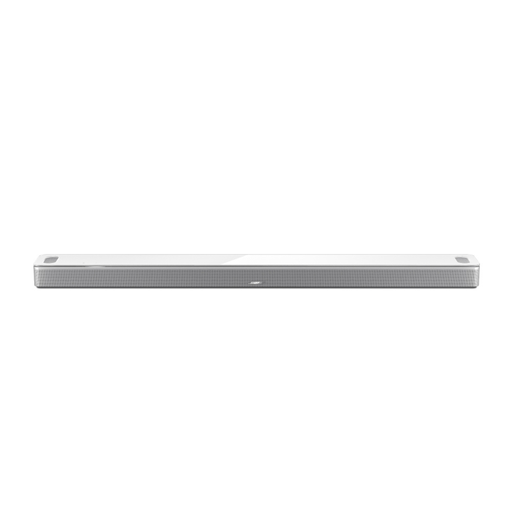 No image available
Consider this soundbar for musical-theatre listening beside a TV if you prefer that format to a separate stereo pair. Check that your source can connect, that the planned position follows the placement guidance and whether you need to obtain mounting hardware.
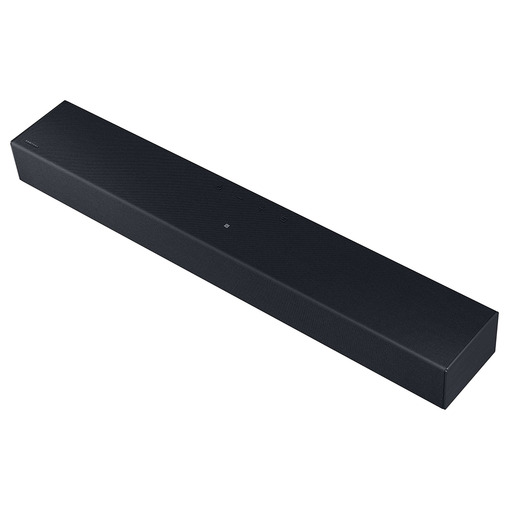 No image available
For a TV-adjacent setup, assess whether this 2.0-channel soundbar gives you the presentation you want from musical-theatre recordings. Check your source connection, the near-wall placement guidance and exactly which mounting parts come with the unit.
There is no distance that works for every speaker and room. Genelec explains that rear-wall reflections can reduce bass at some distances, while placement close to a boundary can increase low-frequency output. Start with the exact model’s placement guidance and assess the result at your listening seat.
Choose passive on-wall stereo speakers if the wall position is fixed and you can provide a compatible amplifier and safe mounting. Active monitors with room-response controls make more sense if you can accommodate their power and source connections and are prepared to adjust or calibrate them. Audition familiar voices and orchestral passages if possible.
Start with the speakers placed symmetrically and aimed towards your listening position. Genelec recommends an approximately 60-degree angle between left and right monitors and advises placing the acoustic axis around ear level where practical.
A passive on-wall pair needs a compatible amplifier, speaker cable and a suitable mounting arrangement. If you plan to calibrate Genelec 8320A active monitors, Genelec says the GLM software requires a separately sold GLM Calibration Kit; also check how your playback source will connect.