Parents starting finger foods
If your baby is ready for solids from around six months, the NHS advises offering small amounts alongside breast milk or first infant formula. The size, shape and texture of any naan you serve need attention too.


Choose naan by its actual ingredients and the piece you plan to offer, rather than assuming that added fibre means a blend of white and wholemeal flour. For a baby starting solids from around six months, NHS guidance calls for small amounts alongside usual milk feeds, attention to allergenic ingredients, and a manageable texture eaten upright under supervision. Wholemeal naan can add variety, but the NHS advises against giving only wholegrain foods before age two.
If your baby is ready for solids from around six months, the NHS advises offering small amounts alongside breast milk or first infant formula. The size, shape and texture of any naan you serve need attention too.
If you want both white and wholemeal flour, check the ingredient list. Tesco’s listed plain naan contains wheat fibre, while Sounas lists a separate wholemeal naan; those descriptions do not establish a mixed-flour recipe.
Read the selected naan’s ingredients for wheat and any other relevant allergens. If you are packing it for nursery or school, check that setting’s food and allergy policy as well.
Start with the flour list, then compare the labelled salt basis and consider how you will prepare the portion your baby will eat.
| Priority | What to check | Your needs |
|---|---|---|
| Flour and fibre | Read the flour ingredients separately from the fibre figure per 100 g. Added wheat fibre does not establish wholemeal flour; a wholemeal naan is not necessarily a white-and-wholemeal blend. The NHS advises against giving only wholegrain foods before age two. | I’m looking for a particular flour mix, not just a higher fibre figure. If I choose wholemeal naan, it will be one of a variety of starchy foods. |
| Salt and portion | Compare salt per 100 g, noting whether the figure is for the product as sold or after cooking. Consider the amount actually offered rather than an adult serving; NHS advice says not to add salt to a baby’s food. | For a shared family meal, I want to check the naan’s label and serve an amount appropriate to the baby, without treating adult reference-intake figures as a feeding target. |
| Serving texture | Assess the size, shape and texture of each piece. Follow the pack’s heating instructions and let heated food cool; NHS guidance calls for upright seating and supervision while eating. | A mini naan might be convenient to prepare, but I still need to decide how to serve it for my baby’s feeding skills. |
| Allergens | Check the exact recipe’s ingredients. NHS guidance says to introduce foods that can trigger allergy, including wheat, one at a time in very small amounts from around six months. | Before offering a new wheat food, I want to know what else is in that naan and whether I need individual advice about an existing allergy or eczema. |
Tesco lists wheat flour and wheat fibre in its Plain Naan Bread 2 Pack. Sounas lists wholemeal flour in a different naan; neither description establishes the blend you may be seeking.
Check the flour ingredients when the mix matters, and use the fibre and salt figures as separate label checks.
An adult reference intake does not tell you how much naan to offer a baby. NHS guidance says babies initially need only small amounts of solid food and should not eat much salt.
Read the nutrition figure’s preparation basis, consider the amount you actually offer and avoid adding salt to the baby’s food.
A packaged naan’s size or description cannot establish that every served piece is suitable. NHS guidance asks carers to consider food’s size, shape and texture.
Prepare each piece for the baby’s feeding skills, seat them upright and supervise eating throughout.
Tesco Plain Naan Bread 2 Pack is an example of a wheat-flour naan with added wheat fibre.
ASDA 2 Plain Naans offers a plain wheat-naan example with preparation information.
Sounas lists a wholemeal naan for shoppers who specifically want wholemeal flour.
M&S lists four mini plain naans, a smaller packaged format rather than a baby-sized serving.
Sainsbury’s Indian Plain Naan x2 260g is a refrigerated plain-naan example.
Waitrose Plain Naan is a plain wheat-naan example with kalonji seeds.
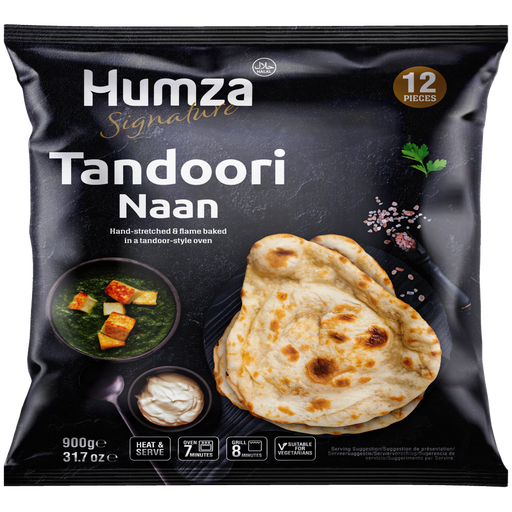
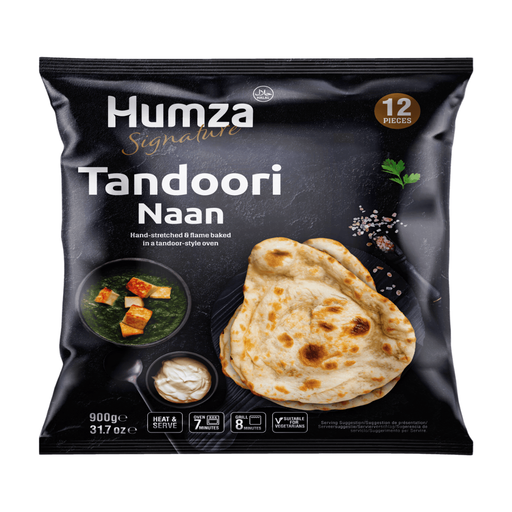
These two Humza packs are plain-naan options for a family meal, not examples of a stated white-and-wholemeal blend. Check the current ingredients and salt label before deciding whether and how much to offer a baby.
 No image available
This 12-piece family pack may suit a shared meal where you will prepare a separate, manageable piece for the baby. Check the pack’s flour ingredients, allergens and salt per 100 g rather than assuming “plain” means a mixed-flour recipe.
 No image available
This four-piece pack is another plain-naan format to consider for a family meal; its pack size does not set a baby’s portion. Check the current ingredients, allergens, salt figure and preparation directions, then assess the texture of the piece served.
NHS guidance places the start of solids at around six months, when the baby is ready. Begin with small amounts alongside breast milk or first infant formula, and consider the food’s size and texture while the baby eats upright under supervision.
NHS guidance says foods containing gluten, including wheat, can be introduced from around six months, one potentially allergenic food at a time and in very small amounts. Read the exact naan’s ingredients; if your baby has a diagnosed food allergy or eczema, or there is a relevant family history, speak to a GP or health visitor first.
Follow the directions on the specific pack and let heated food cool before serving it. Storage instructions differ: ASDA says to use its listed plain naans within 24 hours of opening, while Sainsbury’s says to keep its Indian Plain Naan refrigerated.
Not necessarily. M&S lists a mini plain-naan format, but the packaged size does not decide the amount, shape or texture appropriate for a particular baby. Assess the piece you serve and supervise eating, as NHS guidance advises.
Check that setting’s food and allergy policy and the needs of children with allergies before packing it. England’s Department for Education guidance addresses school allergy safety policies; it does not mean every nursery or school has the same rules for wheat-containing food.