Lunch planners using a pack across several meals
Check the number of naans, the portion you expect to use and the storage directions before choosing a larger pack.


Choose naan as the starchy part of lunch, then add vegetables and a protein food, in line with NHS meal guidance. For a budget-conscious choice, consider how many portions you will use and whether the pack can be frozen; compare fibre, salt and energy on the same per-100g basis before deciding which naan fits the meal.
Check the number of naans, the portion you expect to use and the storage directions before choosing a larger pack.
Compare fibre, salt and energy per 100g, then consider what vegetables and protein food will accompany the naan. NHS guidance recommends higher-fibre or wholegrain starchy foods where possible.
Choose a format that suits the amount you intend to serve, and read the current ingredients, allergen and storage information. The Waitrose and M&S naans referenced here declare wheat or gluten.
Start with the amount you will eat and the rest of the lunch, then compare labels on the same basis and check whether the pack fits your storage plans.
| Priority | What to check | Your needs |
|---|---|---|
| Nutrition label | Compare salt, saturates and energy per 100g; check the amount in the naan you plan to eat. Traffic-light labels can help you compare products where displayed. | I want to see beyond flavour when choosing a lunch bread. In the Food Standards Agency and Ipsos Northern Ireland’s 2024 survey of 611 adults, 49% said they actively used traffic-light labelling when shopping for food; that figure is not specific to naan. |
| Pack and portions | Check pack weight, piece count, the amount you expect to use and whether freezing is permitted. | A pack that covers several lunches appeals to me only if I can use or store it as directed. In the Food Standards Agency and YouGov’s June 2026 tracker, 24% of surveyed consumers aged 16 or over in England, Wales and Northern Ireland worried that their household could not afford food in the next month. That measures general food affordability, not naan-buying behaviour. |
| Lunch ingredients | Check fibre on the naan label and plan vegetables and a protein food alongside it. NHS guidance recommends higher-fibre or wholegrain starchy choices where possible. | I’m using naan as one part of lunch, rather than relying on the bread alone to make the meal. |
| Allergens and storage | Read the current wheat or gluten declaration, storage temperature, opened-pack life and freezing directions for the particular product. | If someone eating lunch must avoid wheat or gluten, I need a product labelled for that requirement. I also need storage instructions that fit when the remaining naans will be eaten. |
Marks & Spencer lists 7.7g sugars and 2.1g saturates per 100g for its Peshwari Naans. A filling or flavour can change what you are comparing.
Check plain, savoury and sweet varieties individually, using per-100g values and the amount you intend to eat.
Piece counts and storage directions affect how much of a pack you can use across lunches.
Count the portions you expect to eat and check whether the particular pack is suitable for freezing. Waitrose lists its Plain Naan as suitable for freezing.
An opened pack may go unused if its remaining naans cannot be eaten or stored within the label’s instructions.
Naan can provide the starchy component, but NHS meal guidance also includes protein foods and fruit and vegetables across the diet.
Plan a protein filling or side and some vegetables, then choose the amount of naan that fits the meal.
The Waitrose and M&S naans referenced here declare wheat or gluten. Their storage directions also vary: Waitrose says to consume its Plain Naan within one day of opening, while M&S says to eat its Tandoori Naans within 24 hours of opening.
Check the current pack’s allergen statement and follow that product’s storage and freezing directions.
These examples show why the individual naan label matters; the figures and instructions apply to the named products, not every bread from each brand.
Waitrose Plain Naan is a plain, freezable option for comparing portions and label values.
M&S provides mini plain, tandoori and Peshwari examples with different formats and label values.
A Tesco Plain Naan listing describes a 320g pack containing two naans.
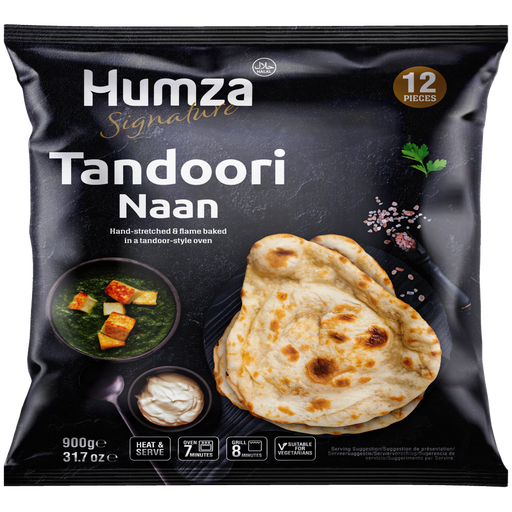
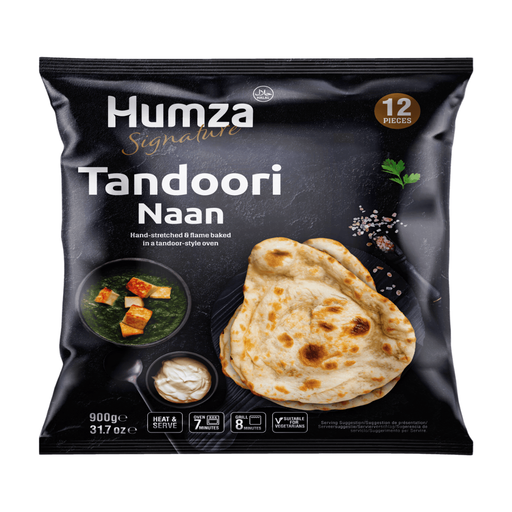
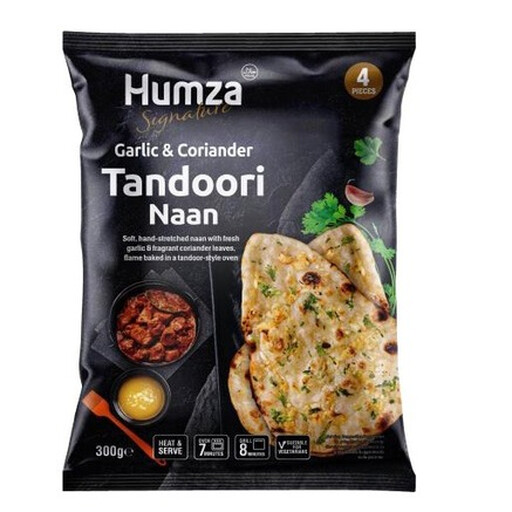
These Humza plain and garlic-and-coriander naans offer different pack sizes and flavours for planning lunches. Check each product’s current nutrition, allergen and storage information against your intended portions.
 No image available
The 12-piece plain pack is an option when several lunches are planned. Check the current salt and fibre values if those affect your choice, and read the wheat or gluten declaration and storage directions before use.
 No image available
The four-piece pack may suit a shorter run of lunches. Compare its current salt and fibre values with other naans you are considering, and check its wheat or gluten declaration and storage directions.
 No image available
This 12-piece pack offers a garlic-and-coriander flavour for lunches where that seasoning suits the filling. Joybuy lists 1.5g salt per 100g and declares wheat or gluten, so check the amount you plan to eat and the current label.
Use naan as the starchy component and add a protein food and vegetables or fruit. NHS guidance recommends higher-fibre or wholegrain starchy choices where possible, so check the naan’s fibre value rather than assuming it is wholegrain.
Yes: compare each product’s label rather than treating plain, savoury and sweet-filled naans as interchangeable. Marks & Spencer lists 7.7g sugars and 2.1g saturates per 100g for its Peshwari Naans; check those values alongside salt, energy and the portion you intend to eat.
Do not assume so. The Waitrose and M&S products referenced here declare wheat or gluten, and the Food Standards Agency identifies wheat as a cereal containing gluten. Choose a product labelled for the relevant dietary requirement and check its current allergen statement.
Some naan can be frozen: Waitrose lists its Plain Naan and M&S lists its Mini Plain Naans as suitable for freezing. Follow the freezing and opened-pack directions on the particular product rather than applying another pack’s instructions.
Keep fillings that spoil quickly, such as dairy or meat, refrigerated until packing and as cold as possible until eaten. Safefood advises that an insulated lunch bag or box can help; this precaution concerns the perishable filling, not every naan on its own.